
Ecommerce Development
Shopify Email Deliverability: Why Your Emails Go to Spam and How to Fix It
Shopify Email Deliverability: Why Your Emails Go to Spam and How to Fix It
08 min read
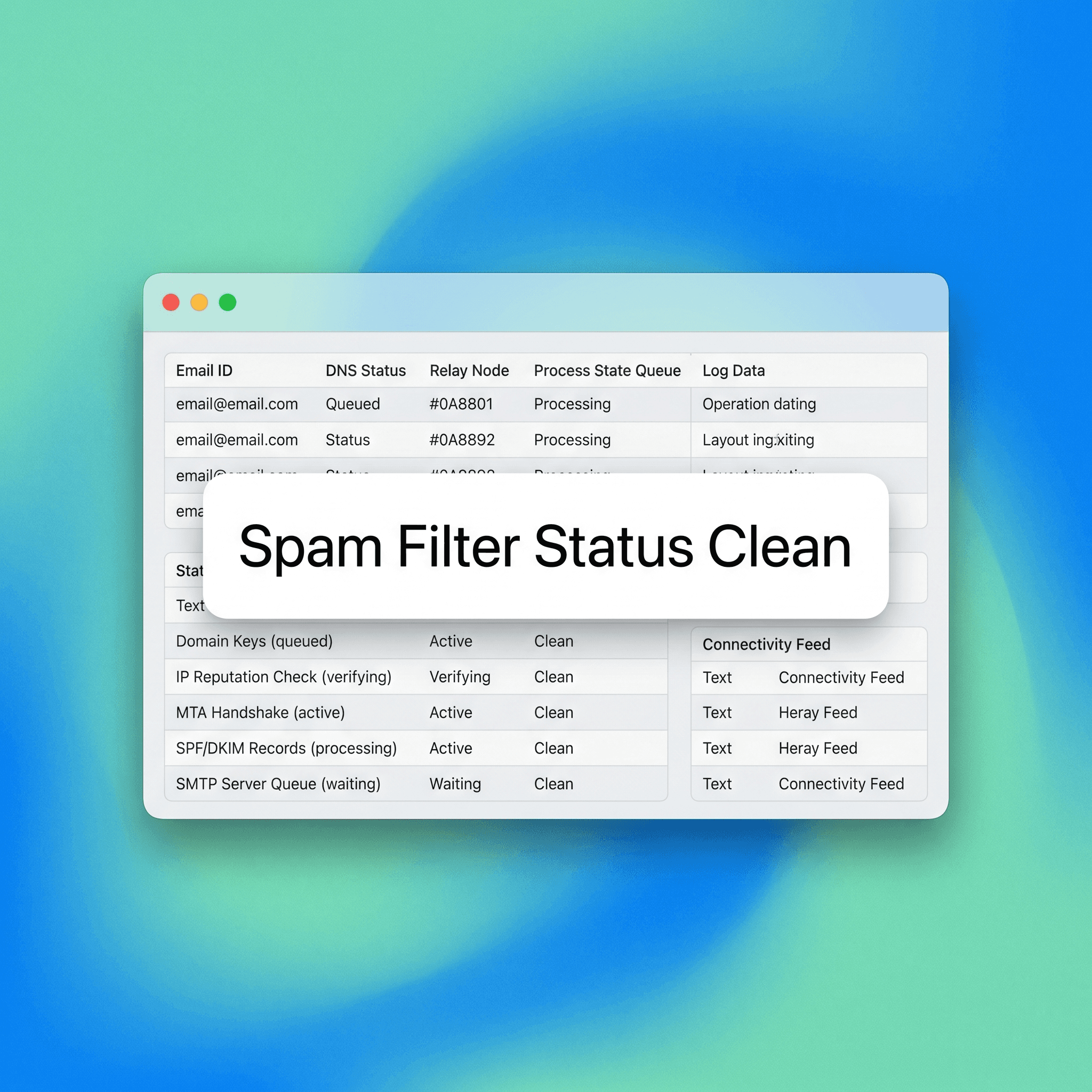
If your Shopify emails are landing in spam, your revenue is leaking. Not slowly — fast. A promotional campaign that doesn't reach the inbox is effectively a campaign that didn't happen. Open rates drop, conversions disappear, and most operators assume the problem is the subject line. It rarely is. Shopify email deliverability failures are almost always infrastructure problems, not creative problems. The good news: they're fixable. This guide walks through the most common causes, a diagnostic framework you can run today, and the exact steps to recover your sender reputation. Addressing these infrastructure deficits is paramount, as modern spam filters prioritize authentication protocols and historical sender reputation over the actual artistic merit of your subject lines. By systematically auditing your technical setup, you ensure that every campaign has the best possible chance of bypassing aggressive ISP filters, thereby protecting the long-term ROI of your email marketing investment.
What Is Email Deliverability and Why Does It Matter for Shopify Stores?
Email deliverability refers to your ability to land emails in the primary inbox — not spam, not promotions, not filtered into oblivion. It's determined by a combination of technical authentication, sender reputation, list hygiene, and engagement signals. For Shopify operators, this matters more than most. Your email list is owned revenue. Paid channels fluctuate. Algorithms shift. But a healthy, engaged email list with strong deliverability is one of the few compounding assets in ecommerce. When deliverability degrades, your entire retention strategy degrades with it. This creates a dangerous feedback loop where low inbox placement leads to lower engagement, which signals to ISPs that your content is unsolicited, further depressing your deliverability metrics in a downward spiral that can take months of dedicated operational effort to reverse.
Why Shopify Emails Go to Spam: The 6 Most Common Causes
1. Missing or Misconfigured Email Authentication Records
SPF, DKIM, and DMARC are the three pillars of email authentication. If any of them are missing or misconfigured, inbox providers have no way to verify your domain is legitimate — so they don't trust it.
SPF (Sender Policy Framework): Tells receiving servers which IP addresses are authorized to send on your domain's behalf.
DKIM (DomainKeys Identified Mail): Adds a cryptographic signature to your emails so the content can be verified.
DMARC (Domain-based Message Authentication, Reporting & Conformance): Tells receiving servers what to do when SPF or DKIM fail.
Many Shopify stores using third-party ESPs (Klaviyo, Omnisend, Mailchimp, Shopify Email) never fully configure all three. Most configure SPF and stop there. That's not enough. Without a strictly aligned DMARC policy, you remain vulnerable to spoofing, which allows malicious actors to misuse your brand reputation, ultimately leading to your legitimate domain being blacklisted by major global ISPs.
2. Sending from a Free or Misaligned Domain
Sending marketing emails from a Gmail, Outlook, or Yahoo address — or from a subdomain that doesn't match your store's primary domain — is an instant credibility signal to spam filters. It also prevents proper DMARC alignment. Your sending domain should match your brand domain (e.g., hello@yourbrand.com, not yourbrand@gmail.com). Utilizing a free provider for professional commerce communications signals to major inbox filters that the sender is likely an amateur or potentially a bot, which immediately categorizes your outbound traffic into higher-risk buckets that are subject to stricter spam filtering, resulting in diminished inbox penetration rates for your critical order updates and promotional blasts.
3. A Damaged Sender Reputation
Your domain and IP address each carry a reputation score with inbox providers. That score is built — or destroyed — over time based on:
Spam complaint rates: Above 0.1% is a problem; above 0.3% triggers serious filtering.
Bounce rates: Hard bounces signal poor list hygiene.
Unsubscribe rates: High rates signal content-audience mismatch.
Engagement rates: Low open rates tell providers your subscribers don't want your mail.
If you've been blasting your full list with every campaign, your reputation has likely taken damage. ISPs monitor these metrics with extreme precision, utilizing machine learning to analyze the historical behavior of your sending domain, meaning that one bad month of high complaint rates can cast a shadow over your deliverability for the entire subsequent quarter as you struggle to regain the trust of major inbox providers.
4. Poor List Hygiene
Purchased lists, dormant subscribers, invalid addresses, and spam traps are the fastest ways to destroy deliverability. Spam traps — email addresses deliberately set up to catch senders with poor list practices — are particularly dangerous because a single hit can tank your domain reputation. If your list hasn't been cleaned in six months or more, it's working against you. Maintaining a stagnant list is essentially an operational liability, as the accumulation of "dead" email addresses acts as a magnet for spam traps and bounce-backs, which are interpreted by ISPs as clear indicators that your business does not prioritize subscriber intent or high-quality data management practices.
5. Spam Trigger Language and Content Issues
Certain subject line patterns, body copy phrases, and formatting choices (excessive caps, too many links, image-heavy emails with minimal text) correlate with spam. Modern spam filters are more sophisticated than a keyword blacklist, but these signals still contribute to filtering decisions. This is the least common root cause, but it compounds the others. Over-reliance on aggressive sales jargon or broken HTML structure in your email templates forces ISPs to prioritize safety and security for their users, often causing your emails to be silently discarded or relegated to the Promotions tab, regardless of how relevant your offer might be to the actual recipient.
6. Sudden Volume Spikes Without Warm-Up
Sending a high-volume campaign from a domain or IP that hasn't been warmed up is a red flag for inbox providers. If your domain has been quiet and you suddenly blast 50,000 contacts, filters assume something is wrong. New ESPs, new sending domains, and post-migration campaigns all require a warm-up period. This ramp-up process is essential for building historical trust with ISPs; sending too fast, too soon is viewed as a high-risk behavior that often mimics the patterns of compromised accounts, leading to immediate domain throttling or blocklisting that can take significant time to clear once identified.
The Shopify Email Deliverability Audit Matrix (SEDAM)
Use this framework to diagnose your current deliverability status before making changes. Run through each layer in order — technical issues at Layer 1 will invalidate fixes made at Layer 3.
Layer 1 — Authentication & Domain Infrastructure
SPF record exists: Includes your ESP's sending servers.
DKIM is configured: Aligned with your sending domain.
DMARC record is published: At least a monitoring policy (p=none).
Sending domain matches your brand: Ensures professional consistency.
Custom sending domain set up: Avoiding shared ESP subdomains.
By validating these layers, you eliminate the foundational errors that cause 90% of deliverability failures, creating a stable platform where you can confidently execute complex marketing automation without fear of immediate spam placement, which is a common occurrence for brands that bypass this rigorous technical audit in favor of faster, but ultimately less secure, sending practices.
Layer 2 — Sender Reputation
Domain spam complaint rate: Below 0.1% (check Google Postmaster Tools).
IP reputation: Clean (use MXToolbox or your ESP's reputation tools).
Blocklist status: No domain or IP on major lists (Spamhaus, Barracuda).
Bounce rate: Under 2% on recent campaigns.
Consistent monitoring of these metrics provides a real-time health check on your domain's standing with the most critical inbox providers, allowing you to intercept issues before they escalate into hard blacklistings that would otherwise necessitate expensive, time-consuming remediation with ISP support teams.
Layer 3 — List Quality
List cleaned: In the last 90 days.
Invalid and hard-bounce addresses: Removed from your active database.
Unengaged subscribers: Segmented out of broadcast sends (no open in 90+ days).
No purchased or rented lists: Ensures authentic subscriber growth.
Double opt-in enabled: For new subscribers to verify intent.
Active list maintenance is an ongoing operational cost that pays for itself by shielding your domain reputation from the detrimental effects of high bounce rates and low engagement, which directly correlates to higher inbox placement rates for your primary audience of loyal, purchasing customers.
Layer 4 — Send Behavior & Volume
Consistent send cadence: Not sporadic blasts.
New domain or ESP warmed up: Before full-volume sending.
Segmentation: Used to target engaged contacts first.
Establishing a predictable rhythm allows inbox algorithms to classify your outgoing traffic as expected, recurring communication rather than erratic, high-risk spam activity, which significantly increases the reliability of your email delivery scheduling and long-term sender reputation growth.
Layer 5 — Content & Engagement Signals
Text-to-image ratio: Balanced (not image-only emails).
Subject lines: Avoid spam trigger patterns.
Unsubscribe link: Prominent and functional.
Recent open rates: Above 20% on broadcast campaigns.
Optimizing your creative assets for readability across all device types and inbox providers is a critical factor in maintaining high engagement rates; when subscribers can easily consume and interact with your content, they are less likely to report it as spam, which serves as a powerful positive signal to ISPs.
Score your results. Any "No" or "Unknown" in Layer 1 is a critical fix. Work top-down.
How to Fix Shopify Email Deliverability: The Repair Sequence
Step 1: Authenticate Your Domain Properly
Go to your DNS provider (where your domain is registered or hosted) and add or verify:
SPF record: Your ESP will provide the exact TXT record to add.
DKIM record: Generated inside your ESP; added as a CNAME or TXT record at your DNS.
DMARC record: Start with p=none and a reporting email address: v=DMARC1; p=none; rua=mailto:reports@yourdomain.com.
If you're using Klaviyo, Omnisend, or Shopify Email, each platform has a step-by-step guide for domain authentication. Follow it completely. Partial setup is almost as bad as no setup. Use MXToolbox's Email Header Analyzer or Google Admin Toolbox to verify all three records are resolving correctly after your DNS changes propagate (allow 24–48 hours). Ensuring these protocols are perfectly aligned is the single most important technical step in establishing your digital identity as a legitimate, high-trust sender in the eyes of global email providers.
Step 2: Set Up a Custom Sending Domain
Move off shared ESP subdomains and send from your own authenticated domain. This is a non-negotiable step for any store doing serious email volume. Most ESPs support this natively. In Klaviyo, this is under Settings > Email > Sending Domain. By utilizing a dedicated domain, you isolate your reputation from the negative behavior of other brands sharing your ESP’s infrastructure, granting you complete control over your sender identity and ensuring that your deliverability is dictated solely by your own, high-quality email practices.
Step 3: Clean Your List
Run your list through an email validation service (ZeroBounce, NeverBounce, or similar). Remove hard bounces, invalid addresses, and role-based accounts (info@, admin@, support@). Then build a suppression segment for subscribers who haven't engaged in 90+ days. Don't delete them immediately — run a re-engagement sequence first. If they don't respond to two to three targeted re-engagement emails, suppress them. Taking this aggressive stance toward data quality not only reduces your ESP costs but drastically improves your sender reputation by removing dead weight that drags down your critical performance metrics.
Step 4: Repair Your Sender Reputation
If your domain reputation is already damaged, you need to rebuild it gradually. The method:
Start sending only to your most engaged segment: Opened in last 30 days.
Send consistently at lower volume: For two to four weeks.
Monitor complaint rates: In Google Postmaster Tools.
Gradually expand: To less engaged segments as metrics stabilize.
This process takes time. There's no shortcut. But it works. By demonstrating consistent, positive sending behavior on a smaller scale, you prove your legitimacy to spam filters, allowing you to incrementally re-establish your domain’s authority and regain your previous level of inbox placement capacity.
Step 5: Set Up Google Postmaster Tools
If you're not monitoring your domain reputation with Google Postmaster Tools, you're flying blind. It's free, it shows your domain's spam rate, IP reputation, and authentication status directly from Google's perspective. Set it up and check it weekly. This diagnostic tool is the industry standard for serious e-commerce operators, as it provides the most accurate, granular data directly from the most popular inbox provider in the world, allowing you to make data-driven adjustments to your strategy based on actual Gmail performance metrics.
Step 6: Reconfigure Your Sending Cadence
Move from sporadic blast sending to a consistent schedule. Inbox providers reward predictable patterns. Establish a send frequency (two to three times per week for most D2C brands) and stick to it. Use engagement-based segmentation so every send goes to contacts most likely to open. This lifts engagement signals across the board. Maintaining a steady, predictable rhythm signals that your brand is a professional entity with a consistent communication strategy, which is rewarded by ISPs through preferential inbox treatment and fewer automated spam blocks.
Common Mistakes Shopify Operators Make With Email Deliverability
Treating deliverability as a one-time fix: Authentication is a foundation, not a solution. List hygiene, reputation, and engagement monitoring are ongoing operations.
Migrating ESPs without a warm-up plan: Moving from Shopify Email to Klaviyo without warming the new sending domain will crater deliverability for weeks.
Blasting the full list for every campaign: Volume without segmentation signals spam behavior. Every unengaged contact you send to is an opportunity for a low open rate to drag down your domain score.
Ignoring DMARC: SPF and DKIM are necessary but not sufficient. Without DMARC, you have no enforcement mechanism and no visibility into spoofing or authentication failures.
Relying on open rates alone as a health metric: Apple Mail Privacy Protection has made open rates unreliable. Use click rates, reply rates, and conversion attribution as your actual engagement signals.
Assuming a clean list at signup: Bots, typos, and disposable addresses make it into every list. Without validation and hygiene processes, these accumulate and erode your sender score over time.
Avoiding these common pitfalls requires a fundamental shift in how you view email marketing; it must be managed as a technical, data-driven utility rather than a simple creative outlet, which will pay dividends in your long-term ability to reach customers reliably and maintain high conversion rates across your entire customer lifecycle.
If your Shopify emails are landing in spam, your revenue is leaking. Not slowly — fast. A promotional campaign that doesn't reach the inbox is effectively a campaign that didn't happen. Open rates drop, conversions disappear, and most operators assume the problem is the subject line. It rarely is. Shopify email deliverability failures are almost always infrastructure problems, not creative problems. The good news: they're fixable. This guide walks through the most common causes, a diagnostic framework you can run today, and the exact steps to recover your sender reputation. Addressing these infrastructure deficits is paramount, as modern spam filters prioritize authentication protocols and historical sender reputation over the actual artistic merit of your subject lines. By systematically auditing your technical setup, you ensure that every campaign has the best possible chance of bypassing aggressive ISP filters, thereby protecting the long-term ROI of your email marketing investment.
What Is Email Deliverability and Why Does It Matter for Shopify Stores?
Email deliverability refers to your ability to land emails in the primary inbox — not spam, not promotions, not filtered into oblivion. It's determined by a combination of technical authentication, sender reputation, list hygiene, and engagement signals. For Shopify operators, this matters more than most. Your email list is owned revenue. Paid channels fluctuate. Algorithms shift. But a healthy, engaged email list with strong deliverability is one of the few compounding assets in ecommerce. When deliverability degrades, your entire retention strategy degrades with it. This creates a dangerous feedback loop where low inbox placement leads to lower engagement, which signals to ISPs that your content is unsolicited, further depressing your deliverability metrics in a downward spiral that can take months of dedicated operational effort to reverse.
Why Shopify Emails Go to Spam: The 6 Most Common Causes
1. Missing or Misconfigured Email Authentication Records
SPF, DKIM, and DMARC are the three pillars of email authentication. If any of them are missing or misconfigured, inbox providers have no way to verify your domain is legitimate — so they don't trust it.
SPF (Sender Policy Framework): Tells receiving servers which IP addresses are authorized to send on your domain's behalf.
DKIM (DomainKeys Identified Mail): Adds a cryptographic signature to your emails so the content can be verified.
DMARC (Domain-based Message Authentication, Reporting & Conformance): Tells receiving servers what to do when SPF or DKIM fail.
Many Shopify stores using third-party ESPs (Klaviyo, Omnisend, Mailchimp, Shopify Email) never fully configure all three. Most configure SPF and stop there. That's not enough. Without a strictly aligned DMARC policy, you remain vulnerable to spoofing, which allows malicious actors to misuse your brand reputation, ultimately leading to your legitimate domain being blacklisted by major global ISPs.
2. Sending from a Free or Misaligned Domain
Sending marketing emails from a Gmail, Outlook, or Yahoo address — or from a subdomain that doesn't match your store's primary domain — is an instant credibility signal to spam filters. It also prevents proper DMARC alignment. Your sending domain should match your brand domain (e.g., hello@yourbrand.com, not yourbrand@gmail.com). Utilizing a free provider for professional commerce communications signals to major inbox filters that the sender is likely an amateur or potentially a bot, which immediately categorizes your outbound traffic into higher-risk buckets that are subject to stricter spam filtering, resulting in diminished inbox penetration rates for your critical order updates and promotional blasts.
3. A Damaged Sender Reputation
Your domain and IP address each carry a reputation score with inbox providers. That score is built — or destroyed — over time based on:
Spam complaint rates: Above 0.1% is a problem; above 0.3% triggers serious filtering.
Bounce rates: Hard bounces signal poor list hygiene.
Unsubscribe rates: High rates signal content-audience mismatch.
Engagement rates: Low open rates tell providers your subscribers don't want your mail.
If you've been blasting your full list with every campaign, your reputation has likely taken damage. ISPs monitor these metrics with extreme precision, utilizing machine learning to analyze the historical behavior of your sending domain, meaning that one bad month of high complaint rates can cast a shadow over your deliverability for the entire subsequent quarter as you struggle to regain the trust of major inbox providers.
4. Poor List Hygiene
Purchased lists, dormant subscribers, invalid addresses, and spam traps are the fastest ways to destroy deliverability. Spam traps — email addresses deliberately set up to catch senders with poor list practices — are particularly dangerous because a single hit can tank your domain reputation. If your list hasn't been cleaned in six months or more, it's working against you. Maintaining a stagnant list is essentially an operational liability, as the accumulation of "dead" email addresses acts as a magnet for spam traps and bounce-backs, which are interpreted by ISPs as clear indicators that your business does not prioritize subscriber intent or high-quality data management practices.
5. Spam Trigger Language and Content Issues
Certain subject line patterns, body copy phrases, and formatting choices (excessive caps, too many links, image-heavy emails with minimal text) correlate with spam. Modern spam filters are more sophisticated than a keyword blacklist, but these signals still contribute to filtering decisions. This is the least common root cause, but it compounds the others. Over-reliance on aggressive sales jargon or broken HTML structure in your email templates forces ISPs to prioritize safety and security for their users, often causing your emails to be silently discarded or relegated to the Promotions tab, regardless of how relevant your offer might be to the actual recipient.
6. Sudden Volume Spikes Without Warm-Up
Sending a high-volume campaign from a domain or IP that hasn't been warmed up is a red flag for inbox providers. If your domain has been quiet and you suddenly blast 50,000 contacts, filters assume something is wrong. New ESPs, new sending domains, and post-migration campaigns all require a warm-up period. This ramp-up process is essential for building historical trust with ISPs; sending too fast, too soon is viewed as a high-risk behavior that often mimics the patterns of compromised accounts, leading to immediate domain throttling or blocklisting that can take significant time to clear once identified.
The Shopify Email Deliverability Audit Matrix (SEDAM)
Use this framework to diagnose your current deliverability status before making changes. Run through each layer in order — technical issues at Layer 1 will invalidate fixes made at Layer 3.
Layer 1 — Authentication & Domain Infrastructure
SPF record exists: Includes your ESP's sending servers.
DKIM is configured: Aligned with your sending domain.
DMARC record is published: At least a monitoring policy (p=none).
Sending domain matches your brand: Ensures professional consistency.
Custom sending domain set up: Avoiding shared ESP subdomains.
By validating these layers, you eliminate the foundational errors that cause 90% of deliverability failures, creating a stable platform where you can confidently execute complex marketing automation without fear of immediate spam placement, which is a common occurrence for brands that bypass this rigorous technical audit in favor of faster, but ultimately less secure, sending practices.
Layer 2 — Sender Reputation
Domain spam complaint rate: Below 0.1% (check Google Postmaster Tools).
IP reputation: Clean (use MXToolbox or your ESP's reputation tools).
Blocklist status: No domain or IP on major lists (Spamhaus, Barracuda).
Bounce rate: Under 2% on recent campaigns.
Consistent monitoring of these metrics provides a real-time health check on your domain's standing with the most critical inbox providers, allowing you to intercept issues before they escalate into hard blacklistings that would otherwise necessitate expensive, time-consuming remediation with ISP support teams.
Layer 3 — List Quality
List cleaned: In the last 90 days.
Invalid and hard-bounce addresses: Removed from your active database.
Unengaged subscribers: Segmented out of broadcast sends (no open in 90+ days).
No purchased or rented lists: Ensures authentic subscriber growth.
Double opt-in enabled: For new subscribers to verify intent.
Active list maintenance is an ongoing operational cost that pays for itself by shielding your domain reputation from the detrimental effects of high bounce rates and low engagement, which directly correlates to higher inbox placement rates for your primary audience of loyal, purchasing customers.
Layer 4 — Send Behavior & Volume
Consistent send cadence: Not sporadic blasts.
New domain or ESP warmed up: Before full-volume sending.
Segmentation: Used to target engaged contacts first.
Establishing a predictable rhythm allows inbox algorithms to classify your outgoing traffic as expected, recurring communication rather than erratic, high-risk spam activity, which significantly increases the reliability of your email delivery scheduling and long-term sender reputation growth.
Layer 5 — Content & Engagement Signals
Text-to-image ratio: Balanced (not image-only emails).
Subject lines: Avoid spam trigger patterns.
Unsubscribe link: Prominent and functional.
Recent open rates: Above 20% on broadcast campaigns.
Optimizing your creative assets for readability across all device types and inbox providers is a critical factor in maintaining high engagement rates; when subscribers can easily consume and interact with your content, they are less likely to report it as spam, which serves as a powerful positive signal to ISPs.
Score your results. Any "No" or "Unknown" in Layer 1 is a critical fix. Work top-down.
How to Fix Shopify Email Deliverability: The Repair Sequence
Step 1: Authenticate Your Domain Properly
Go to your DNS provider (where your domain is registered or hosted) and add or verify:
SPF record: Your ESP will provide the exact TXT record to add.
DKIM record: Generated inside your ESP; added as a CNAME or TXT record at your DNS.
DMARC record: Start with p=none and a reporting email address: v=DMARC1; p=none; rua=mailto:reports@yourdomain.com.
If you're using Klaviyo, Omnisend, or Shopify Email, each platform has a step-by-step guide for domain authentication. Follow it completely. Partial setup is almost as bad as no setup. Use MXToolbox's Email Header Analyzer or Google Admin Toolbox to verify all three records are resolving correctly after your DNS changes propagate (allow 24–48 hours). Ensuring these protocols are perfectly aligned is the single most important technical step in establishing your digital identity as a legitimate, high-trust sender in the eyes of global email providers.
Step 2: Set Up a Custom Sending Domain
Move off shared ESP subdomains and send from your own authenticated domain. This is a non-negotiable step for any store doing serious email volume. Most ESPs support this natively. In Klaviyo, this is under Settings > Email > Sending Domain. By utilizing a dedicated domain, you isolate your reputation from the negative behavior of other brands sharing your ESP’s infrastructure, granting you complete control over your sender identity and ensuring that your deliverability is dictated solely by your own, high-quality email practices.
Step 3: Clean Your List
Run your list through an email validation service (ZeroBounce, NeverBounce, or similar). Remove hard bounces, invalid addresses, and role-based accounts (info@, admin@, support@). Then build a suppression segment for subscribers who haven't engaged in 90+ days. Don't delete them immediately — run a re-engagement sequence first. If they don't respond to two to three targeted re-engagement emails, suppress them. Taking this aggressive stance toward data quality not only reduces your ESP costs but drastically improves your sender reputation by removing dead weight that drags down your critical performance metrics.
Step 4: Repair Your Sender Reputation
If your domain reputation is already damaged, you need to rebuild it gradually. The method:
Start sending only to your most engaged segment: Opened in last 30 days.
Send consistently at lower volume: For two to four weeks.
Monitor complaint rates: In Google Postmaster Tools.
Gradually expand: To less engaged segments as metrics stabilize.
This process takes time. There's no shortcut. But it works. By demonstrating consistent, positive sending behavior on a smaller scale, you prove your legitimacy to spam filters, allowing you to incrementally re-establish your domain’s authority and regain your previous level of inbox placement capacity.
Step 5: Set Up Google Postmaster Tools
If you're not monitoring your domain reputation with Google Postmaster Tools, you're flying blind. It's free, it shows your domain's spam rate, IP reputation, and authentication status directly from Google's perspective. Set it up and check it weekly. This diagnostic tool is the industry standard for serious e-commerce operators, as it provides the most accurate, granular data directly from the most popular inbox provider in the world, allowing you to make data-driven adjustments to your strategy based on actual Gmail performance metrics.
Step 6: Reconfigure Your Sending Cadence
Move from sporadic blast sending to a consistent schedule. Inbox providers reward predictable patterns. Establish a send frequency (two to three times per week for most D2C brands) and stick to it. Use engagement-based segmentation so every send goes to contacts most likely to open. This lifts engagement signals across the board. Maintaining a steady, predictable rhythm signals that your brand is a professional entity with a consistent communication strategy, which is rewarded by ISPs through preferential inbox treatment and fewer automated spam blocks.
Common Mistakes Shopify Operators Make With Email Deliverability
Treating deliverability as a one-time fix: Authentication is a foundation, not a solution. List hygiene, reputation, and engagement monitoring are ongoing operations.
Migrating ESPs without a warm-up plan: Moving from Shopify Email to Klaviyo without warming the new sending domain will crater deliverability for weeks.
Blasting the full list for every campaign: Volume without segmentation signals spam behavior. Every unengaged contact you send to is an opportunity for a low open rate to drag down your domain score.
Ignoring DMARC: SPF and DKIM are necessary but not sufficient. Without DMARC, you have no enforcement mechanism and no visibility into spoofing or authentication failures.
Relying on open rates alone as a health metric: Apple Mail Privacy Protection has made open rates unreliable. Use click rates, reply rates, and conversion attribution as your actual engagement signals.
Assuming a clean list at signup: Bots, typos, and disposable addresses make it into every list. Without validation and hygiene processes, these accumulate and erode your sender score over time.
Avoiding these common pitfalls requires a fundamental shift in how you view email marketing; it must be managed as a technical, data-driven utility rather than a simple creative outlet, which will pay dividends in your long-term ability to reach customers reliably and maintain high conversion rates across your entire customer lifecycle.
FAQs
Web Personalisation
Framer is a design tool that allows you to design websites on a freeform canvas, and then publish them as websites with a single click.
UI and UX Design
Framer is a design tool that allows you to design websites on a freeform canvas, and then publish them as websites with a single click.
Search Engine Optimisation
Framer is a design tool that allows you to design websites on a freeform canvas, and then publish them as websites with a single click.
CRM and ERP Solutions
Framer is a design tool that allows you to design websites on a freeform canvas, and then publish them as websites with a single click.
Ecommerce
Framer is a design tool that allows you to design websites on a freeform canvas, and then publish them as websites with a single click.
Email Marketing
Framer is a design tool that allows you to design websites on a freeform canvas, and then publish them as websites with a single click.
Marketing Automation
Framer is a design tool that allows you to design websites on a freeform canvas, and then publish them as websites with a single click.
Chatbots and Conversational AI
Framer is a design tool that allows you to design websites on a freeform canvas, and then publish them as websites with a single click.
Chatbots and Conversational AI
Framer is a design tool that allows you to design websites on a freeform canvas, and then publish them as websites with a single click.
Related Blogs
We know your space
Explore our latest UI/UX Case Studies that showcase how our process-driven creativity transforms complex ideas into real, measurable business results, step by step.

AI and Data Analytics
•
Aug 19, 2026
Context Engineering for Enterprise AI Agents: Memory, Retrieval, Tools and State Management

AI and Data Analytics
•
Aug 19, 2026
Enterprise RAG vs Agentic RAG vs AI Search: Which Architecture Should You Build?

AI and Data Analytics
•
Aug 19, 2026
Enterprise Semantic Layer for AI Agents: How to Produce Trusted Business Answers
Let's work together
Have a project in mind?
Let's make it real.
Tell us what you're building. We'll bring the design, technology, and thinking to make it happen.
Fill up the following form to start a conversation
with our team
Let's work together
Have a project in mind?
Let's make it real.
Tell us what you're building. We'll bring the design, technology, and thinking to make it happen.
Fill up the following form to start a conversation with our team
Let's work together
Have a project in mind?
Let's make it real.
Tell us what you're building. We'll bring the design, technology, and thinking to make it happen.
Fill up the following form to start a conversation
with our team
Services
Services
© 2026 projectsupply
Part of Tangle
Services
© 2026 projectsupply
Part of Tangle