
Ecommerce Development
Shopify Analytics for Agencies: How to Build Reliable D2C Analytics Infrastructure
Shopify Analytics for Agencies: How to Build Reliable D2C Analytics Infrastructure
08 min read
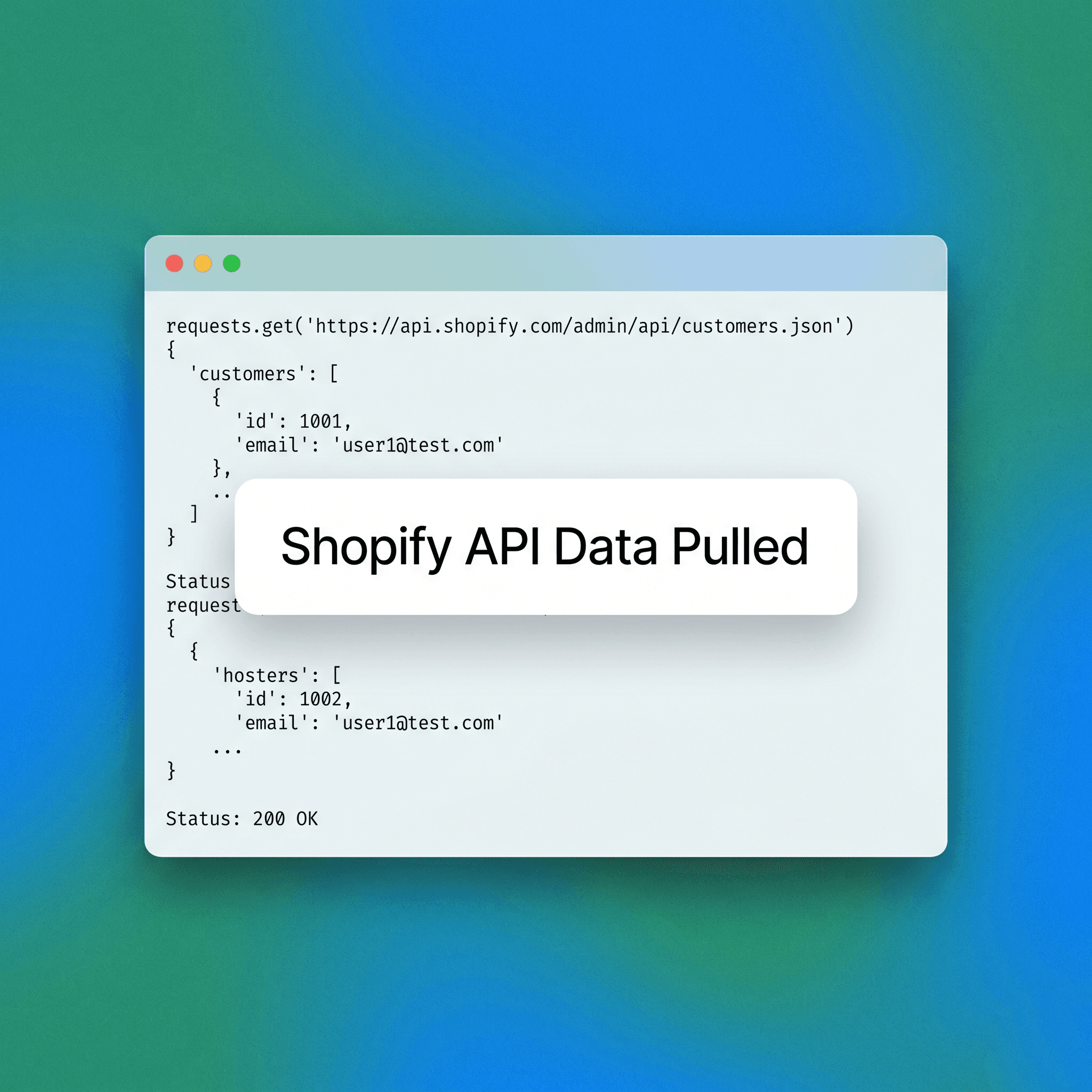
Most Shopify stores don't have an analytics problem. They have an infrastructure problem. The symptoms look the same — numbers that don't match, attribution gaps, channel-level data you can't trust — but the cause is almost always structural. Tracking was set up once, early, and never maintained. Data flows through three platforms and reconciles in none of them. The dashboard exists, but no one is confident in what it's measuring. This is the starting point for most Shopify analytics engagements at Project Supply. And it's fixable, but only if you treat it like an infrastructure project, not a reporting project. Here's how we approach it. Modern ecommerce data operations require a transition from siloed reporting to an integrated ecosystem. By viewing analytics as a foundational utility rather than a luxury dashboarding exercise, brands can stop reacting to phantom data errors. Sustainable growth depends on the reliability of the underlying telemetry, which prevents the degradation of signal-to-noise ratios as customer acquisition costs fluctuate and marketing funnels become increasingly fragmented.
Why Shopify Analytics Breaks Down at Scale
Shopify's native analytics are useful at the beginning. You get order data, revenue summaries, basic conversion metrics, and a few traffic reports. For a brand doing its first few hundred orders a month, that's often enough to make decisions. The problems compound as you grow. You add paid channels. You launch email flows. You run influencer campaigns. You move to a headless setup or add third-party checkout tools. Every addition creates a new data touchpoint — and without deliberate architecture, those touchpoints don't talk to each other cleanly. By the time most brands reach us, they're dealing with some combination of the following:
Revenue Discrepancies: Revenue figures that differ between Shopify, their ad platforms, and their BI tool.
Attribution Errors: Facebook and Google attribution that double-counts conversions.
Klaviyo Misalignment: Klaviyo-driven revenue with no clear line back to acquisition cost.
Manual Data Debt: LTV and cohort data that can't be pulled without a manual export.
GA4 Configuration Debt: Google Analytics 4 configured incorrectly (or barely configured at all).
None of these are Shopify's fault. They're the result of building reporting on top of systems that weren't designed to connect. As a brand scales, the sheer volume of API calls and customer journey permutations overwhelms default tracking methods. Without a centralized data repository or a consistent event schema, the technical debt accrued by marketing automation and third-party plugins inevitably leads to disjointed customer insights.
The Shopify Analytics Stack Framework
To solve this systematically, Project Supply uses a five-layer infrastructure model we call the Shopify Analytics Stack Framework. Each layer serves a distinct function, and weakness in any layer cascades upward. This structured hierarchy ensures that data integrity is maintained from the moment a user lands on a site until the final reporting stage.
Layer 1: Event Tracking Foundation
Everything starts with clean event data. This means implementing a server-side tracking layer alongside your client-side tags, confirming that Shopify's checkout events are firing correctly, and validating that purchase, add-to-cart, and initiate-checkout events are consistent across GA4, Meta, and any other ad platforms you're running. Most brands have client-side tracking only. This creates data loss — particularly on iOS and in privacy-focused browsers — and it's the single most common reason attribution looks broken. By moving to server-side GTM containers, brands regain control over the data payload sent to third-party endpoints. This transition mitigates the impact of browser-based ad blockers and ITP (Intelligent Tracking Prevention) protocols that frequently strip away cookies necessary for accurate conversion attribution.
Layer 2: Data Destination Architecture
Where does your data go, and how does it get there? This layer covers the pipelines from Shopify to your destinations: GA4, a data warehouse, your ad platforms, your email platform. It includes:
Direct Connections: Direct API connections vs. ETL tools (Fivetran, Stitch, or similar).
Webhook Strategy: Shopify webhook configurations for order and customer data.
Downstream Logic: How returns, cancellations, and exchanges are handled downstream.
Getting this layer wrong means your warehouse never has a clean source of truth. Fixing it is tedious, but it's the foundation for every metric you'll report on. Developing a robust data pipeline involves establishing a schema that transforms raw Shopify objects—like
ordersorcustomers—into a standardized format capable of being queried by BI tools. This prevents the "garbage in, garbage out" phenomenon that plagues many growing D2C brands.
Layer 3: Identity and Attribution Model
This is where most complexity lives. Attribution is not a platform problem — it's a modeling problem. You need to decide, deliberately, how you're going to assign credit across touchpoints, and then build that model consistently. This includes:
Model Selection: Choosing a primary attribution model (last-click, linear, data-driven) and applying it uniformly.
UTM Governance: Building UTM governance so every campaign, ad set, and creative is tagged consistently.
Reconciliation: Reconciling platform-reported conversions against Shopify order data regularly.
Channel Analysis: Understanding the role of Klaviyo and organic in your actual purchase path.
There is no perfect attribution model. There is a defensible, consistent one — and that's what matters for decision-making. By implementing a standardized identity resolution strategy, brands can finally track the multi-touch customer journey accurately, even as users bounce between mobile, desktop, social media, and email channels.
Layer 4: Reporting Layer
Once layers one through three are stable, reporting becomes straightforward. This layer covers the dashboards, views, and scheduled reports that your team actually uses. Key decisions at this layer:
BI Selection: What tool sits at the top (Looker Studio, Tableau, native Shopify, Northbeam, Triple Whale, or a custom warehouse-connected BI setup).
Metric Hierarchy: What metrics belong in each view (executive, channel, product, ops).
Review Cadence: How often reports refresh and who owns the data review cadence.
Over-investing in dashboards before the underlying infrastructure is solid is one of the most common and expensive mistakes in ecommerce analytics. A beautiful dashboard built on dirty data doesn't help you make better decisions — it just makes you more confident in wrong ones. Establishing a high-fidelity reporting layer requires clear visualization of KPIs that align directly with business objectives. This ensures stakeholders can derive actionable insights without needing to decipher underlying data discrepancies.
Layer 5: Decision Infrastructure
The final layer is often ignored entirely. It's the set of processes, ownership structures, and review cadences that ensure your data actually informs decisions. This includes:
Data Ownership: Who is responsible for data quality.
Auditing: What triggers a data audit vs. a data investigation.
Operational Integration: How analytics feeds into weekly channel reviews, inventory planning, and creative strategy.
Data infrastructure without decision infrastructure is a sunk cost. To be truly effective, the analytics stack must be integrated into the weekly rhythm of the business, enabling stakeholders to make pivot-or-persevere decisions based on accurate data rather than intuition. This level of maturity turns a brand into a data-driven organization that proactively manages its growth levers.
Common Mistakes D2C Brands Make with Shopify Analytics
ROAS Blindness: Relying entirely on platform-reported ROAS. Meta and Google report conversions differently from each other, and differently from Shopify. Neither is wrong — they're measuring different things. Brands that optimize purely on platform ROAS without reconciling to Shopify revenue end up over-investing in channels that look better than they perform.
GA4 Misconfiguration: Setting up GA4 incorrectly and not noticing. GA4 requires active configuration to be useful for ecommerce. Out of the box, it captures very little. Enhanced ecommerce events, cross-domain tracking, and custom dimensions all need deliberate setup. Most brands have GA4 installed but not configured — which is worse than not having it.
UTM Neglect: Treating UTM structure as optional. Inconsistent UTM parameters are one of the most reliable ways to guarantee bad attribution data. If your agency, freelancer, and internal team are all tagging URLs differently, your channel data is untrustworthy. UTM governance is boring. It is also necessary.
Dashboard Prematurity: Building dashboards before the data is clean. This has already been mentioned once because it's worth repeating. Reporting infrastructure should come after data infrastructure, not before.
Static Setup Mentality: Treating analytics as a setup task rather than a maintenance function. Tracking breaks when Shopify themes are updated. Events break when apps are added. Data pipelines need monitoring. Analytics infrastructure requires ongoing attention — not a one-time setup and a handoff.
What Project Supply Actually Builds
When we take on a Shopify analytics engagement, the output is typically some combination of:
Tracking: A server-side tracking implementation (via Google Tag Manager server-side container, or Meta's Conversions API).
Configuration: Clean GA4 ecommerce event configuration with validated data layer.
Governance: UTM governance documentation and enforcement.
Warehousing: A data warehouse setup with Shopify as a primary source (commonly BigQuery or Redshift).
Modeling: Attribution modeling documented and applied consistently.
Reporting: A reporting layer the internal team can own and maintain.
The goal is infrastructure the brand's team can use without needing to come back to us for every question. Good infrastructure should reduce dependency, not increase it. By deploying modular, scalable architecture, we ensure that as the brand adds new sales channels, new regions, or new product lines, the data infrastructure expands alongside them without requiring constant reconstruction.
Who This Is For
This approach is best suited for Shopify brands that are:
High Spend: Spending meaningfully on paid acquisition across at least two channels.
Lifecycle Marketing: Using email as a retention and revenue driver.
Ops Complexity: Managing inventory and fulfillment with enough complexity that ops needs data too.
Data Distrust: Frustrated by conflicting numbers across platforms.
High Growth: Scaling fast enough that gut-feel decisions are becoming genuinely risky.
If you're early-stage and doing under $500K annual revenue, native Shopify analytics and a well-configured GA4 account will likely get you where you need to be. The infrastructure build is an investment that pays off at scale. Companies at the growth stage often experience a "data inflection point" where the limitations of legacy setups inhibit the ability to optimize acquisition, necessitating a professional-grade stack upgrade to sustain long-term profitability.
Most Shopify stores don't have an analytics problem. They have an infrastructure problem. The symptoms look the same — numbers that don't match, attribution gaps, channel-level data you can't trust — but the cause is almost always structural. Tracking was set up once, early, and never maintained. Data flows through three platforms and reconciles in none of them. The dashboard exists, but no one is confident in what it's measuring. This is the starting point for most Shopify analytics engagements at Project Supply. And it's fixable, but only if you treat it like an infrastructure project, not a reporting project. Here's how we approach it. Modern ecommerce data operations require a transition from siloed reporting to an integrated ecosystem. By viewing analytics as a foundational utility rather than a luxury dashboarding exercise, brands can stop reacting to phantom data errors. Sustainable growth depends on the reliability of the underlying telemetry, which prevents the degradation of signal-to-noise ratios as customer acquisition costs fluctuate and marketing funnels become increasingly fragmented.
Why Shopify Analytics Breaks Down at Scale
Shopify's native analytics are useful at the beginning. You get order data, revenue summaries, basic conversion metrics, and a few traffic reports. For a brand doing its first few hundred orders a month, that's often enough to make decisions. The problems compound as you grow. You add paid channels. You launch email flows. You run influencer campaigns. You move to a headless setup or add third-party checkout tools. Every addition creates a new data touchpoint — and without deliberate architecture, those touchpoints don't talk to each other cleanly. By the time most brands reach us, they're dealing with some combination of the following:
Revenue Discrepancies: Revenue figures that differ between Shopify, their ad platforms, and their BI tool.
Attribution Errors: Facebook and Google attribution that double-counts conversions.
Klaviyo Misalignment: Klaviyo-driven revenue with no clear line back to acquisition cost.
Manual Data Debt: LTV and cohort data that can't be pulled without a manual export.
GA4 Configuration Debt: Google Analytics 4 configured incorrectly (or barely configured at all).
None of these are Shopify's fault. They're the result of building reporting on top of systems that weren't designed to connect. As a brand scales, the sheer volume of API calls and customer journey permutations overwhelms default tracking methods. Without a centralized data repository or a consistent event schema, the technical debt accrued by marketing automation and third-party plugins inevitably leads to disjointed customer insights.
The Shopify Analytics Stack Framework
To solve this systematically, Project Supply uses a five-layer infrastructure model we call the Shopify Analytics Stack Framework. Each layer serves a distinct function, and weakness in any layer cascades upward. This structured hierarchy ensures that data integrity is maintained from the moment a user lands on a site until the final reporting stage.
Layer 1: Event Tracking Foundation
Everything starts with clean event data. This means implementing a server-side tracking layer alongside your client-side tags, confirming that Shopify's checkout events are firing correctly, and validating that purchase, add-to-cart, and initiate-checkout events are consistent across GA4, Meta, and any other ad platforms you're running. Most brands have client-side tracking only. This creates data loss — particularly on iOS and in privacy-focused browsers — and it's the single most common reason attribution looks broken. By moving to server-side GTM containers, brands regain control over the data payload sent to third-party endpoints. This transition mitigates the impact of browser-based ad blockers and ITP (Intelligent Tracking Prevention) protocols that frequently strip away cookies necessary for accurate conversion attribution.
Layer 2: Data Destination Architecture
Where does your data go, and how does it get there? This layer covers the pipelines from Shopify to your destinations: GA4, a data warehouse, your ad platforms, your email platform. It includes:
Direct Connections: Direct API connections vs. ETL tools (Fivetran, Stitch, or similar).
Webhook Strategy: Shopify webhook configurations for order and customer data.
Downstream Logic: How returns, cancellations, and exchanges are handled downstream.
Getting this layer wrong means your warehouse never has a clean source of truth. Fixing it is tedious, but it's the foundation for every metric you'll report on. Developing a robust data pipeline involves establishing a schema that transforms raw Shopify objects—like
ordersorcustomers—into a standardized format capable of being queried by BI tools. This prevents the "garbage in, garbage out" phenomenon that plagues many growing D2C brands.
Layer 3: Identity and Attribution Model
This is where most complexity lives. Attribution is not a platform problem — it's a modeling problem. You need to decide, deliberately, how you're going to assign credit across touchpoints, and then build that model consistently. This includes:
Model Selection: Choosing a primary attribution model (last-click, linear, data-driven) and applying it uniformly.
UTM Governance: Building UTM governance so every campaign, ad set, and creative is tagged consistently.
Reconciliation: Reconciling platform-reported conversions against Shopify order data regularly.
Channel Analysis: Understanding the role of Klaviyo and organic in your actual purchase path.
There is no perfect attribution model. There is a defensible, consistent one — and that's what matters for decision-making. By implementing a standardized identity resolution strategy, brands can finally track the multi-touch customer journey accurately, even as users bounce between mobile, desktop, social media, and email channels.
Layer 4: Reporting Layer
Once layers one through three are stable, reporting becomes straightforward. This layer covers the dashboards, views, and scheduled reports that your team actually uses. Key decisions at this layer:
BI Selection: What tool sits at the top (Looker Studio, Tableau, native Shopify, Northbeam, Triple Whale, or a custom warehouse-connected BI setup).
Metric Hierarchy: What metrics belong in each view (executive, channel, product, ops).
Review Cadence: How often reports refresh and who owns the data review cadence.
Over-investing in dashboards before the underlying infrastructure is solid is one of the most common and expensive mistakes in ecommerce analytics. A beautiful dashboard built on dirty data doesn't help you make better decisions — it just makes you more confident in wrong ones. Establishing a high-fidelity reporting layer requires clear visualization of KPIs that align directly with business objectives. This ensures stakeholders can derive actionable insights without needing to decipher underlying data discrepancies.
Layer 5: Decision Infrastructure
The final layer is often ignored entirely. It's the set of processes, ownership structures, and review cadences that ensure your data actually informs decisions. This includes:
Data Ownership: Who is responsible for data quality.
Auditing: What triggers a data audit vs. a data investigation.
Operational Integration: How analytics feeds into weekly channel reviews, inventory planning, and creative strategy.
Data infrastructure without decision infrastructure is a sunk cost. To be truly effective, the analytics stack must be integrated into the weekly rhythm of the business, enabling stakeholders to make pivot-or-persevere decisions based on accurate data rather than intuition. This level of maturity turns a brand into a data-driven organization that proactively manages its growth levers.
Common Mistakes D2C Brands Make with Shopify Analytics
ROAS Blindness: Relying entirely on platform-reported ROAS. Meta and Google report conversions differently from each other, and differently from Shopify. Neither is wrong — they're measuring different things. Brands that optimize purely on platform ROAS without reconciling to Shopify revenue end up over-investing in channels that look better than they perform.
GA4 Misconfiguration: Setting up GA4 incorrectly and not noticing. GA4 requires active configuration to be useful for ecommerce. Out of the box, it captures very little. Enhanced ecommerce events, cross-domain tracking, and custom dimensions all need deliberate setup. Most brands have GA4 installed but not configured — which is worse than not having it.
UTM Neglect: Treating UTM structure as optional. Inconsistent UTM parameters are one of the most reliable ways to guarantee bad attribution data. If your agency, freelancer, and internal team are all tagging URLs differently, your channel data is untrustworthy. UTM governance is boring. It is also necessary.
Dashboard Prematurity: Building dashboards before the data is clean. This has already been mentioned once because it's worth repeating. Reporting infrastructure should come after data infrastructure, not before.
Static Setup Mentality: Treating analytics as a setup task rather than a maintenance function. Tracking breaks when Shopify themes are updated. Events break when apps are added. Data pipelines need monitoring. Analytics infrastructure requires ongoing attention — not a one-time setup and a handoff.
What Project Supply Actually Builds
When we take on a Shopify analytics engagement, the output is typically some combination of:
Tracking: A server-side tracking implementation (via Google Tag Manager server-side container, or Meta's Conversions API).
Configuration: Clean GA4 ecommerce event configuration with validated data layer.
Governance: UTM governance documentation and enforcement.
Warehousing: A data warehouse setup with Shopify as a primary source (commonly BigQuery or Redshift).
Modeling: Attribution modeling documented and applied consistently.
Reporting: A reporting layer the internal team can own and maintain.
The goal is infrastructure the brand's team can use without needing to come back to us for every question. Good infrastructure should reduce dependency, not increase it. By deploying modular, scalable architecture, we ensure that as the brand adds new sales channels, new regions, or new product lines, the data infrastructure expands alongside them without requiring constant reconstruction.
Who This Is For
This approach is best suited for Shopify brands that are:
High Spend: Spending meaningfully on paid acquisition across at least two channels.
Lifecycle Marketing: Using email as a retention and revenue driver.
Ops Complexity: Managing inventory and fulfillment with enough complexity that ops needs data too.
Data Distrust: Frustrated by conflicting numbers across platforms.
High Growth: Scaling fast enough that gut-feel decisions are becoming genuinely risky.
If you're early-stage and doing under $500K annual revenue, native Shopify analytics and a well-configured GA4 account will likely get you where you need to be. The infrastructure build is an investment that pays off at scale. Companies at the growth stage often experience a "data inflection point" where the limitations of legacy setups inhibit the ability to optimize acquisition, necessitating a professional-grade stack upgrade to sustain long-term profitability.
FAQs
Web Personalisation
Framer is a design tool that allows you to design websites on a freeform canvas, and then publish them as websites with a single click.
UI and UX Design
Framer is a design tool that allows you to design websites on a freeform canvas, and then publish them as websites with a single click.
Search Engine Optimisation
Framer is a design tool that allows you to design websites on a freeform canvas, and then publish them as websites with a single click.
CRM and ERP Solutions
Framer is a design tool that allows you to design websites on a freeform canvas, and then publish them as websites with a single click.
Ecommerce
Framer is a design tool that allows you to design websites on a freeform canvas, and then publish them as websites with a single click.
Email Marketing
Framer is a design tool that allows you to design websites on a freeform canvas, and then publish them as websites with a single click.
Marketing Automation
Framer is a design tool that allows you to design websites on a freeform canvas, and then publish them as websites with a single click.
Chatbots and Conversational AI
Framer is a design tool that allows you to design websites on a freeform canvas, and then publish them as websites with a single click.
Chatbots and Conversational AI
Framer is a design tool that allows you to design websites on a freeform canvas, and then publish them as websites with a single click.
Related Blogs
We know your space
Explore our latest UI/UX Case Studies that showcase how our process-driven creativity transforms complex ideas into real, measurable business results, step by step.

AI and Data Analytics
•
Aug 19, 2026
Context Engineering for Enterprise AI Agents: Memory, Retrieval, Tools and State Management

AI and Data Analytics
•
Aug 19, 2026
Enterprise RAG vs Agentic RAG vs AI Search: Which Architecture Should You Build?

AI and Data Analytics
•
Aug 19, 2026
Enterprise Semantic Layer for AI Agents: How to Produce Trusted Business Answers
Let's work together
Have a project in mind?
Let's make it real.
Tell us what you're building. We'll bring the design, technology, and thinking to make it happen.
Fill up the following form to start a conversation
with our team
Let's work together
Have a project in mind?
Let's make it real.
Tell us what you're building. We'll bring the design, technology, and thinking to make it happen.
Fill up the following form to start a conversation with our team
Let's work together
Have a project in mind?
Let's make it real.
Tell us what you're building. We'll bring the design, technology, and thinking to make it happen.
Fill up the following form to start a conversation
with our team
Services
Services
© 2026 projectsupply
Part of Tangle
Services
© 2026 projectsupply
Part of Tangle