
Performance Media
08 min read
Meta Creative Fatigue in 2026: Why Your Ads Are Breaking Faster and What to Do About It
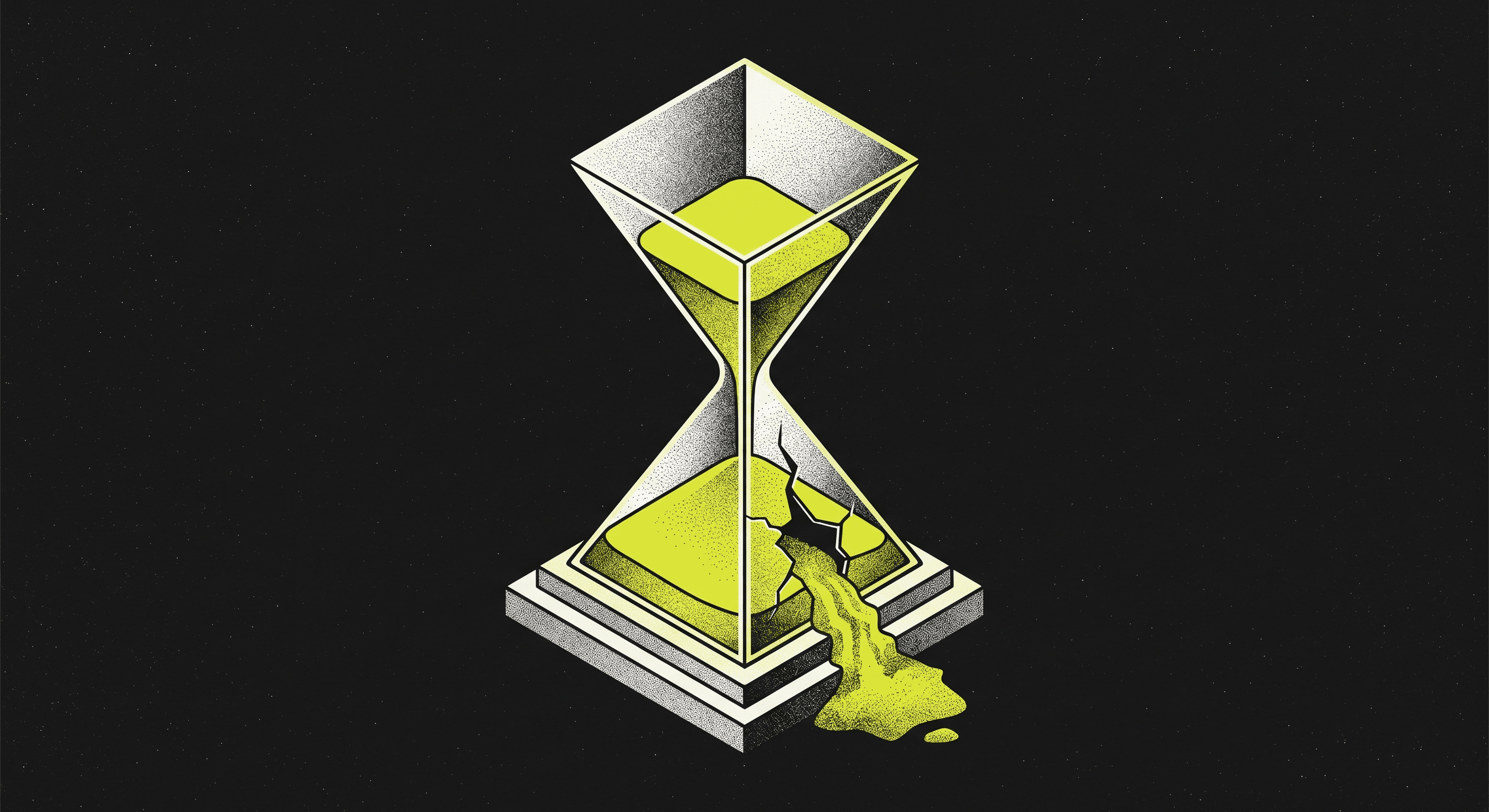
Your Meta ads did not stop working because your product changed. They stopped working because your audience saw the same creative too many times and their thumb learned to skip it before their brain registered what it was. That is creative fatigue. And in 2026, it is happening faster than it ever has before.
Indian D2C brands running Meta campaigns are watching winning creatives die in 10 to 14 days instead of the 30 to 45 days that was normal two years ago. CPMs are rising. CTRs are falling. ROAS is dropping. The instinctive response is to fix the targeting, adjust the bidding strategy, or increase the budget. None of those interventions address the actual problem. The creative is exhausted and the audience has moved on.
This blog covers exactly why creative fatigue is accelerating in 2026, how to diagnose it accurately in your own account, and how to build a creative system that prevents fatigue from becoming the ceiling on your Meta performance.
What Creative Fatigue Actually Is and Why Most Brands Misdiagnose It
Creative fatigue is not just high frequency. That is the most common misunderstanding and it leads to the wrong fixes.
Frequency measures how many times a single person sees a specific ad. Creative fatigue is what happens when enough of your target audience has processed your creative sufficiently that the marginal impact of each additional impression approaches zero. The distinction matters because you can have low frequency and still experience creative fatigue if your audience is small and your creative pool is shallow. You can also have relatively high frequency and not experience fatigue if your creative library is diverse enough that each impression feels meaningfully different.
The signal most brands miss is that creative fatigue shows up in the data before it shows up in ROAS. By the time your return on ad spend is visibly declining, fatigue has already been compressing your performance for days. The early indicators are a rising cost per click without a corresponding rise in CPM, a falling hook rate which is the percentage of people who watch past the first three seconds of a video, and a declining thumbstop ratio on static ads. These move first. ROAS moves last.
Why Creative Fatigue Is Accelerating in 2026
Three structural changes in the Meta platform and in the Indian D2C competitive environment are making creative fatigue hit harder and faster than it did in previous years.
Meta's Advantage+ distribution is more efficient, which means audiences exhaust faster. Advantage+ Shopping Campaigns are genuinely better at finding the right people for your creative than manual targeting was. The problem is that finding the right people efficiently also means concentrating impressions within a more defined audience segment more quickly. A manual campaign with imperfect targeting distributed impressions across a broader pool, which inadvertently slowed fatigue. Advantage+ hits the core audience harder and faster, which means that audience saturates sooner.
More Indian D2C brands are running more ads than ever before. The total volume of Meta ad creative in circulation in India has grown significantly as more brands entered D2C, more agencies scaled their production capacity, and more founders learned to run their own campaigns. Your audience is not just seeing your ads more. They are seeing more ads in total from every brand competing for their attention. The scroll has become more competitive and more numbing simultaneously, which means the threshold for pattern interruption required to stop a thumb is higher than it was and the window before a creative becomes familiar is shorter.
Reels and short-form video have trained audiences to process content faster. The average Indian Instagram user now processes a Reel in under 1.5 seconds before deciding whether to engage or scroll. That threshold was closer to 2.5 seconds in 2022. Creative that would have had time to land its hook now loses the viewer before the message is delivered. This is a behavioral shift that does not reverse. It means the creative standard required to stop the scroll keeps rising and the window for doing so keeps shrinking.
How to Diagnose Creative Fatigue Accurately in Your Meta Account
Before changing anything, confirm that what you are experiencing is actually creative fatigue and not a different problem wearing the same symptoms. Bidding issues, pixel signal degradation, seasonal demand shifts, and landing page problems all produce similar-looking ROAS declines. Treating them as creative fatigue wastes time and budget. The diagnostic sequence that separates creative fatigue from other causes:
Check frequency by ad set, not by campaign. A campaign-level frequency of 2.1 can mask an ad set where a specific audience segment has seen the same creative 6 or 7 times. Pull frequency at the ad set level and filter for any ad set where frequency exceeds 3.5 within a 7-day window. Those are your fatigue candidates.
Look at hook rate trend over time for video creatives. If your hook rate, the percentage of viewers who watch past 3 seconds, was 32% in week one and is now 18% in week three with no change to the creative, that is a fatigue signal. The creative has not changed. The audience's familiarity with it has.
Compare CTR trend against CPM trend. Rising CPM with falling CTR means the audience is seeing the ad but choosing not to engage. That is fatigue. Rising CPM with stable CTR means you have a cost efficiency problem, not a creative problem. Flat CPM with falling CTR is the clearest creative fatigue signal of all because the platform is delivering efficiently but the creative is no longer compelling engagement.
Check your creative pool size against your active audience size. If your retargeting audience is 80,000 people and you have 4 active creatives, each person is seeing roughly the same creative every time they see your ad. A creative pool of 4 against an audience of 80,000 will fatigue in 10 to 14 days at any meaningful spend level.
The Creative Fatigue Timeline for Indian D2C Brands in 2026
Understanding the typical lifecycle of a Meta creative in the current environment helps teams anticipate fatigue rather than react to it.
Phase | Typical Duration | What You See in Data |
|---|---|---|
Launch and learning | Days 1 to 3 | Unstable delivery, variable CPM, algorithm exploring audience |
Peak performance | Days 4 to 10 | Lowest CPM, highest CTR, ROAS at maximum for this creative |
Early fatigue | Days 11 to 18 | CTR begins falling, hook rate drops, CPM starts rising |
Active fatigue | Days 19 to 25 | Visible ROAS decline, frequency climbing, engagement falling |
Full exhaustion | Day 25 and beyond | CPM significantly elevated, CTR near floor, ROAS below target |
Two years ago this timeline ran approximately 30 to 45 days for peak performance. In 2026 it runs 7 to 10 days for most Indian D2C brands at meaningful spend levels. The implication is not that you need to produce more creative indefinitely. It is that you need a system for producing creative rather than producing individual ads.
The Four Levers That Determine How Fast Your Creative Fatigues
Not all creatives fatigue at the same rate. Understanding what drives the timeline helps you make creative decisions that extend performance windows without requiring proportionally more production.
Audience size relative to budget. The smaller your audience and the higher your spend, the faster any individual creative exhausts. A ₹500 per day spend against a retargeting audience of 15,000 people will fatigue a creative in under a week. The same creative running against a broad cold audience of 5 million people at the same budget may run for three to four weeks. Audience expansion is sometimes more effective than creative refresh for extending performance windows.
Creative similarity within the active pool. If your 10 active creatives all use the same visual style, the same color palette, and the same opening hook, your audience perceives them as effectively one creative with minor variations. Genuine creative diversity, meaning meaningfully different visual approaches, different talent, different emotional angles, and different formats, extends the effective lifetime of each individual creative because the audience cannot pattern-match across the pool as quickly.
Format mix across the active library. Single image ads, Reels, carousels, and collection ads reach overlapping but distinct attention states in the same audience member. A person who has fatigued on your Reel creative may still respond to a static image making the same claim differently. Running multiple formats simultaneously against the same audience extends total creative effectiveness without requiring new messaging.
Hook specificity and relevance. Generic hooks fatigue faster than specific ones. "Glowing skin in 7 days" is a hook the audience has processed from dozens of brands. "This fixed the texture bumps I had for three years" is specific enough that the audience cannot immediately pattern-match it to every other beauty ad they have seen. Specific, personal, and unexpected hooks buy more time before the audience's skip reflex activates.
The Creative System That Prevents Fatigue From Becoming Your Ceiling
The solution to creative fatigue is not producing more ads. It is building a production system that generates diverse, high-quality creative at a pace that matches the fatigue timeline. There is a meaningful difference between those two things.
Brands that respond to fatigue by producing more of the same type of creative are on a production treadmill. They spend more on production, launch more ads, and still hit fatigue at the same rate because the underlying diversity problem has not been solved. Brands that build a creative system are solving the diversity problem structurally rather than chasing it reactively. A functional creative system for Indian D2C Meta advertising in 2026 has four components.
A weekly creative production cadence with defined output types. Every week, the system produces a minimum of three hook variations on the current winning creative body, one new format test using the same message, and one new angle test using a different emotional entry point. This is not a large production requirement. It is three to five pieces of content per week produced consistently rather than a large batch produced reactively when fatigue hits.
A clear creative retirement process. Creative should be retired on a schedule based on performance data, not left running until ROAS collapses. Set a retirement trigger: any creative where hook rate has fallen more than 40% from its peak performance week, or where CTR has dropped below 0.8%, gets retired within 48 hours regardless of absolute ROAS. Keeping fatigued creative running because it is still generating some return is the most common way brands allow one tired creative to drag down the performance of an entire ad set.
A creative learning log that captures what worked and why. Most Indian D2C brands run creative tests but do not systematically record what the winning elements were or why they outperformed. A simple log that captures the hook, the format, the emotional angle, the talent type, and the performance metrics for every tested creative builds institutional knowledge that makes each subsequent round of production more efficient. After 90 days of consistent logging, the pattern of what works for your specific audience becomes clear enough to direct production with significantly more precision.
A creative bank built ahead of need. Reactive creative production, which is producing new ads after fatigue has already hit performance, guarantees a gap between when performance declines and when new creative is available to replace it. Building a creative bank of 10 to 15 approved but unlaunched pieces means you always have tested creative ready to deploy when fatigue signals appear. The production cadence builds the bank. The retirement process deploys from it. The system runs continuously rather than in crisis cycles.
What Strong Creative Looks Like in the Indian D2C Context in 2026
The creative standards that prevent early fatigue are specific to the Indian market and the current competitive environment. Generic creative advice adapted from Western D2C playbooks consistently underperforms in Indian Meta campaigns for reasons that are structural rather than executional.
The first frame must work without sound and without context. A significant portion of Indian mobile users browse Instagram with sound off in commuting and public contexts. The first frame of any video creative must communicate something compelling through visual and text elements alone, before a single word of audio is heard. If your creative relies on a voiceover to deliver the hook, you are losing every silent-scroll viewer before the message lands.
Specific claims outperform aspirational ones for retention and conversion. "Reduced my dark spots by 60% in 30 days" outperforms "Achieve radiant skin" in both hook rate and conversion rate for Indian beauty audiences. The specificity creates enough cognitive engagement to interrupt the scroll pattern. The aspiration creates nothing the audience has not already processed from the previous ten beauty ads.
Founder and user-generated content fatigues more slowly than produced brand content. Audiences process produced brand creative as advertising immediately and the skip reflex activates faster. Founder-led content, genuine customer testimonials filmed on phones, and unscripted product demonstrations in real environments hold attention longer because they disrupt the pattern the audience uses to identify and skip ads. For Indian D2C brands with limited production budgets, this is also the most cost-efficient creative format available.
Regional language creative extends performance windows for Tier 2 and Tier 3 audiences. Hindi and regional language creatives fatigue more slowly than English-language creatives for non-metro audiences because the English creative pool from competing brands is larger and more familiar. A Hindi creative in a category dominated by English advertising creates genuine pattern interruption at the format level before the message is even processed. If you want ProjectSupply to audit your current Meta creative library and identify exactly which creatives are in active fatigue and what to replace them with, start here.
What Metrics Should Drive Your Creative Fatigue Management?
Metric | Where to find it | Fatigue signal threshold |
|---|---|---|
Hook rate for video | Meta Ads Manager, video plays at 3 seconds divided by impressions | Below 20% or a 40% drop from peak |
Thumbstop ratio for static | Impressions divided by 2-second video plays or link clicks | Consistent decline over 7 days |
CTR by creative | Meta Ads Manager creative breakdown | Below 0.8% for cold audiences |
Frequency by ad set | Meta Ads Manager ad set level | Above 3.5 within a 7-day window |
CPM trend week over week | Meta Ads Manager | Rising CPM with falling CTR |
ROAS by creative age | Meta Ads Manager filtered by creative launch date | Decline beginning at day 10 to 14 |
Review these metrics at the creative level every Monday and Wednesday. Fatigue that is caught on Wednesday can be addressed with new creative by the following Monday. Fatigue that is caught when ROAS collapses means five to seven days of degraded performance have already passed.
Forward View: Creative Fatigue in Indian D2C Meta Campaigns Beyond 2026
The creative fatigue problem will not stabilize at current levels. Three forces are going to make it more acute over the next 18 to 24 months.
AI-generated creative is flooding the Meta ad auction. Tools that produce scroll-stopping video ads in minutes are now accessible to every D2C brand in India regardless of budget. The volume of competent creative in the auction is increasing faster than audience attention is growing. When every brand can produce decent creative cheaply, the bar for what constitutes pattern interruption rises and the fatigue timeline compresses further. The brands that will win are not the ones using AI to produce more of the same. They are the ones using human creative strategy to produce genuinely unexpected work at AI-assisted production speed.
Audiences are developing more sophisticated ad recognition. Indian Instagram users who have been on the platform for five or more years have processed enough advertising to recognize ad formats, structures, and patterns almost subconsciously. The hook structures that worked in 2022, including the bold claim followed by social proof followed by the offer, are now pattern-matched and skipped before they are consciously processed. Creative that follows any recognizable template will fatigue faster than creative that breaks the template entirely.
Meta's measurement improvements will make fatigue more visible but not slower. Improvements to Meta's attribution and creative analytics will give brands better real-time visibility into fatigue signals. That is valuable but it does not change the underlying dynamic. It just means brands will have less excuse for letting fatigued creative run longer than it should. The response capability matters as much as the measurement capability, which is why having a creative system ready to deploy is more valuable than better analytics alone.
The Indian D2C brands that will compound their Meta performance over the next two years are the ones that treat creative as infrastructure rather than output. Not a campaign you run. A system you build. The difference between those two things is the difference between chasing fatigue and staying ahead of it.
FAQs
What is the difference between creative fatigue and audience saturation?
Framer is a design tool that allows you to design websites on a freeform canvas, and then publish them as websites with a single click.
Web Personalisation
Framer is a design tool that allows you to design websites on a freeform canvas, and then publish them as websites with a single click.
UI and UX Design
Framer is a design tool that allows you to design websites on a freeform canvas, and then publish them as websites with a single click.
Search Engine Optimisation
Framer is a design tool that allows you to design websites on a freeform canvas, and then publish them as websites with a single click.
CRM and ERP Solutions
Framer is a design tool that allows you to design websites on a freeform canvas, and then publish them as websites with a single click.
Ecommerce
Framer is a design tool that allows you to design websites on a freeform canvas, and then publish them as websites with a single click.
Email Marketing
Framer is a design tool that allows you to design websites on a freeform canvas, and then publish them as websites with a single click.
Marketing Automation
Framer is a design tool that allows you to design websites on a freeform canvas, and then publish them as websites with a single click.
Chatbots and Conversational AI
Framer is a design tool that allows you to design websites on a freeform canvas, and then publish them as websites with a single click.
Chatbots and Conversational AI
Framer is a design tool that allows you to design websites on a freeform canvas, and then publish them as websites with a single click.
Related Blogs
We know your space
Explore our latest UI/UX Case Studies that showcase how our process-driven creativity transforms complex ideas into real, measurable business results, step by step.


