

Shopify
How to Register Your Business in India Before Setting Up Shopify
How to Register Your Business in India Before Setting Up Shopify
Planning to launch a Shopify store in India? Here's the exact business registration process — entity type, GST, bank accounts, and payment gateway requirements — before you go live.
Planning to launch a Shopify store in India? Here's the exact business registration process — entity type, GST, bank accounts, and payment gateway requirements — before you go live.
08 min read
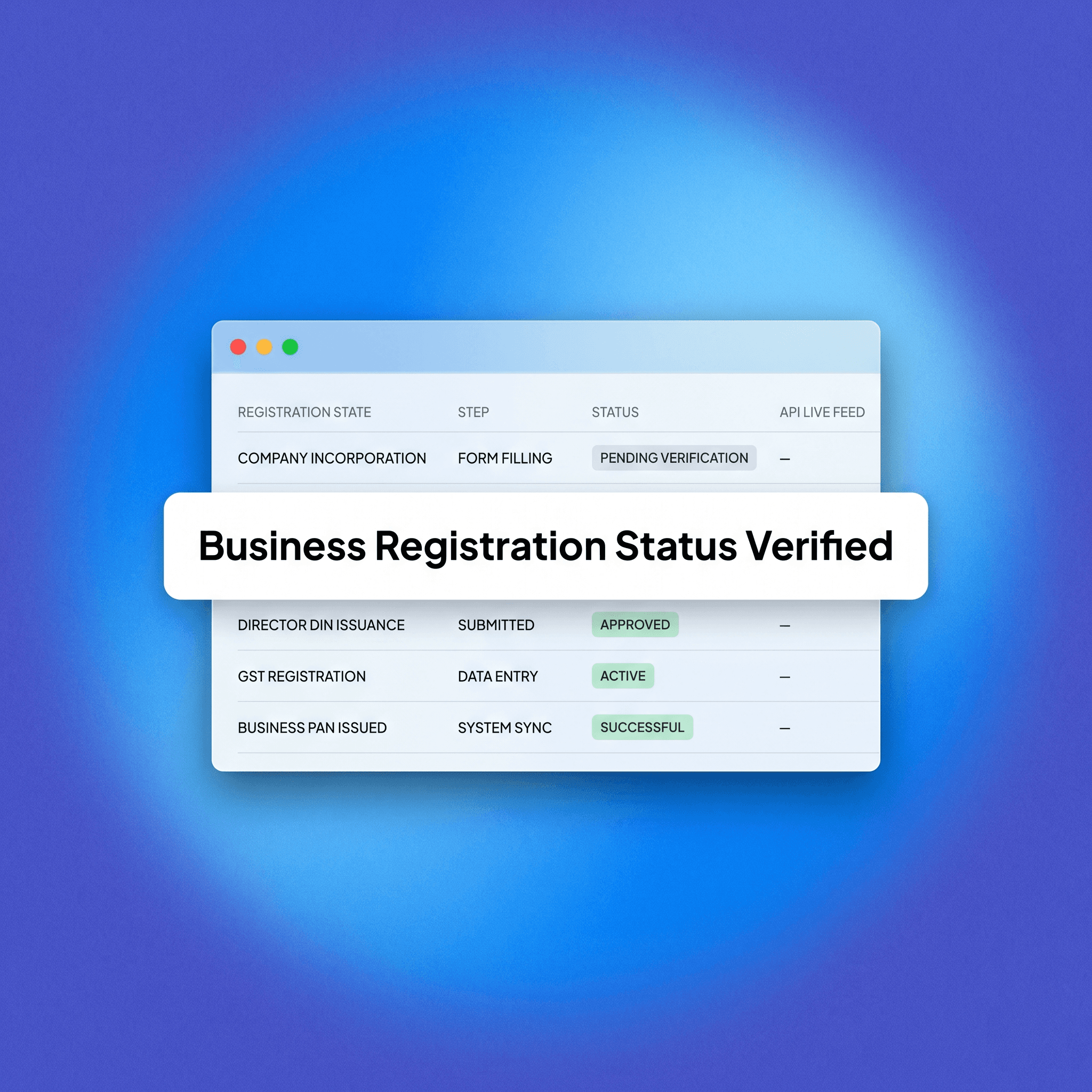
If you're planning to launch a Shopify store in India, there's a hard sequence most first-time founders miss: the legal and compliance layer has to come before the store does — not after. Establishing your entity first creates a foundational architecture that ensures your operational scalability, tax integrity, and legal safety are baked into your business model from the start.
Many entrepreneurs erroneously view Shopify as a sandbox to experiment in, ignoring the fact that commercial transactions in India are strictly regulated by the Ministry of Corporate Affairs and the GST Council. Payment gateways won't activate without a registered business, and attempting to operate in a gray area creates significant administrative friction that will ultimately stall your growth.
A personal bank account will create problems the moment you try to reconcile revenue or file returns, leading to tax department queries that are notoriously difficult to resolve after the fact. Getting this sequence right before you touch Shopify saves weeks of back-and-forth and avoids account suspension risks down the line, ensuring you maintain a clean track record for future scaling.
This guide walks you through the full pre-launch registration process for India-based ecommerce businesses — what to register, in what order, and what you'll need before your Shopify store goes live.
Why Business Registration Matters Before You Open Shopify
Shopify itself will let you build a store without any documentation. That's where many founders get comfortable, assuming they can sort the legal side later. This false sense of security often leads to a frantic, weeks-long delay when a merchant realizes they cannot finalize their gateway setup, effectively trapping their store in a state of pre-launch limbo that discourages potential investors and partners. The friction shows up at the payment layer, where providers require strict verification. Razorpay, PayU, Cashfree, and most Indian payment gateways require business verification documents to activate. Without a registered entity and a GST number, you cannot collect payments legally from Indian customers at scale, as these gateways must adhere to strict KYC norms mandated by the Reserve Bank of India. You also can't issue valid tax invoices — which is a requirement for B2B buyers and increasingly expected by B2C customers who expect transparency and standard tax treatment. Beyond payments, there are practical business reasons to have this in place:
Banking Integrity: Separate business banking protects your personal finances and simplifies reconciliation, which is vital for audit trails.
Gateway Compliance: A registered entity is required to run Shopify Payments or connect a compliant gateway to your store environment.
Tax Efficiency: GST registration allows you to claim input tax credit on your business expenses, lowering your overall operational overhead.
Scaling Capability: A formal entity is needed to sign supplier contracts, lease warehouses, or engage third-party logistics providers who will not work with informal, unregistered setups.
The short version: if you want a Shopify store that can actually take money, ship products, and operate cleanly, you need to be a registered business first.
Step 1 — Choose the Right Business Entity
The entity you register determines your tax structure, liability exposure, and how easy it is to raise capital later. For D2C founders in India, the most common structures are outlined below.
Sole Proprietorship
The simplest structure. No formal registration is required beyond a GST number and a current bank account. You trade under your own name or a business name. There is no legal separation between you and the business, meaning your personal assets are fully exposed to business liabilities. Best for: very early-stage founders testing product-market fit with low transaction volumes and no immediate plans to bring in co-founders or investors. Limitation: unlimited personal liability, harder to open payment gateway accounts, not suitable for scaling.
Partnership Firm
Two or more founders operating under a partnership deed. Registered under the Indian Partnership Act. Similar liability exposure to a proprietorship. Best for: co-founded businesses at the early stage who want a simple structure before formalising. Limitation: still carries personal liability and is less respected by gateways and investors compared to a private limited company.
Limited Liability Partnership (LLP)
Offers limited liability like a company but with simpler compliance requirements. Registered with the Ministry of Corporate Affairs (MCA). Best for: service-oriented businesses, small ecommerce brands that want liability protection without the overhead of a private limited company. Limitation: equity dilution for investors is less straightforward; not the preferred structure if you're planning institutional funding.
Private Limited Company
The gold standard for D2C and ecommerce brands in India. Registered under the Companies Act, 2013. Provides limited liability, is preferred by payment gateways, is required for many logistics and marketplace integrations, and is the standard expected structure if you ever raise venture capital or angel investment. Best for: founders building for scale, planning to raise capital, or running operations with multiple team members. What you'll need: minimum two directors and two shareholders (can be the same individuals), a registered office address, and a Digital Signature Certificate (DSC) for each director. For most founders reading this, a Private Limited Company is the recommended starting point if you have any growth ambition beyond a side project.
Step 2 — Register Your Entity
Once you've chosen your structure, here's how the registration process works for the two most relevant structures.
Sole Proprietorship Registration
There is no single registration act. Instead, you establish existence through:
Banking: A current bank account opened under your business name (requires KYC documents).
Taxation: GST registration (if turnover will exceed ₹20 lakhs; ₹10 lakhs for some states).
MSME: MSME/Udyam registration (optional but useful for government schemes).
Licensing: A Shop and Establishment registration if you have a physical premises.
Timeline: 3–7 working days, primarily driven by GST processing.
Private Limited Company Registration
Handled entirely through the MCA portal (mca.gov.in). The process:
DSC: Apply for a Digital Signature Certificate (DSC) for each director.
DIN: Apply for a Director Identification Number (DIN) — done within the incorporation form.
Naming: Reserve your company name via the RUN service or as part of the SPICe+ form.
Documentation: File the SPICe+ form with the required incorporation documents (MOA, AOA, identity and address proofs).
Approval: Receive your Certificate of Incorporation (COI), PAN, and TAN from the MCA.
You can do this yourself through the MCA portal or work with a CA or company secretary, which most founders prefer for the first incorporation. Timeline: 10–21 working days depending on the accuracy of documentation and MCA processing queues.
Step 3 — Get Your GST Registration
GST registration is mandatory for ecommerce sellers in India regardless of turnover. This is not optional. Under the GST Act, anyone selling through an ecommerce operator (Shopify is classified as one) must register for GST. Documents required for GST registration:
Identity: PAN card of the business or proprietor.
Authorisation: [Aadhaar Redacted] of the authorised signatory.
Proof: Proof of business registration (COI for a company, partnership deed for a firm).
Address: Business address proof (utility bill, rent agreement, or property documents).
Finance: Bank account details (cancelled cheque or bank statement).
Photo: Digital photograph of the authorised signatory.
GST registration is done through the GST portal (gst.gov.in). Once approved, you receive a GSTIN (15-digit number) that you'll use on all tax invoices. Timeline: 7–14 working days after submitting your application with complete documents. Once you have your GSTIN, you can configure it in Shopify under Settings > Taxes > India and issue GST-compliant invoices automatically using a compatible Shopify app.
Step 4 — Open a Business Bank Account
Your Shopify payment gateway will credit earnings to a bank account. This must be a current account in your business name — not a personal savings account. Most Indian banks offer current accounts for businesses. Documents typically required:
Registration: Certificate of Incorporation (for companies) or GST certificate (for proprietorships).
Tax: PAN of the business.
KYC: KYC documents of directors or authorised signatories.
Address: Business address proof.
Corporate: Board resolution authorising account opening (for companies).
Choose a bank with strong API banking support if you plan to automate reconciliation — HDFC, ICICI, RBL, and Yes Bank are commonly used by ecommerce businesses. Timeline: 5–10 working days.
Step 5 — Connect a Compliant Payment Gateway
With registration, GST, and a business bank account in place, you're ready to apply for a payment gateway account. Indian payment gateways Shopify integrates with natively or via apps include Razorpay, Cashfree, PayU, CCAvenue, Paytm for Business, and Instamojo (for lower-volume stores). For gateway application, you'll typically need:
Docs: Business registration documents.
Tax: GSTIN.
Bank: Business bank account and cancelled cheque.
KYC: Directors' or proprietor's KYC.
Web: Website URL (your Shopify store URL, even in preview mode, is usually accepted).
Timeline: 3–7 working days for most gateways once documents are complete. Note: Some gateways will ask for a live, publicly accessible website. You can submit your Shopify store URL with a password-protected store and note that it is in pre-launch phase. Most gateway teams accept this.
The India Shopify Pre-Launch Registration Checklist
Use this checklist as your sequenced action plan before you publish your Shopify store.
Phase 1 — Entity & Identity:
Structure: Choose your business structure (Proprietorship, LLP, or Private Limited).
Security: Apply for DSC and DIN (if incorporating a company).
MCA Filing: File incorporation documents via MCA SPICe+ form.
Finalisation: Receive Certificate of Incorporation, PAN, and TAN.
Phase 2 — Tax Compliance:
GST Application: Apply for GST registration via gst.gov.in.
Credentialing: Receive GSTIN.
Classification: Confirm HSN/SAC codes for your product categories.
Phase 3 — Banking:
Account Opening: Open a current account in the business name.
Linkage: Confirm account is linked to your business PAN.
Phase 4 — Payments & Platform:
Gateway: Apply for payment gateway account (Razorpay, Cashfree, or preferred provider).
Verification: Complete gateway KYC and verification.
Integration: Connect gateway to Shopify.
Config: Configure GST settings in Shopify admin.
Automation: Install a GST-compliant invoice app (e.g., Selloship, Order Printer Pro, or a Shopify-native option).
Phase 5 — Pre-Launch Confirmation:
Auditing: Confirm your business name, address, and GSTIN appear correctly on invoices.
Testing: Test a real transaction end-to-end before launch.
Legal: Ensure your returns and refund policy is compliant and publicly visible on your store.
Common Mistakes in India Shopify Setup (And How to Avoid Them)
Starting on Shopify before getting GST: The store gets built, the product is ready, and then the founder discovers that the payment gateway won't activate without a GSTIN. The delay costs 2–3 weeks minimum. Start GST registration on day one.
Using a personal bank account for the first few months: This seems convenient until you need to reconcile monthly revenue, file GST returns, or show clean financials to a potential investor or logistics partner. Run all business money through a dedicated current account from the start.
Registering as a proprietorship with immediate scale plans: Proprietorships are easy to start but painful to convert. If you're planning to bring on a co-founder, raise capital, or hire employees within 12 months, start as a Private Limited company. The additional setup time is worth it.
Choosing the wrong HSN code for products: HSN codes determine the GST rate applied to your products. An incorrect code can lead to compliance issues during return filing. Cross-check your product categories against the official HSN schedule or confirm with a CA before launch.
Skipping MSME registration: Udyam (MSME) registration is free, quick, and unlocks access to government credit schemes, priority banking products, and reduced bank charges. Most ecommerce founders skip it without realising the benefit.
Trade-Offs to Know Before You Choose a Structure
Choosing structure involves real trade-offs that depend on where you are and where you're going. A Sole Proprietorship is the fastest path to a functional GST number and bank account, but it offers no liability protection and the least credibility with enterprise suppliers and larger payment gateways.
An LLP offers liability protection with lower annual compliance cost than a Private Limited company, but it is not the preferred structure for payment gateways and is structurally awkward if you want to issue ESOPs or raise equity capital.
A Private Limited company has the highest setup cost and compliance overhead, but it is the cleanest structure for scaling — preferred by gateways, logistics providers, investors, and marketplaces. If you're building a real D2C brand, this is almost always the right call. The cost difference between structures at the setup stage is rarely large enough to justify choosing a structure that you'll need to convert in six months.
If you're planning to launch a Shopify store in India, there's a hard sequence most first-time founders miss: the legal and compliance layer has to come before the store does — not after. Establishing your entity first creates a foundational architecture that ensures your operational scalability, tax integrity, and legal safety are baked into your business model from the start.
Many entrepreneurs erroneously view Shopify as a sandbox to experiment in, ignoring the fact that commercial transactions in India are strictly regulated by the Ministry of Corporate Affairs and the GST Council. Payment gateways won't activate without a registered business, and attempting to operate in a gray area creates significant administrative friction that will ultimately stall your growth.
A personal bank account will create problems the moment you try to reconcile revenue or file returns, leading to tax department queries that are notoriously difficult to resolve after the fact. Getting this sequence right before you touch Shopify saves weeks of back-and-forth and avoids account suspension risks down the line, ensuring you maintain a clean track record for future scaling.
This guide walks you through the full pre-launch registration process for India-based ecommerce businesses — what to register, in what order, and what you'll need before your Shopify store goes live.
Why Business Registration Matters Before You Open Shopify
Shopify itself will let you build a store without any documentation. That's where many founders get comfortable, assuming they can sort the legal side later. This false sense of security often leads to a frantic, weeks-long delay when a merchant realizes they cannot finalize their gateway setup, effectively trapping their store in a state of pre-launch limbo that discourages potential investors and partners. The friction shows up at the payment layer, where providers require strict verification. Razorpay, PayU, Cashfree, and most Indian payment gateways require business verification documents to activate. Without a registered entity and a GST number, you cannot collect payments legally from Indian customers at scale, as these gateways must adhere to strict KYC norms mandated by the Reserve Bank of India. You also can't issue valid tax invoices — which is a requirement for B2B buyers and increasingly expected by B2C customers who expect transparency and standard tax treatment. Beyond payments, there are practical business reasons to have this in place:
Banking Integrity: Separate business banking protects your personal finances and simplifies reconciliation, which is vital for audit trails.
Gateway Compliance: A registered entity is required to run Shopify Payments or connect a compliant gateway to your store environment.
Tax Efficiency: GST registration allows you to claim input tax credit on your business expenses, lowering your overall operational overhead.
Scaling Capability: A formal entity is needed to sign supplier contracts, lease warehouses, or engage third-party logistics providers who will not work with informal, unregistered setups.
The short version: if you want a Shopify store that can actually take money, ship products, and operate cleanly, you need to be a registered business first.
Step 1 — Choose the Right Business Entity
The entity you register determines your tax structure, liability exposure, and how easy it is to raise capital later. For D2C founders in India, the most common structures are outlined below.
Sole Proprietorship
The simplest structure. No formal registration is required beyond a GST number and a current bank account. You trade under your own name or a business name. There is no legal separation between you and the business, meaning your personal assets are fully exposed to business liabilities. Best for: very early-stage founders testing product-market fit with low transaction volumes and no immediate plans to bring in co-founders or investors. Limitation: unlimited personal liability, harder to open payment gateway accounts, not suitable for scaling.
Partnership Firm
Two or more founders operating under a partnership deed. Registered under the Indian Partnership Act. Similar liability exposure to a proprietorship. Best for: co-founded businesses at the early stage who want a simple structure before formalising. Limitation: still carries personal liability and is less respected by gateways and investors compared to a private limited company.
Limited Liability Partnership (LLP)
Offers limited liability like a company but with simpler compliance requirements. Registered with the Ministry of Corporate Affairs (MCA). Best for: service-oriented businesses, small ecommerce brands that want liability protection without the overhead of a private limited company. Limitation: equity dilution for investors is less straightforward; not the preferred structure if you're planning institutional funding.
Private Limited Company
The gold standard for D2C and ecommerce brands in India. Registered under the Companies Act, 2013. Provides limited liability, is preferred by payment gateways, is required for many logistics and marketplace integrations, and is the standard expected structure if you ever raise venture capital or angel investment. Best for: founders building for scale, planning to raise capital, or running operations with multiple team members. What you'll need: minimum two directors and two shareholders (can be the same individuals), a registered office address, and a Digital Signature Certificate (DSC) for each director. For most founders reading this, a Private Limited Company is the recommended starting point if you have any growth ambition beyond a side project.
Step 2 — Register Your Entity
Once you've chosen your structure, here's how the registration process works for the two most relevant structures.
Sole Proprietorship Registration
There is no single registration act. Instead, you establish existence through:
Banking: A current bank account opened under your business name (requires KYC documents).
Taxation: GST registration (if turnover will exceed ₹20 lakhs; ₹10 lakhs for some states).
MSME: MSME/Udyam registration (optional but useful for government schemes).
Licensing: A Shop and Establishment registration if you have a physical premises.
Timeline: 3–7 working days, primarily driven by GST processing.
Private Limited Company Registration
Handled entirely through the MCA portal (mca.gov.in). The process:
DSC: Apply for a Digital Signature Certificate (DSC) for each director.
DIN: Apply for a Director Identification Number (DIN) — done within the incorporation form.
Naming: Reserve your company name via the RUN service or as part of the SPICe+ form.
Documentation: File the SPICe+ form with the required incorporation documents (MOA, AOA, identity and address proofs).
Approval: Receive your Certificate of Incorporation (COI), PAN, and TAN from the MCA.
You can do this yourself through the MCA portal or work with a CA or company secretary, which most founders prefer for the first incorporation. Timeline: 10–21 working days depending on the accuracy of documentation and MCA processing queues.
Step 3 — Get Your GST Registration
GST registration is mandatory for ecommerce sellers in India regardless of turnover. This is not optional. Under the GST Act, anyone selling through an ecommerce operator (Shopify is classified as one) must register for GST. Documents required for GST registration:
Identity: PAN card of the business or proprietor.
Authorisation: [Aadhaar Redacted] of the authorised signatory.
Proof: Proof of business registration (COI for a company, partnership deed for a firm).
Address: Business address proof (utility bill, rent agreement, or property documents).
Finance: Bank account details (cancelled cheque or bank statement).
Photo: Digital photograph of the authorised signatory.
GST registration is done through the GST portal (gst.gov.in). Once approved, you receive a GSTIN (15-digit number) that you'll use on all tax invoices. Timeline: 7–14 working days after submitting your application with complete documents. Once you have your GSTIN, you can configure it in Shopify under Settings > Taxes > India and issue GST-compliant invoices automatically using a compatible Shopify app.
Step 4 — Open a Business Bank Account
Your Shopify payment gateway will credit earnings to a bank account. This must be a current account in your business name — not a personal savings account. Most Indian banks offer current accounts for businesses. Documents typically required:
Registration: Certificate of Incorporation (for companies) or GST certificate (for proprietorships).
Tax: PAN of the business.
KYC: KYC documents of directors or authorised signatories.
Address: Business address proof.
Corporate: Board resolution authorising account opening (for companies).
Choose a bank with strong API banking support if you plan to automate reconciliation — HDFC, ICICI, RBL, and Yes Bank are commonly used by ecommerce businesses. Timeline: 5–10 working days.
Step 5 — Connect a Compliant Payment Gateway
With registration, GST, and a business bank account in place, you're ready to apply for a payment gateway account. Indian payment gateways Shopify integrates with natively or via apps include Razorpay, Cashfree, PayU, CCAvenue, Paytm for Business, and Instamojo (for lower-volume stores). For gateway application, you'll typically need:
Docs: Business registration documents.
Tax: GSTIN.
Bank: Business bank account and cancelled cheque.
KYC: Directors' or proprietor's KYC.
Web: Website URL (your Shopify store URL, even in preview mode, is usually accepted).
Timeline: 3–7 working days for most gateways once documents are complete. Note: Some gateways will ask for a live, publicly accessible website. You can submit your Shopify store URL with a password-protected store and note that it is in pre-launch phase. Most gateway teams accept this.
The India Shopify Pre-Launch Registration Checklist
Use this checklist as your sequenced action plan before you publish your Shopify store.
Phase 1 — Entity & Identity:
Structure: Choose your business structure (Proprietorship, LLP, or Private Limited).
Security: Apply for DSC and DIN (if incorporating a company).
MCA Filing: File incorporation documents via MCA SPICe+ form.
Finalisation: Receive Certificate of Incorporation, PAN, and TAN.
Phase 2 — Tax Compliance:
GST Application: Apply for GST registration via gst.gov.in.
Credentialing: Receive GSTIN.
Classification: Confirm HSN/SAC codes for your product categories.
Phase 3 — Banking:
Account Opening: Open a current account in the business name.
Linkage: Confirm account is linked to your business PAN.
Phase 4 — Payments & Platform:
Gateway: Apply for payment gateway account (Razorpay, Cashfree, or preferred provider).
Verification: Complete gateway KYC and verification.
Integration: Connect gateway to Shopify.
Config: Configure GST settings in Shopify admin.
Automation: Install a GST-compliant invoice app (e.g., Selloship, Order Printer Pro, or a Shopify-native option).
Phase 5 — Pre-Launch Confirmation:
Auditing: Confirm your business name, address, and GSTIN appear correctly on invoices.
Testing: Test a real transaction end-to-end before launch.
Legal: Ensure your returns and refund policy is compliant and publicly visible on your store.
Common Mistakes in India Shopify Setup (And How to Avoid Them)
Starting on Shopify before getting GST: The store gets built, the product is ready, and then the founder discovers that the payment gateway won't activate without a GSTIN. The delay costs 2–3 weeks minimum. Start GST registration on day one.
Using a personal bank account for the first few months: This seems convenient until you need to reconcile monthly revenue, file GST returns, or show clean financials to a potential investor or logistics partner. Run all business money through a dedicated current account from the start.
Registering as a proprietorship with immediate scale plans: Proprietorships are easy to start but painful to convert. If you're planning to bring on a co-founder, raise capital, or hire employees within 12 months, start as a Private Limited company. The additional setup time is worth it.
Choosing the wrong HSN code for products: HSN codes determine the GST rate applied to your products. An incorrect code can lead to compliance issues during return filing. Cross-check your product categories against the official HSN schedule or confirm with a CA before launch.
Skipping MSME registration: Udyam (MSME) registration is free, quick, and unlocks access to government credit schemes, priority banking products, and reduced bank charges. Most ecommerce founders skip it without realising the benefit.
Trade-Offs to Know Before You Choose a Structure
Choosing structure involves real trade-offs that depend on where you are and where you're going. A Sole Proprietorship is the fastest path to a functional GST number and bank account, but it offers no liability protection and the least credibility with enterprise suppliers and larger payment gateways.
An LLP offers liability protection with lower annual compliance cost than a Private Limited company, but it is not the preferred structure for payment gateways and is structurally awkward if you want to issue ESOPs or raise equity capital.
A Private Limited company has the highest setup cost and compliance overhead, but it is the cleanest structure for scaling — preferred by gateways, logistics providers, investors, and marketplaces. If you're building a real D2C brand, this is almost always the right call. The cost difference between structures at the setup stage is rarely large enough to justify choosing a structure that you'll need to convert in six months.
FAQ
What documents do I need to register a business in India for Shopify?
The core documents are: your PAN card, Aadhaar, a business address proof, and proof of entity registration (Certificate of Incorporation for a company, GST certificate for a proprietorship). For payment gateway applications, you'll also need a cancelled cheque from your business current account and your GSTIN.
Is GST registration mandatory for a Shopify store in India?
Yes. Under Indian GST law, anyone selling through an ecommerce operator — which includes Shopify — is required to register for GST regardless of annual turnover. This applies even if you are a proprietor selling low volumes.
Can I run a Shopify store as a sole proprietor in India?
Yes, and many early-stage founders do. A proprietorship with GST registration and a business current account is enough to activate payment gateways and run a functional store. However, it offers no limited liability protection and may face friction with some gateways and suppliers that prefer registered companies.
How long does business registration in India take before I can launch Shopify?
If registering as a proprietorship, the effective timeline is driven by GST approval — typically 10–21 days total including banking. For a Private Limited company, expect 3–5 weeks from starting the process to having your GSTIN and a current account ready. Plan your Shopify launch date around the registration timeline, not the other way around.
Which payment gateway should I use for Shopify in India?
Razorpay and Cashfree are the most commonly used by D2C brands on Shopify in India. Both offer clean Shopify integration, strong dashboard tooling, and competitive processing fees. PayU is a solid alternative. Instamojo works for very low-volume stores but has limitations at scale. Your choice should be driven by the gateway's Shopify plugin quality, settlement timelines, and support responsiveness.
Do I need a separate GST registration for each state I sell in?
No, for most ecommerce sellers. A single GST registration in your home state covers interstate sales. You only need state-specific GST registration if you have a physical warehouse, office, or inventory stored in that state — which triggers a place of supply obligation in that state.
Can I use a foreign payment gateway like Stripe on a Shopify store in India?
Stripe is available in India but with limitations. It does not support all Indian payment methods (UPI, net banking, and certain wallets may be restricted or require additional integration). For a store primarily targeting Indian customers, a domestic gateway like Razorpay or Cashfree is more practical and feature-complete for the Indian payment ecosystem.
insights
Explore more on AI, Design and Growth

SEO
Google AI & Local SEO: Rank in Both (2026 Guide)
Learn how to optimize content for Google AI search and local SEO simultaneously to rank in AI Overviews, maps, and organic search results.

SEO
Semantic Content Clusters for SEO & AEO (Templates)
Learn how to build semantic content clusters for SEO and AEO. Includes practical templates, internal linking structures, and examples for ranking in AI search.

SEO
How Google AI Search Works: RankBrain to Gemini (2026)
Discover how Google’s AI search evolved from RankBrain to Gemini and what it means for SEO, AI search results, and ranking strategies in 2026.
SEO
Google AI & Local SEO: Rank in Both (2026 Guide)
Learn how to optimize content for Google AI search and local SEO simultaneously to rank in AI Overviews, maps, and organic search results.
SEO
Semantic Content Clusters for SEO & AEO (Templates)
Learn how to build semantic content clusters for SEO and AEO. Includes practical templates, internal linking structures, and examples for ranking in AI search.
get in touch
Ready to Grow From Day One?
Strategy, execution, and digital experiences designed to move together. Fill out the form below and our team will contact you shortly.
get in touch
Ready to Grow From Day One?
Strategy, execution, and digital experiences designed to move together. Fill out the form below and our team will contact you shortly.
get in touch
Ready to Grow From Day One?
Strategy, execution, and digital experiences designed to move together. Fill out the form below and our team will contact you shortly.
Services
We'd love to hear from you.
Tell us what you're building and where you need support.
© 2026 projectsupply AI, Data and Digital Engineering
Company. Pune, India. All rights reserved.
Part of Tangle
Services
We'd love to hear from you.
Tell us what you're building and where you need support.
© 2026 projectsupply AI, Data and Digital Engineering
Company. Pune, India. All rights reserved.
Part of Tangle
Services
We'd love to hear from you.
Tell us what you're building and where you need support.
© 2026 projectsupply AI, Data and Digital Engineering
Company. Pune, India. All rights reserved.
Part of Tangle