

SEO & Search
City-Specific GBP Tips: How to Rank in Pune, Mumbai, Delhi & Beyond
City-Specific GBP Tips: How to Rank in Pune, Mumbai, Delhi & Beyond
City-Specific GBP Tips: How to Rank in Pune, Mumbai, Delhi & Beyond — Local Google Business Tips Tailored to India's Major Markets A city-by-city GBP optimization guide for Indian businesses showing why a one-size-fits-all local search strategy fails across different metros. Covers Mumbai's hyperlocal micro-market fragmentation and trilingual content advantage, Pune's academic calendar alignment and tech corridor timing window, Delhi's regional fragmentation and review-heavy search behavior, tier-2 city strategies for Jaipur and Lucknow, and universal GBP India tips on photo recency, response time, and post consistency that apply across every market. Core message — the GBP foundation is universal, but timing, language, locality targeting, and seasonal hooks must be city-specific to win consistently in India's major markets.
City-Specific GBP Tips: How to Rank in Pune, Mumbai, Delhi & Beyond — Local Google Business Tips Tailored to India's Major Markets A city-by-city GBP optimization guide for Indian businesses showing why a one-size-fits-all local search strategy fails across different metros. Covers Mumbai's hyperlocal micro-market fragmentation and trilingual content advantage, Pune's academic calendar alignment and tech corridor timing window, Delhi's regional fragmentation and review-heavy search behavior, tier-2 city strategies for Jaipur and Lucknow, and universal GBP India tips on photo recency, response time, and post consistency that apply across every market. Core message — the GBP foundation is universal, but timing, language, locality targeting, and seasonal hooks must be city-specific to win consistently in India's major markets.
08 min read
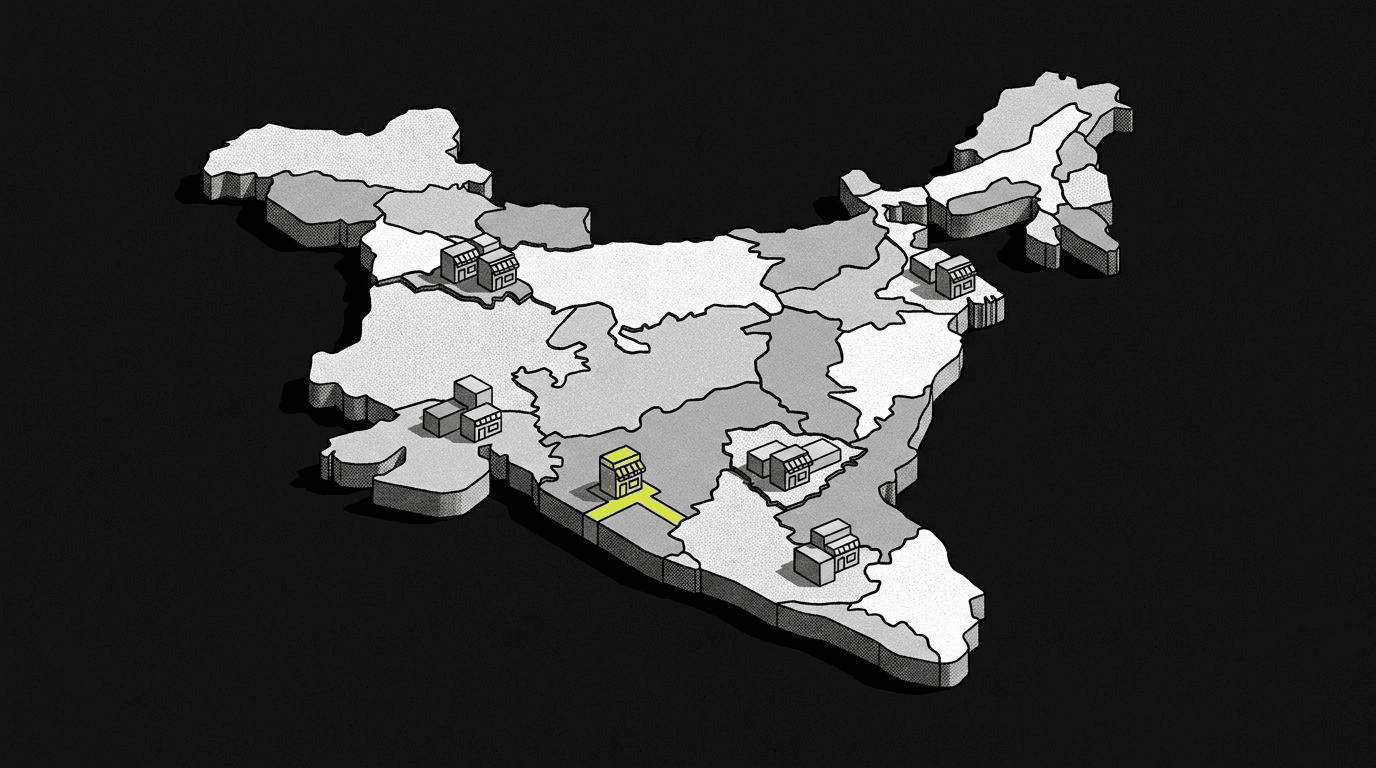
City-Specific GBP Tips: How to Rank in Pune, Mumbai, Delhi & Beyond
(Local Google Business Tips Tailored to India's Major Markets)
Why Your GBP Strategy Can't Be One-Size-Fits-All in India
If your business has locations across Indian metros, you've likely noticed something frustrating: what works in Pune doesn't always work in Mumbai. Your Delhi location has different review dynamics than Bangalore. And a strategy that drives foot traffic in one city seems to fall flat entirely in another.
This isn't a coincidence — it's by design. Google's local algorithm responds to regional search behavior, and search behavior in India varies significantly across cities. Competition density, language preferences, device usage patterns, and even local seasonal cycles all influence how GBP profiles perform.
This guide breaks down exactly what local Google Business tips for Pune differ from Mumbai GBP ranking strategies, how Delhi operates as a completely different beast, and what universal GBP India tips apply across every market — so you can stop guessing and start optimizing with precision.
💡 Key Principle: The foundation of GBP optimization is universal. But the layer on top — timing, language, locality focus, seasonal hooks — must be city-specific to win consistently.
Table 1: City Snapshot — How India's Major Markets Compare
City | Competition Level | Mobile Search % | Review Importance | Key Differentiator |
Mumbai | 🔴 Extreme | 78% | ⚡ Very High | Hyperlocal + Trilingual content |
Delhi | 🔴 Very High | 62% | 🔴 Highest (84% read 3+ reviews) | Regional fragmentation + seasonal shifts |
Pune | 🟡 High | 59% | 🟡 High | Academic calendar + startup corridors |
Bangalore | 🟡 High | ~65% | 🟡 High | Tech audience + quality over volume |
Jaipur | 🟢 Moderate | ~55% | 🟢 Moderate | Tourism proximity + heritage angles |
Lucknow | 🟢 Low-Med | ~52% | 🟢 Moderate | Trust signals + established categories |
Mumbai GBP Ranking: Winning in India's Most Competitive Market
Mumbai is in a category of its own. With over 12 million residents compressed into 603 square kilometers, the competition for local search visibility is more intense here than anywhere else in India. Getting into the local pack in Mumbai isn't just about having a complete profile — it's about having a hyperlocal, mobile-first, multilingual strategy.
Mumbai Is a City of Micro-Markets
The most important thing to understand about Mumbai GBP ranking is that the city doesn't function as one market — it functions as dozens of them. A salon ranking well in Andheri can be completely invisible to searchers in Bandra, despite the two neighborhoods being just 8 kilometers apart.
This hyperlocal fragmentation means businesses must optimize for specific locality names rather than broad city-wide terms. Targeting 'best cafe in Mumbai' is far less effective than targeting 'cafe in Bandra West' or 'coffee shop near Andheri station.'
Mobile-First Is Non-Negotiable
Mumbai leads all Indian metros in mobile search share. Data from local businesses shows 78% of GBP views originate from mobile devices in Mumbai — compared to 62% in Delhi and 59% in Pune. That gap has real implications for how your profile needs to be set up.
What this means in practice: Tap-to-call buttons must be prominent. Photos must load quickly. Directions must be precise. Any friction in the mobile experience costs you clicks — and in Mumbai's competitive landscape, those clicks matter.
Language Mixing Is a Ranking Opportunity
Mumbai's search queries frequently blend English, Hindi, and Marathi within a single search. Businesses that incorporate this trilingual approach in their GBP descriptions and posts see 34% higher engagement rates than English-only profiles. If your competitors are only posting in English, this is one of the fastest wins available to you in this market.
📊 Mumbai Stat: 78% of GBP views come from mobile (vs. 59% in Pune). Trilingual profiles (English + Hindi + Marathi) see 34% higher engagement than English-only profiles.
Table 2: Mumbai GBP Optimization Matrix
Optimization Area | Mumbai-Specific Insight | Action Step |
Locality Targeting | Andheri & Bandra are separate micro-markets despite 8 km proximity | Optimize for specific locality names, not 'Mumbai' |
Mobile Experience | 78% of GBP views come from mobile — highest in India | Prioritize tap-to-call, fast photos, precise directions |
Language Strategy | Trilingual queries (English + Hindi + Marathi) = 34% higher engagement | Add Marathi/Hindi phrases in descriptions and posts |
Peak Search Hours | Higher activity during commute hours (8–10 AM, 6–9 PM) | Schedule posts and offers around commute windows |
Photo Strategy | Photos uploaded in last 30 days get 42% more actions | Refresh at least 4–5 photos per month |
Local Google Business Tips for Pune: The Academic & Startup Advantage
Pune's GBP landscape is fundamentally different from Mumbai's. Competition is high, but not overwhelming — and the city offers unique optimization angles that many businesses overlook entirely.
Align With the Academic Calendar
Pune is home to 50+ colleges and universities, and this shapes search behavior in ways that are invisible to businesses following traditional retail optimization calendars. Student-heavy areas like Karve Nagar and Kothrud see search volume spikes of 40–60% during admission seasons and semester starts.
Businesses serving these neighborhoods benefit from posting schedules built around the academic year — not around Diwali or Christmas. A cafe near a college campus that posts semester-start offers will consistently outperform one that posts generic content year-round.
Pune Searchers Want the Details
Pune users show a stronger preference for complete business information than most other metros. Profiles with full attribute selections receive 2.3 times more click-throughs than partially filled profiles. That means parking availability, outdoor seating, WIFI accessibility, and every other applicable attribute needs to be filled in — not skipped.
The Tech Corridor Timing Window
In Hinjewadi, Baner, and Wakad — Pune's primary startup and IT corridors — search activity peaks sharply on weekdays between 10 AM and 4 PM, showing 45% more searches than evening hours. This is the inverse of what most consumer-facing businesses expect.
For businesses targeting this segment: Post during business hours, target professional and B2B-adjacent keywords, and tailor offers around weekday lunch and coffee breaks rather than evenings and weekends.
📊 Pune Stat: Complete GBP profiles in Pune get 2.3x more click-throughs. Tech corridor searches peak 10 AM–4 PM on weekdays — 45% higher than evenings.
Table 3: Pune GBP Optimization Matrix
Optimization Area | Pune-Specific Insight | Action Step |
Academic Seasonality | Student areas see 40–60% search spikes during admissions & semester starts | Align GBP posts with academic calendar, not retail calendar |
Profile Completeness | Complete attribute profiles get 2.3x more click-throughs than partial ones | Fill parking, WiFi, outdoor seating — every attribute counts |
Tech Corridor Timing | Hinjewadi & Baner see 45% more searches on weekdays, 10 AM–4 PM | Post during business hours; target B2B keywords in tech zones |
Language Mix | English dominates in tech areas; Marathi rises in Shivajinagar & Sadashiv Peth | Create area-specific content with the right language mix |
Audience Segments | 50+ colleges create a student segment with distinct search behavior | Create posts/offers targeting student needs, discounts, timing |
Delhi City Local SEO: Managing a Market That's Really Three Markets
Delhi presents a challenge unlike any other Indian metro. It's not one market — it's a collection of distinct regional markets that happen to share a city name. South Delhi, West Delhi, and East Delhi operate with minimal search overlap, and a strategy that works in one can be completely ineffective in another.
One City, Multiple GBP Strategies
A restaurant chain operating in both Hauz Khas and Laxmi Nagar is essentially operating in two different worlds. Their Hauz Khas branch requires content focused on experiential dining, ambiance keywords, and premium positioning. Their Laxmi Nagar branch needs price-conscious messaging, family-friendly attributes, and accessibility information to rank effectively.
The core mistake Delhi businesses make is applying a single GBP strategy across locations in different parts of the city. Each location needs its own content voice, post strategy, and attribute emphasis.
Reviews Matter More in Delhi Than Anywhere Else
Delhi searchers are the most research-intensive of any major metro. 84% of Delhi users read at least three reviews before visiting a business — compared to 71% in Mumbai. This makes review management not just a ranking factor but a conversion factor in this market.
Implication: Every review deserves a personalized response. Proactively building a review base that is detailed and service-specific (not just 'great place!') is more important in Delhi than anywhere else in India.
Seasonal Search Swings Are Extreme
Delhi's weather patterns create some of the most pronounced seasonal search shifts in the country. Indoor businesses see 52% more GBP views during summer (April–June) and peak winter (December–January). Outdoor venues see the inverse pattern. Smart businesses adjust their photos, posts, and special offers to match these cycles rather than running evergreen content year-round.
Metro Station Proximity Is a Ranking Lever
Delhi's metro network is deeply integrated into how residents navigate the city. Businesses near metro stations that mention proximity in their descriptions and select relevant attributes see 37% more foot traffic from GBP discoveries. Adding the nearest metro station name in your business description is one of the simplest, highest-impact Delhi-specific optimizations available.
📊 Delhi Stat: 84% of searchers read 3+ reviews before visiting (highest in India). Metro proximity mentions drive 37% more GBP-sourced foot traffic.
Table 4: Delhi GBP Optimization Matrix
Optimization Area | Delhi-Specific Insight | Action Step |
Regional Fragmentation | South, West & East Delhi are entirely separate markets with minimal overlap | Treat each Delhi location as a standalone GBP with unique content |
Review Behaviour | 84% of Delhi searchers read 3+ reviews before visiting — highest in India | Respond to every review; actively build specific, detailed reviews |
Seasonal Patterns | Indoor businesses: +52% views in Apr–Jun & Dec–Jan; outdoor = inverse | Adjust photos, posts & offers to match seasonal demand cycles |
Metro Proximity | Businesses near metro stations mentioning proximity get 37% more foot traffic | Add metro station names in descriptions and posts |
Messaging Strategy | Hauz Khas needs experiential keywords; Laxmi Nagar needs value/family messaging | Tailor GBP description and posts per neighbourhood identity |
GBP India Tips That Work Across Every City
Before applying city-specific strategies, these universal principles need to be in place. They form the baseline that everything else is built on — and they deliver results whether your business operates in Bangalore's tech parks, Chennai's commercial districts, or Indore's high street.
Recency Signals Are Underestimated
Profiles with photos uploaded within the last 30 days receive 42% more customer actions than those with outdated images. This holds true across every market in India. Monthly photo refreshes are not a nice-to-have — they're a consistent ranking input that most businesses ignore.
Response Time Affects Ranking
Businesses that respond to GBP messages within one hour maintain better local visibility than those taking 24+ hours to reply. A Mumbai accounting firm that reduced its response time from 12 hours to 45 minutes saw profile views increase 28% within six weeks. The pattern repeats across cities — speed of response is a signal Google measures.
Post Consistency Beats Post Quality
Businesses publishing at least three times per week maintain 63% higher engagement rates than monthly posters. The content matters less than the consistency. A Pune gym posting workout tips, a Delhi bookstore sharing reading lists, and a Bangalore cafe highlighting seasonal menus all benefit equally from showing up regularly.
Quarterly Attribute Audits Protect Your Rankings
A retail chain with 18 locations across five Indian cities found that quarterly attribute audits — checking and correcting business hours, payment methods, services listed — reduced customer complaints by 31% while improving average rankings. When business information changes and GBP doesn't reflect it, the platform penalizes you for the mismatch.
Table 5: Universal GBP Best Practices — With Data
Best Practice | Data Point | Applies To | Priority |
Upload fresh photos monthly | Photos < 30 days old = 42% more customer actions | All cities | 🔴 Critical |
Respond within 1 hour to messages | Mumbai firm: +28% profile views after cutting response from 12 hrs to 45 mins | All cities | 🔴 Critical |
Post at least 3x per week | 3x/week = 63% higher engagement than monthly posting | All cities | 🟡 High |
Quarterly attribute audits | 18-location chain: 31% fewer complaints + improved avg rankings | All cities | 🟡 High |
Use direction request rate (8–12%) | Most reliable cross-city conversion metric; consistent across markets | All cities | 🟢 Ongoing |
Align language with locality | Trilingual GBPs in Mumbai show 34% higher engagement | Mumbai, Pune, Delhi | 🔴 Critical |
Tier-2 Cities: Jaipur, Lucknow & Beyond
Businesses in tier-2 Indian cities operate under entirely different dynamics. Lower competition means ranking opportunities exist with less aggressive effort — but smaller search volumes require a different approach to what you're targeting and how broadly you cast your net.
Jaipur: Tourism Is the Multiplier
Jaipur businesses have an advantage no metro can replicate: a massive influx of tourist searchers who aren't local customers but represent high-intent visits. Profiles that include heritage site proximity, tourist-friendly attributes, and multilingual descriptions capture significant visitor traffic that most local-only strategies miss entirely.
A restaurant near Hawa Mahal that added heritage-adjacent attributes and tourist-specific information saw tourist-driven GBP traffic increase 89% compared to its previous approach.
Lucknow: Trust Is the Currency
Lucknow's market shows a strong preference for established businesses over newer entrants. Profiles showing 5+ years of operation and long-term customer reviews significantly outperform newer businesses — even those with better products or services. For new businesses in Lucknow, emphasizing owner heritage, family business history, and connections to established local institutions is not optional; it's competitive strategy.
Important note: Modern service categories like coworking spaces or cloud kitchens face limited search volume in Lucknow. Businesses in these newer categories need supplementary visibility channels beyond GBP alone.
Table 6: Tier-2 City GBP Strategy Guide
City | Key Opportunity | Winning Strategy | Data Point |
Jaipur | Tourist + local hybrid audience | Heritage proximity, multilingual attributes, tourist-friendly tags | +89% tourist traffic for optimized profiles near Hawa Mahal |
Lucknow | Established trust wins over novelty | Emphasize years in operation, owner heritage, community ties | New categories (e.g. cloud kitchens) need supplementary visibility strategies |
Other Tier-2 | Lower competition = faster ranking wins | Broad keyword targeting with strong NAP consistency | Lower search volume requires wider net than metros |
Measuring GBP Performance Across Different Markets
Here's a mistake many multi-location businesses make: they apply the same performance benchmarks across every city. A profile generating 500 monthly views in Mumbai is performing very differently than one generating 500 views in Pune — even though the number looks identical.
Views Are City-Relative
Mumbai profiles averaging 500+ monthly views typically rank in the top 10% for their category. The same view count in Pune might place a business only in the top 30%. Reading view counts without city context leads to false confidence — or unnecessary alarm.
Direction Request Rate Is the Universal Metric
The most reliable cross-city performance metric is direction request rate: the percentage of profile views that result in a direction request. Businesses generating direction requests from 8–12% of profile views demonstrate strong local relevance regardless of city or total view volume. This ratio remains consistent whether you're operating in Delhi's Connaught Place or Indore's commercial districts.
Conversion Quality Over Vanity Metrics
A Bangalore software company discovered their GBP generated fewer views than competitors — but produced 3.2 times more qualified leads. They had optimized for service-specific keywords and detailed descriptions rather than chasing visibility at all costs. In competitive markets, this kind of precision pays more than broad reach.
Align Staffing With City-Specific Call Patterns
Call volume patterns differ meaningfully by city. Mumbai businesses receive the highest call volumes during commute hours. Pune sees a clear evening peak after 7 PM. Delhi shows a bimodal pattern with both morning and evening spikes. If your team isn't staffed to respond during your city's peak call windows, you're losing the conversions your GBP is generating.
Table 7: GBP Performance Benchmarks by City
City | Top 10% Monthly Views | Good Direction Request Rate | Call Peak Hours | Benchmark Difficulty |
Mumbai | 500+ views | 8–12% of profile views | 8–10 AM, 6–9 PM | 🔴 Hard |
Delhi | 400+ views | 8–12% of profile views | Bimodal: AM + PM | 🔴 Hard |
Pune | ~150–200 views (top 30%) | 8–12% of profile views | After 7 PM peak | 🟡 Medium |
Bangalore | 300+ views | 8–12% of profile views | Lunch + evening | 🟡 Medium |
Jaipur | 80–120 views | 8–12% of profile views | Morning + tourist hrs | 🟢 Lower |
Lucknow | 60–100 views | 8–12% of profile views | Afternoon peak | 🟢 Lower |
The Right GBP Strategy Depends on Which City You're In
Effective GBP optimization in India is not a single strategy applied everywhere. Pune's academic market, Mumbai's hyperlocal micro-markets, Delhi's regional fragmentation, and Jaipur's tourism overlay all require different approaches to achieve consistent local search visibility.
The businesses seeing the best results across multiple cities combine a strong universal foundation — photo recency, fast response times, posting consistency, clean attribute data — with city-specific adaptations in language, timing, seasonal alignment, and locality targeting.
The practical starting point is an audit: compare your current GBP performance against city-specific benchmarks, identify where your approach aligns with or diverges from local user behavior, and prioritize the gaps that will move your rankings the most. In most cases, the highest-impact changes are simpler than you'd expect — and city-specific insights are what reveal them.
🚀 Ready to optimize? Start by auditing your GBP performance against the city-specific benchmarks in Table 7. Even one targeted change — like adding locality names or aligning your posting schedule with local search peaks — can drive measurable ranking improvements within 4–6 weeks.
City-Specific GBP Tips: How to Rank in Pune, Mumbai, Delhi & Beyond
(Local Google Business Tips Tailored to India's Major Markets)
Why Your GBP Strategy Can't Be One-Size-Fits-All in India
If your business has locations across Indian metros, you've likely noticed something frustrating: what works in Pune doesn't always work in Mumbai. Your Delhi location has different review dynamics than Bangalore. And a strategy that drives foot traffic in one city seems to fall flat entirely in another.
This isn't a coincidence — it's by design. Google's local algorithm responds to regional search behavior, and search behavior in India varies significantly across cities. Competition density, language preferences, device usage patterns, and even local seasonal cycles all influence how GBP profiles perform.
This guide breaks down exactly what local Google Business tips for Pune differ from Mumbai GBP ranking strategies, how Delhi operates as a completely different beast, and what universal GBP India tips apply across every market — so you can stop guessing and start optimizing with precision.
💡 Key Principle: The foundation of GBP optimization is universal. But the layer on top — timing, language, locality focus, seasonal hooks — must be city-specific to win consistently.
Table 1: City Snapshot — How India's Major Markets Compare
City | Competition Level | Mobile Search % | Review Importance | Key Differentiator |
Mumbai | 🔴 Extreme | 78% | ⚡ Very High | Hyperlocal + Trilingual content |
Delhi | 🔴 Very High | 62% | 🔴 Highest (84% read 3+ reviews) | Regional fragmentation + seasonal shifts |
Pune | 🟡 High | 59% | 🟡 High | Academic calendar + startup corridors |
Bangalore | 🟡 High | ~65% | 🟡 High | Tech audience + quality over volume |
Jaipur | 🟢 Moderate | ~55% | 🟢 Moderate | Tourism proximity + heritage angles |
Lucknow | 🟢 Low-Med | ~52% | 🟢 Moderate | Trust signals + established categories |
Mumbai GBP Ranking: Winning in India's Most Competitive Market
Mumbai is in a category of its own. With over 12 million residents compressed into 603 square kilometers, the competition for local search visibility is more intense here than anywhere else in India. Getting into the local pack in Mumbai isn't just about having a complete profile — it's about having a hyperlocal, mobile-first, multilingual strategy.
Mumbai Is a City of Micro-Markets
The most important thing to understand about Mumbai GBP ranking is that the city doesn't function as one market — it functions as dozens of them. A salon ranking well in Andheri can be completely invisible to searchers in Bandra, despite the two neighborhoods being just 8 kilometers apart.
This hyperlocal fragmentation means businesses must optimize for specific locality names rather than broad city-wide terms. Targeting 'best cafe in Mumbai' is far less effective than targeting 'cafe in Bandra West' or 'coffee shop near Andheri station.'
Mobile-First Is Non-Negotiable
Mumbai leads all Indian metros in mobile search share. Data from local businesses shows 78% of GBP views originate from mobile devices in Mumbai — compared to 62% in Delhi and 59% in Pune. That gap has real implications for how your profile needs to be set up.
What this means in practice: Tap-to-call buttons must be prominent. Photos must load quickly. Directions must be precise. Any friction in the mobile experience costs you clicks — and in Mumbai's competitive landscape, those clicks matter.
Language Mixing Is a Ranking Opportunity
Mumbai's search queries frequently blend English, Hindi, and Marathi within a single search. Businesses that incorporate this trilingual approach in their GBP descriptions and posts see 34% higher engagement rates than English-only profiles. If your competitors are only posting in English, this is one of the fastest wins available to you in this market.
📊 Mumbai Stat: 78% of GBP views come from mobile (vs. 59% in Pune). Trilingual profiles (English + Hindi + Marathi) see 34% higher engagement than English-only profiles.
Table 2: Mumbai GBP Optimization Matrix
Optimization Area | Mumbai-Specific Insight | Action Step |
Locality Targeting | Andheri & Bandra are separate micro-markets despite 8 km proximity | Optimize for specific locality names, not 'Mumbai' |
Mobile Experience | 78% of GBP views come from mobile — highest in India | Prioritize tap-to-call, fast photos, precise directions |
Language Strategy | Trilingual queries (English + Hindi + Marathi) = 34% higher engagement | Add Marathi/Hindi phrases in descriptions and posts |
Peak Search Hours | Higher activity during commute hours (8–10 AM, 6–9 PM) | Schedule posts and offers around commute windows |
Photo Strategy | Photos uploaded in last 30 days get 42% more actions | Refresh at least 4–5 photos per month |
Local Google Business Tips for Pune: The Academic & Startup Advantage
Pune's GBP landscape is fundamentally different from Mumbai's. Competition is high, but not overwhelming — and the city offers unique optimization angles that many businesses overlook entirely.
Align With the Academic Calendar
Pune is home to 50+ colleges and universities, and this shapes search behavior in ways that are invisible to businesses following traditional retail optimization calendars. Student-heavy areas like Karve Nagar and Kothrud see search volume spikes of 40–60% during admission seasons and semester starts.
Businesses serving these neighborhoods benefit from posting schedules built around the academic year — not around Diwali or Christmas. A cafe near a college campus that posts semester-start offers will consistently outperform one that posts generic content year-round.
Pune Searchers Want the Details
Pune users show a stronger preference for complete business information than most other metros. Profiles with full attribute selections receive 2.3 times more click-throughs than partially filled profiles. That means parking availability, outdoor seating, WIFI accessibility, and every other applicable attribute needs to be filled in — not skipped.
The Tech Corridor Timing Window
In Hinjewadi, Baner, and Wakad — Pune's primary startup and IT corridors — search activity peaks sharply on weekdays between 10 AM and 4 PM, showing 45% more searches than evening hours. This is the inverse of what most consumer-facing businesses expect.
For businesses targeting this segment: Post during business hours, target professional and B2B-adjacent keywords, and tailor offers around weekday lunch and coffee breaks rather than evenings and weekends.
📊 Pune Stat: Complete GBP profiles in Pune get 2.3x more click-throughs. Tech corridor searches peak 10 AM–4 PM on weekdays — 45% higher than evenings.
Table 3: Pune GBP Optimization Matrix
Optimization Area | Pune-Specific Insight | Action Step |
Academic Seasonality | Student areas see 40–60% search spikes during admissions & semester starts | Align GBP posts with academic calendar, not retail calendar |
Profile Completeness | Complete attribute profiles get 2.3x more click-throughs than partial ones | Fill parking, WiFi, outdoor seating — every attribute counts |
Tech Corridor Timing | Hinjewadi & Baner see 45% more searches on weekdays, 10 AM–4 PM | Post during business hours; target B2B keywords in tech zones |
Language Mix | English dominates in tech areas; Marathi rises in Shivajinagar & Sadashiv Peth | Create area-specific content with the right language mix |
Audience Segments | 50+ colleges create a student segment with distinct search behavior | Create posts/offers targeting student needs, discounts, timing |
Delhi City Local SEO: Managing a Market That's Really Three Markets
Delhi presents a challenge unlike any other Indian metro. It's not one market — it's a collection of distinct regional markets that happen to share a city name. South Delhi, West Delhi, and East Delhi operate with minimal search overlap, and a strategy that works in one can be completely ineffective in another.
One City, Multiple GBP Strategies
A restaurant chain operating in both Hauz Khas and Laxmi Nagar is essentially operating in two different worlds. Their Hauz Khas branch requires content focused on experiential dining, ambiance keywords, and premium positioning. Their Laxmi Nagar branch needs price-conscious messaging, family-friendly attributes, and accessibility information to rank effectively.
The core mistake Delhi businesses make is applying a single GBP strategy across locations in different parts of the city. Each location needs its own content voice, post strategy, and attribute emphasis.
Reviews Matter More in Delhi Than Anywhere Else
Delhi searchers are the most research-intensive of any major metro. 84% of Delhi users read at least three reviews before visiting a business — compared to 71% in Mumbai. This makes review management not just a ranking factor but a conversion factor in this market.
Implication: Every review deserves a personalized response. Proactively building a review base that is detailed and service-specific (not just 'great place!') is more important in Delhi than anywhere else in India.
Seasonal Search Swings Are Extreme
Delhi's weather patterns create some of the most pronounced seasonal search shifts in the country. Indoor businesses see 52% more GBP views during summer (April–June) and peak winter (December–January). Outdoor venues see the inverse pattern. Smart businesses adjust their photos, posts, and special offers to match these cycles rather than running evergreen content year-round.
Metro Station Proximity Is a Ranking Lever
Delhi's metro network is deeply integrated into how residents navigate the city. Businesses near metro stations that mention proximity in their descriptions and select relevant attributes see 37% more foot traffic from GBP discoveries. Adding the nearest metro station name in your business description is one of the simplest, highest-impact Delhi-specific optimizations available.
📊 Delhi Stat: 84% of searchers read 3+ reviews before visiting (highest in India). Metro proximity mentions drive 37% more GBP-sourced foot traffic.
Table 4: Delhi GBP Optimization Matrix
Optimization Area | Delhi-Specific Insight | Action Step |
Regional Fragmentation | South, West & East Delhi are entirely separate markets with minimal overlap | Treat each Delhi location as a standalone GBP with unique content |
Review Behaviour | 84% of Delhi searchers read 3+ reviews before visiting — highest in India | Respond to every review; actively build specific, detailed reviews |
Seasonal Patterns | Indoor businesses: +52% views in Apr–Jun & Dec–Jan; outdoor = inverse | Adjust photos, posts & offers to match seasonal demand cycles |
Metro Proximity | Businesses near metro stations mentioning proximity get 37% more foot traffic | Add metro station names in descriptions and posts |
Messaging Strategy | Hauz Khas needs experiential keywords; Laxmi Nagar needs value/family messaging | Tailor GBP description and posts per neighbourhood identity |
GBP India Tips That Work Across Every City
Before applying city-specific strategies, these universal principles need to be in place. They form the baseline that everything else is built on — and they deliver results whether your business operates in Bangalore's tech parks, Chennai's commercial districts, or Indore's high street.
Recency Signals Are Underestimated
Profiles with photos uploaded within the last 30 days receive 42% more customer actions than those with outdated images. This holds true across every market in India. Monthly photo refreshes are not a nice-to-have — they're a consistent ranking input that most businesses ignore.
Response Time Affects Ranking
Businesses that respond to GBP messages within one hour maintain better local visibility than those taking 24+ hours to reply. A Mumbai accounting firm that reduced its response time from 12 hours to 45 minutes saw profile views increase 28% within six weeks. The pattern repeats across cities — speed of response is a signal Google measures.
Post Consistency Beats Post Quality
Businesses publishing at least three times per week maintain 63% higher engagement rates than monthly posters. The content matters less than the consistency. A Pune gym posting workout tips, a Delhi bookstore sharing reading lists, and a Bangalore cafe highlighting seasonal menus all benefit equally from showing up regularly.
Quarterly Attribute Audits Protect Your Rankings
A retail chain with 18 locations across five Indian cities found that quarterly attribute audits — checking and correcting business hours, payment methods, services listed — reduced customer complaints by 31% while improving average rankings. When business information changes and GBP doesn't reflect it, the platform penalizes you for the mismatch.
Table 5: Universal GBP Best Practices — With Data
Best Practice | Data Point | Applies To | Priority |
Upload fresh photos monthly | Photos < 30 days old = 42% more customer actions | All cities | 🔴 Critical |
Respond within 1 hour to messages | Mumbai firm: +28% profile views after cutting response from 12 hrs to 45 mins | All cities | 🔴 Critical |
Post at least 3x per week | 3x/week = 63% higher engagement than monthly posting | All cities | 🟡 High |
Quarterly attribute audits | 18-location chain: 31% fewer complaints + improved avg rankings | All cities | 🟡 High |
Use direction request rate (8–12%) | Most reliable cross-city conversion metric; consistent across markets | All cities | 🟢 Ongoing |
Align language with locality | Trilingual GBPs in Mumbai show 34% higher engagement | Mumbai, Pune, Delhi | 🔴 Critical |
Tier-2 Cities: Jaipur, Lucknow & Beyond
Businesses in tier-2 Indian cities operate under entirely different dynamics. Lower competition means ranking opportunities exist with less aggressive effort — but smaller search volumes require a different approach to what you're targeting and how broadly you cast your net.
Jaipur: Tourism Is the Multiplier
Jaipur businesses have an advantage no metro can replicate: a massive influx of tourist searchers who aren't local customers but represent high-intent visits. Profiles that include heritage site proximity, tourist-friendly attributes, and multilingual descriptions capture significant visitor traffic that most local-only strategies miss entirely.
A restaurant near Hawa Mahal that added heritage-adjacent attributes and tourist-specific information saw tourist-driven GBP traffic increase 89% compared to its previous approach.
Lucknow: Trust Is the Currency
Lucknow's market shows a strong preference for established businesses over newer entrants. Profiles showing 5+ years of operation and long-term customer reviews significantly outperform newer businesses — even those with better products or services. For new businesses in Lucknow, emphasizing owner heritage, family business history, and connections to established local institutions is not optional; it's competitive strategy.
Important note: Modern service categories like coworking spaces or cloud kitchens face limited search volume in Lucknow. Businesses in these newer categories need supplementary visibility channels beyond GBP alone.
Table 6: Tier-2 City GBP Strategy Guide
City | Key Opportunity | Winning Strategy | Data Point |
Jaipur | Tourist + local hybrid audience | Heritage proximity, multilingual attributes, tourist-friendly tags | +89% tourist traffic for optimized profiles near Hawa Mahal |
Lucknow | Established trust wins over novelty | Emphasize years in operation, owner heritage, community ties | New categories (e.g. cloud kitchens) need supplementary visibility strategies |
Other Tier-2 | Lower competition = faster ranking wins | Broad keyword targeting with strong NAP consistency | Lower search volume requires wider net than metros |
Measuring GBP Performance Across Different Markets
Here's a mistake many multi-location businesses make: they apply the same performance benchmarks across every city. A profile generating 500 monthly views in Mumbai is performing very differently than one generating 500 views in Pune — even though the number looks identical.
Views Are City-Relative
Mumbai profiles averaging 500+ monthly views typically rank in the top 10% for their category. The same view count in Pune might place a business only in the top 30%. Reading view counts without city context leads to false confidence — or unnecessary alarm.
Direction Request Rate Is the Universal Metric
The most reliable cross-city performance metric is direction request rate: the percentage of profile views that result in a direction request. Businesses generating direction requests from 8–12% of profile views demonstrate strong local relevance regardless of city or total view volume. This ratio remains consistent whether you're operating in Delhi's Connaught Place or Indore's commercial districts.
Conversion Quality Over Vanity Metrics
A Bangalore software company discovered their GBP generated fewer views than competitors — but produced 3.2 times more qualified leads. They had optimized for service-specific keywords and detailed descriptions rather than chasing visibility at all costs. In competitive markets, this kind of precision pays more than broad reach.
Align Staffing With City-Specific Call Patterns
Call volume patterns differ meaningfully by city. Mumbai businesses receive the highest call volumes during commute hours. Pune sees a clear evening peak after 7 PM. Delhi shows a bimodal pattern with both morning and evening spikes. If your team isn't staffed to respond during your city's peak call windows, you're losing the conversions your GBP is generating.
Table 7: GBP Performance Benchmarks by City
City | Top 10% Monthly Views | Good Direction Request Rate | Call Peak Hours | Benchmark Difficulty |
Mumbai | 500+ views | 8–12% of profile views | 8–10 AM, 6–9 PM | 🔴 Hard |
Delhi | 400+ views | 8–12% of profile views | Bimodal: AM + PM | 🔴 Hard |
Pune | ~150–200 views (top 30%) | 8–12% of profile views | After 7 PM peak | 🟡 Medium |
Bangalore | 300+ views | 8–12% of profile views | Lunch + evening | 🟡 Medium |
Jaipur | 80–120 views | 8–12% of profile views | Morning + tourist hrs | 🟢 Lower |
Lucknow | 60–100 views | 8–12% of profile views | Afternoon peak | 🟢 Lower |
The Right GBP Strategy Depends on Which City You're In
Effective GBP optimization in India is not a single strategy applied everywhere. Pune's academic market, Mumbai's hyperlocal micro-markets, Delhi's regional fragmentation, and Jaipur's tourism overlay all require different approaches to achieve consistent local search visibility.
The businesses seeing the best results across multiple cities combine a strong universal foundation — photo recency, fast response times, posting consistency, clean attribute data — with city-specific adaptations in language, timing, seasonal alignment, and locality targeting.
The practical starting point is an audit: compare your current GBP performance against city-specific benchmarks, identify where your approach aligns with or diverges from local user behavior, and prioritize the gaps that will move your rankings the most. In most cases, the highest-impact changes are simpler than you'd expect — and city-specific insights are what reveal them.
🚀 Ready to optimize? Start by auditing your GBP performance against the city-specific benchmarks in Table 7. Even one targeted change — like adding locality names or aligning your posting schedule with local search peaks — can drive measurable ranking improvements within 4–6 weeks.
FAQs
How do I rank my Google Business Profile higher in Mumbai?
Optimize for specific locality names like "Bandra West" or "Andheri station" rather than broad "Mumbai" terms. Add Marathi and Hindi phrases to descriptions and posts — trilingual profiles see 34% higher engagement. Prioritize mobile experience since 78% of Mumbai GBP views come from mobile.
What's the best GBP strategy for ranking in Pune?
Align your posting schedule with Pune's academic calendar — student areas see 40–60% search spikes during admissions and semester starts. Fill every profile attribute since complete profiles get 2.3× more click-throughs. For tech corridors like Hinjewadi and Baner, post during weekday business hours when searches peak 45% higher than evenings.
Why do I need a different GBP strategy for each Delhi location?
South, West, and East Delhi are essentially separate markets with minimal search overlap. A Hauz Khas location needs experiential and premium keywords; a Laxmi Nagar location needs value and family-friendly messaging. Also, 84% of Delhi searchers read 3+ reviews before visiting — the highest in India — making review management a conversion factor, not just a ranking factor.
How often should I post on Google Business Profile in India?
Post at least 3 times per week across all Indian cities. Businesses posting this frequently maintain 63% higher engagement than monthly posters. Consistency beats content quality — showing up regularly is the signal that matters most regardless of city.
How do I measure GBP performance across multiple Indian cities?
Don't compare raw view counts across cities — 500 monthly views in Mumbai ranks top 10% while the same number in Pune is only top 30%. Instead use direction request rate (8–12% of profile views converting to directions) as your universal benchmark — it stays consistent and meaningful across every Indian market.
INSIGHTS
Expert perspectives on design, AI, and growth.
Explore our latest strategies for scaling high-performance creative in a digital world.
SEO
Google AI & Local SEO: Rank in Both (2026 Guide)
Learn how to optimize content for Google AI search and local SEO simultaneously to rank in AI Overviews, maps, and organic search results.

SEO
Semantic Content Clusters for SEO & AEO (Templates)
Learn how to build semantic content clusters for SEO and AEO. Includes practical templates, internal linking structures, and examples for ranking in AI search.

SEO
How Google AI Search Works: RankBrain to Gemini (2026)
Discover how Google’s AI search evolved from RankBrain to Gemini and what it means for SEO, AI search results, and ranking strategies in 2026.
SEO
Google AI & Local SEO: Rank in Both (2026 Guide)
Learn how to optimize content for Google AI search and local SEO simultaneously to rank in AI Overviews, maps, and organic search results.
SEO
Semantic Content Clusters for SEO & AEO (Templates)
Learn how to build semantic content clusters for SEO and AEO. Includes practical templates, internal linking structures, and examples for ranking in AI search.
View more
GET STARTED
Ready to supercharge your brand’s creative output?
Fill out the form below and our team will contact you shortly.
GET STARTED
Ready to supercharge your brand’s creative output?
Fill out the form below and our team will contact you shortly.
GET STARTED
Ready to supercharge your brand’s creative output?
Fill out the form below and our team will contact you shortly.

Services
Creative Design
Marketing & Growth
Video & Production
AI & Intelligent
Tech & Development
4:03:24 PM
Services
Creative Design
Marketing & Growth
Video & Production
AI & Intelligent
Tech & Development
4:03:24 PM
Services
Creative Design
Marketing & Growth
Video & Production
AI & Intelligent
Tech & Development
4:03:24 PM