

Framer
08 min read
Introduction
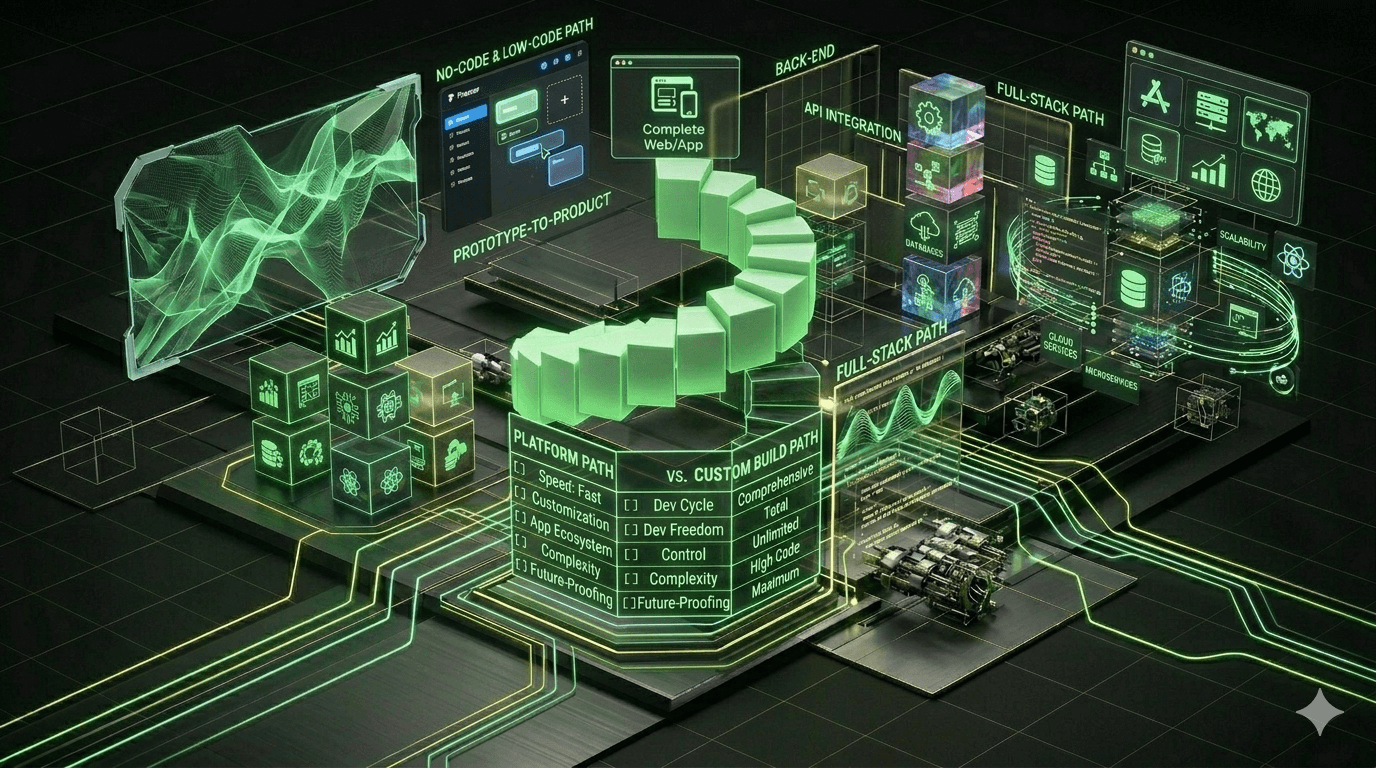
Businesses building a new website today face an important architectural decision. Should the site be built using a modern visual platform like Framer, or should it be developed through a fully custom engineering approach?
Both options can deliver high-quality digital experiences, but they serve different strategic goals. Framer is designed to help teams launch visually impressive, high-performance websites quickly, with minimal development overhead. Custom development offers unlimited flexibility but requires significantly more time, resources, and technical management.
For startups, SaaS companies, and growth teams, the decision often comes down to speed, operational efficiency, and marketing agility. A website is no longer just a static asset. It acts as a continuous experimentation platform where landing pages evolve, messaging changes frequently, and campaigns launch rapidly.
Understanding how Framer compares with custom development helps companies choose the architecture that supports both immediate launch needs and long-term growth.
Understanding the Framer Development Approach
Framer has emerged as one of the most advanced visual website builders available today. It combines design tools, CMS functionality, hosting infrastructure, and publishing workflows into a unified environment.
This design-to-production model dramatically shortens the traditional web development cycle. Designers can create layouts, interactions, and responsive components directly inside the platform and publish them without relying heavily on engineering teams.
For marketing websites, product landing pages, and startup brand sites, this approach reduces friction between design and deployment. Updates can be pushed quickly, enabling teams to experiment with messaging, page structures, and conversion flows.
Another reason Framer is gaining traction among startups is its ability to deliver strong performance without complex optimization work. The platform automatically handles responsive layouts, hosting, and infrastructure, allowing teams to focus on content and growth.
Framer therefore fits particularly well into environments where marketing teams need to iterate quickly while maintaining strong visual quality.
What Custom Website Development Involves
Custom website development refers to building a website from the ground up using programming frameworks, frontend libraries, and backend infrastructure.
Developers typically use technologies such as React, Next.js, or other modern frameworks to construct the website’s architecture. This approach allows complete control over the functionality, performance logic, and integration capabilities of the site.
Custom builds are often used for platforms that require unique functionality, advanced user interactions, or deep integrations with internal systems. Examples include complex SaaS dashboards, data platforms, or enterprise tools.
The trade-off is complexity. Custom websites require design handoffs, engineering cycles, testing environments, deployment infrastructure, and ongoing maintenance. The development process is slower and more resource intensive than visual builders.
While custom development provides maximum flexibility, many businesses discover that they do not need this level of technical control for marketing websites.
Speed to Launch and Marketing Agility
One of the most significant differences between Framer and custom development is the time required to launch a production website.
Framer dramatically shortens the timeline between concept and launch because the design and development phases are essentially merged. A startup can design pages, configure content, and publish a website within a relatively short timeframe.
For companies preparing a product launch or fundraising campaign, this speed becomes strategically valuable. Marketing teams can respond quickly to market feedback and modify pages without waiting for development cycles.
Custom development, in contrast, typically requires separate design and engineering stages. Even relatively simple marketing websites can take several months to build when the full development process is considered.
While custom builds provide greater architectural control, they introduce slower iteration cycles that may not align with the fast pace of startup marketing.
Design Flexibility and Brand Expression
Modern marketing websites depend heavily on visual storytelling. Interactive sections, animations, and responsive layouts play a significant role in how brands communicate their value.
Framer was built with design freedom in mind. The platform allows teams to create advanced layouts, transitions, and interactive elements while maintaining a clean and responsive structure.
For many marketing websites, Framer provides more than enough flexibility to produce a highly distinctive brand experience. Designers can experiment with layouts, typography, and animation without writing extensive code.
Custom development offers theoretically unlimited design flexibility because developers can build any interface that can be coded. However, this freedom often requires significantly more development time and engineering expertise.
In many real-world cases, the design capabilities of Framer are sufficient for marketing websites while being far more efficient to implement.
Cost Structure and Resource Allocation
Budget considerations often play a major role in the Framer versus custom development decision.
Framer reduces development costs because it eliminates many of the engineering hours required to build and maintain a website. A smaller team can handle design, content updates, and publishing without needing a full development pipeline.
Custom development typically requires a team of designers, frontend developers, backend engineers, and infrastructure specialists. The cost increases further when ongoing maintenance and updates are included.
For early-stage startups or growing companies, allocating engineering resources to product development rather than marketing websites often makes more strategic sense.
Framer therefore allows businesses to launch high-quality websites while keeping development costs manageable.
Scalability and Long-Term Platform Considerations
As companies grow, their digital infrastructure often becomes more complex. This raises an important question about whether Framer can scale alongside a growing business.
Framer works exceptionally well for marketing websites, product landing pages, and content platforms. The built-in CMS allows teams to manage blogs, case studies, and campaign pages without technical overhead.
However, websites that require complex application logic, advanced user accounts, or heavy backend processing may eventually require a custom development stack.
Many modern companies adopt a hybrid approach. The marketing website is built using Framer to maximize speed and design flexibility, while the core product platform is developed using custom technologies.
This separation allows each part of the digital ecosystem to use the most efficient architecture.
Performance and SEO Considerations
Website performance has become a critical factor for both user experience and search engine visibility.
Framer websites generally perform well because the platform automatically manages infrastructure, asset optimization, and content delivery. Pages are structured to load efficiently across devices.
Custom websites can achieve excellent performance as well, but this depends heavily on the skill of the development team. Without proper optimization practices, custom builds may introduce unnecessary complexity or slower load times.
For businesses that want reliable performance without maintaining technical infrastructure, Framer provides a simpler path to achieving strong results.
When Framer Is the Right Choice
Framer is particularly effective for startups, SaaS companies, and marketing teams that prioritize speed, visual quality, and iteration.
Businesses launching new products or entering competitive markets often benefit from the rapid deployment capabilities Framer provides. Marketing teams can test landing pages, adjust messaging, and update designs without lengthy development cycles.
Framer also works well for organizations that want design teams to maintain greater control over the website experience.
When the primary goal is to build a high-performance marketing website rather than a complex software platform, Framer offers a strong balance of speed, design flexibility, and cost efficiency.
When Custom Development Makes More Sense
Custom development becomes the preferred option when a website requires advanced functionality beyond marketing content.
Platforms involving complex user workflows, extensive data systems, or deep integration with enterprise tools often require custom architecture.
Large SaaS platforms, internal dashboards, or highly specialized digital experiences are examples where a fully custom development stack provides necessary flexibility.
Although the investment in engineering resources is higher, custom development ensures that the website can support complex product functionality.
Bottom Line: What Metrics Should Drive Your Decision?
When evaluating Framer versus custom development, businesses should focus on measurable factors that influence both performance and operational efficiency.
Website performance metrics such as page load speed, Core Web Vitals scores, and Lighthouse performance ratings are essential indicators of user experience quality. Faster websites typically produce better engagement and stronger search visibility.
Business execution metrics also play an important role. Teams should consider how quickly new landing pages can be deployed, how easily marketing campaigns can be launched, and how many developer hours are required to maintain the site.
Cost factors include the initial build budget, long-term maintenance expenses, hosting costs, and the effort required to implement future updates.
Efficiency indicators such as design-to-production speed and CMS management complexity also influence the decision. Platforms that allow marketing teams to manage content independently can significantly reduce operational friction.
For many marketing-focused websites, Framer becomes more efficient once rapid iteration and lower development overhead are factored into the equation.
Forward View: The Future of Website Development
The website development landscape is shifting toward faster, more visual, and more automated workflows.
Design-to-production platforms are increasingly replacing traditional development pipelines for marketing websites. These tools allow companies to launch and iterate on digital experiences without waiting for complex engineering processes.
Artificial intelligence is also beginning to influence web design workflows. Future platforms will likely automate layout creation, content optimization, and performance tuning.
At the same time, the importance of website performance and conversion optimization will continue to grow. Businesses will prioritize platforms that allow rapid experimentation while maintaining high technical standards.
Framer sits at the intersection of these trends. By combining visual design tools with production-ready infrastructure, it represents a new generation of website platforms focused on speed and efficiency.
Companies that embrace these modern development models may gain a competitive advantage by launching and improving their digital presence faster than competitors relying on traditional workflows.
FAQ
Is Framer suitable for large websites?
Framer works well for marketing websites with multiple pages and CMS content such as blogs or case studies. However, extremely large websites with thousands of pages may require a more specialized architecture.
Do businesses need developers to use Framer?
Not necessarily. Designers and marketing teams can build and manage many Framer websites independently. Developers may still be involved when integrating external systems or implementing advanced features.
Can Framer integrate with other tools and platforms?
Yes. Framer supports integrations with analytics tools, marketing platforms, and third-party services. These integrations allow businesses to connect their website with broader marketing and analytics systems.
Is Framer scalable for growing startups?
For marketing websites, Framer scales well as startups grow. Many companies continue using Framer as their primary marketing site even after their product platform expands.
What are the limitations of Framer compared to custom development?
Framer is not designed for highly complex applications or advanced backend systems. Websites that require deep product functionality or specialized software features may require custom development solutions.
Direct Answers
What is Framer used for?
Framer is primarily used to design and launch modern marketing websites, landing pages, and product sites. It allows teams to build responsive, high-performance websites visually while reducing the need for extensive development work.
Is Framer better than custom website development?
Framer is often better for marketing websites because it enables faster launches and easier updates. Custom development is more suitable when a website requires complex functionality, deep integrations, or advanced application logic.
Can startups build their entire website using Framer?
Yes. Many startups use Framer to build their main marketing website, including landing pages, product pages, and blogs. The platform provides enough design flexibility and CMS functionality for most early-stage companies.
How long does it take to launch a website with Framer?
A startup website built with Framer can often be launched within a few weeks depending on the complexity of the design and content. This is significantly faster than most custom development timelines.
Is Framer good for SEO?
Framer websites can perform well for SEO when structured correctly. The platform supports metadata, clean URLs, fast loading speeds, and responsive design, which are important factors for search engine visibility.
INSIGHTS
Expert perspectives on design, AI, and growth.
Explore our latest strategies for scaling high-performance creative in a digital world.


View more