AI & Automation
08 min read
What Is OpenClaw AI? (Beyond the Buzz)
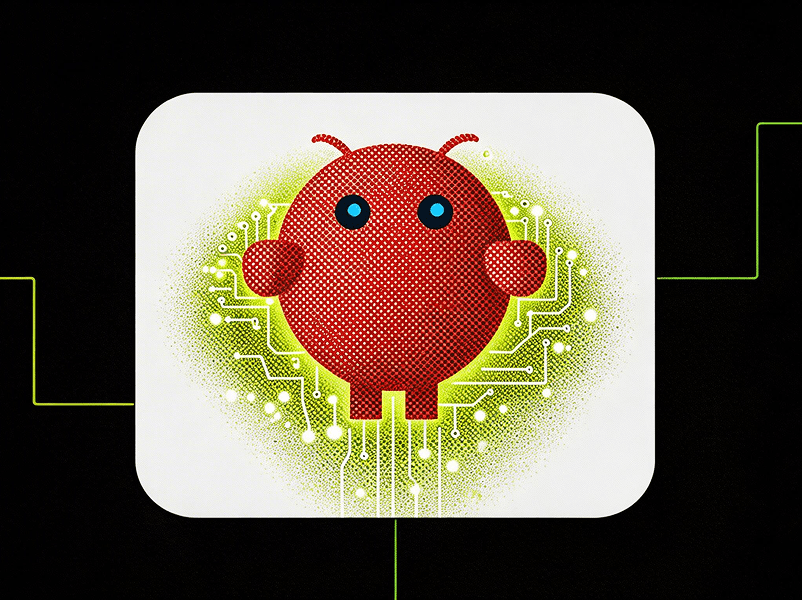
OpenClaw AI is an open-source autonomous AI assistant framework originally developed by Peter Steinberger and released in late 2025. It’s designed to run locally on machines or private servers and interact through messaging platforms like WhatsApp, Telegram, Slack, or Discord. Unlike traditional large language models, OpenClaw does not simply generate responses — it can execute actions across connected applications on behalf of the user.
Key points:
It is open source (MIT license), meaning its codebase is transparent and extensible.
It integrates with external AI models (OpenAI GPT, Claude, local models, etc.).
It persists memory locally to make decisions across multiple sessions.
Interactions happen via messaging apps — no new dashboards to learn.
Think of it like a digital coworker running 24/7 — if managed properly, it can automate repetitive workflows and reduce operational effort. If mismanaged, it can also be a serious security liability.
How OpenClaw Works: The Engine Under the Hood
OpenClaw’s architecture has three layers that matter for business decision-making:
1. Local Execution & Permissions
OpenClaw runs on a device you control, not in a vendor’s backend. For tasks like email management, scheduling, or file operations, it requires access to your local system and accounts.
2. Chat-Driven Interface
Users don’t learn new interfaces — they interact via familiar apps. You send a message and it acts as a command. This drastically lowers behavioral friction vs traditional SaaS tools.
3. Persistent Memory + Heartbeat
OpenClaw’s “heartbeat” scheduler allows it to independently wake up, monitor systems (e.g., email), and trigger workflows without explicit prompts each time. That’s autonomy beyond just reacting.
This architecture is what makes OpenClaw agentic: it’s not just reactive — it proactively performs tasks.
Strategic Use Cases That Matter in 2026
For businesses considering OpenClaw’s integration or experimentation, here are the core enterprise-relevant use cases:
1. Workflow Automation Across Enterprise Systems
Executives can prototype and automate repetitive tasks (e.g., data ingestion, email triage, internal reporting). For product teams, this cuts down operational load and accelerates execution speed.
2. Personal Productivity Agents for Knowledge Workers
Teams swamped with emails, calendars, and coordination workflows can offload administrative work to an AI agent — increasing effective output with lower human labor hours.
3. Always-On Monitoring and Alerts
Unlike SaaS automation platforms that run on schedules, OpenClaw can listen and act in real time based on triggers across local and cloud apps.
These are not hype scenarios — they are execution workflows with measurable time and cost savings. We’ll quantify that later.
The Elephant in the Room: Risk & Security
OpenClaw’s capabilities come with serious enterprise risk implications:
1. Access Scope and Privilege Overreach
Because OpenClaw can access inboxes, calendars, files, and scripts, a misconfiguration or malicious command could expose credentials or sensitive data. Experts call this a “privacy nightmare.”
2. Skill Marketplace Vulnerabilities
OpenClaw’s community-driven skill extensions haven’t been fully vetted — researchers found malicious modules capable of information theft.
3. Prompt Injection Attacks
Because the agent interprets natural instructions into action, attackers can embed harmful instructions in data streams — a new category of AI attack that can leak data or escalate privileges.
4. Organizational Policy Gaps
Major companies like Meta have banned OpenClaw outright due to these cybersecurity concerns, signaling that wide corporate adoption requires strict governance.
Business Decision Framework: When (and When Not) to Use OpenClaw
Here’s a structured way leaders should think about OpenClaw:
Do explore OpenClaw if:
Your organization operates in a high-innovation or R&D context
You have in-house security and governance maturity
Tasks involve repetitive workflows where time saved >> risk
You can isolate the agent (sandboxed environments) during evaluation
Avoid or postpone if:
You lack endpoint security controls
You can’t manage credentials and secrets securely
Systems involve regulated or confidential data
In short — treat OpenClaw like an internal automation experiment, not a plug-and-play SaaS.
Bottom Line: What Metrics Should Drive Your Decision?
Leaders should anchor their evaluation in measurable metrics:
Productivity & Cost Metrics
Time saved per task (hours/week/employee)
Labor cost reduction (%)
Task automation coverage (workflow % automated)
Security & Risk Metrics
Credential exposure incidents
Misconfiguration detection rate (%)
Skill vetting effectiveness (%)
Governance Metrics
Policy compliance rate
Sandbox deployment success rate
Incident recovery time
For example: an enterprise might pilot OpenClaw in a controlled environment and measure week-over-week time saved on email triage tasks to justify expansion.
Forward View: Strategic Outlook
By the end of 2026, autonomous AI agents like OpenClaw will no longer be a niche experiment. They represent a paradigm shift — moving AI from reactive conversation to proactive task automation.
But the business winners will be the ones who balance autonomy with governance, experiment in controlled environments, and treat these systems like internal automation platforms rather than consumer gadgets. Embedding these agents into workflows will redefine productivity — but only if security and policy frameworks evolve in lockstep.
OpenClaw is a harbinger — not just a tool. It signals a new frontier in how AI integrates with human work patterns: always on, always learning, and capable of acting without constant human oversight. That’s the strategic horizon leaders should prepare for in 2026 and beyond.
FAQs
Is OpenClaw suitable for beginners?
No. It requires technical setup and security oversight.
Can OpenClaw be used without AI models like GPT?
It needs an AI backend (local or cloud) to interpret tasks.
What messaging platforms does OpenClaw support?
Major apps like WhatsApp, Telegram, Slack, Discord, and others.
Does OpenClaw store my data externally?
No — it keeps data locally unless configured otherwise.
Direct Answers
What is OpenClaw AI?
OpenClaw AI is an open-source autonomous AI agent that runs locally on machines and performs tasks on behalf of users by interfacing with messaging apps and executing workflows.
Can OpenClaw replace traditional chatbots?
Not directly. Chatbots generate conversations; OpenClaw executes actions across systems, making it an operational agent rather than a conversational tool.
Is OpenClaw safe for business use?
Not by default. Without strong security governance and sandboxing, it poses privacy and credential risks.
Does OpenClaw run locally or in the cloud?
It primarily runs locally on your machine or private servers, though it can connect to cloud-hosted AI models.
Why is OpenClaw controversial?
Because its autonomous capabilities raise significant security and privacy concerns, and companies like Meta have restricted its use internally.
How does OpenClaw connect with tools?
Via gateways that map messaging app commands into system actions and workflows.
insights