
Ecommerce Development
Shopify Unboxing Experience: How to Make Every Box a Brand Statement
Shopify Unboxing Experience: How to Make Every Box a Brand Statement
08 min read
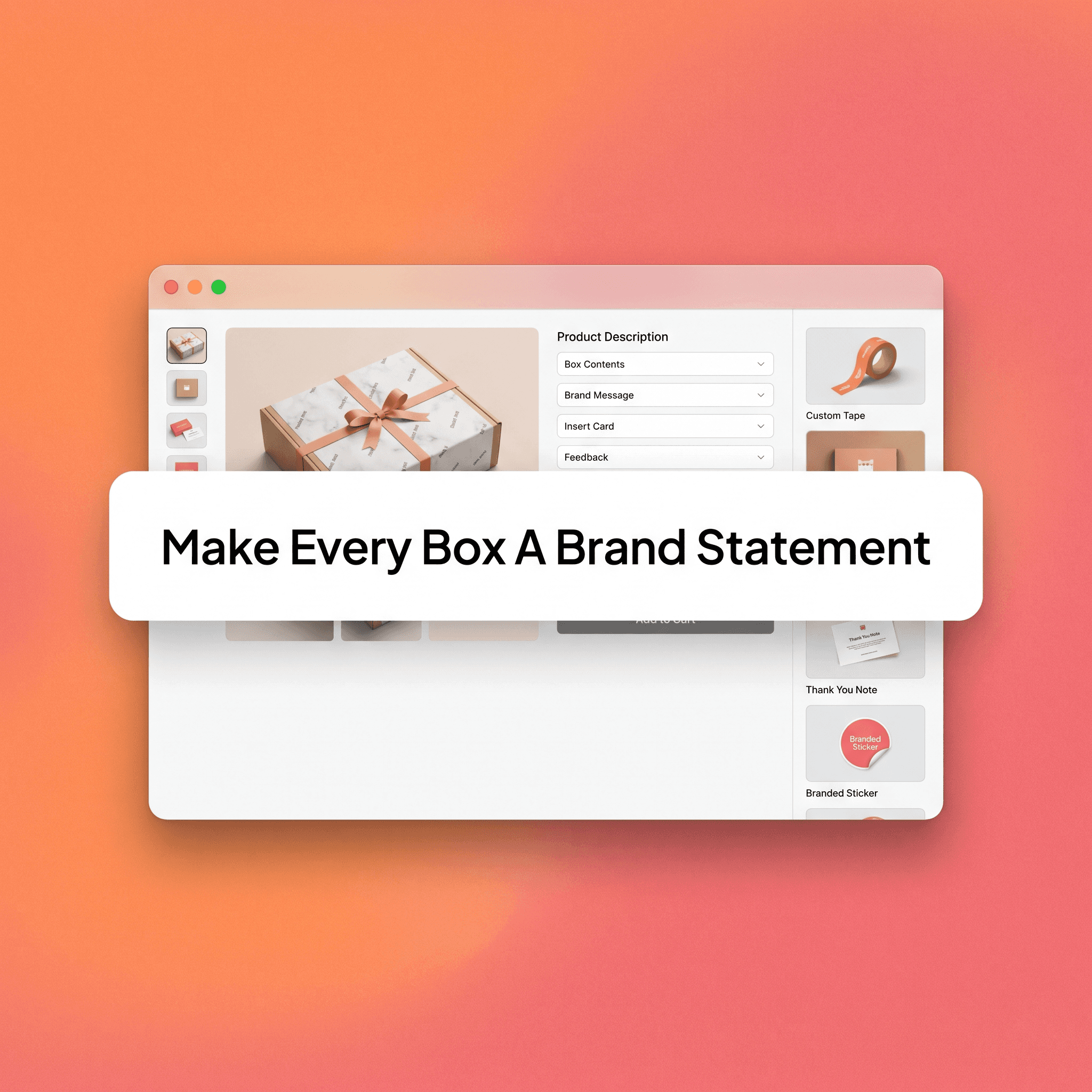
Your Shopify store converts a visitor into a buyer. The box they receive determines whether that buyer comes back. Most D2C brands spend months refining their website, their ads, their product pages. Then they ship in a generic brown mailer with a thermal-printed label and a packing slip. That disconnect is where brand loyalty dies. The unboxing experience is not a design exercise. It is a business decision. Done well, it drives repeat purchases, generates organic content, and signals to your customer that they made the right choice. Done poorly, it tells them the brand experience ended at checkout. This guide breaks down how to build a Shopify unboxing experience that functions as a brand asset — not just a container. By operationalizing your packaging, you transform a logistics expense into a high-leverage marketing channel that reinforces the psychological contract between the brand promise displayed on your Shopify frontend and the tangible reality delivered to the doorstep. This strategy requires auditing your logistics pipeline to ensure the physical arrival of the goods serves as a cohesive extension of the customer journey, preventing the "unboxing letdown" that frequently plagues scaling ecommerce enterprises.
Why the Unboxing Moment Has Outsize Business Impact
The package your customer receives is the first physical touchpoint your brand has ever had with them. Every interaction before that — ads, emails, product pages — was digital and fleeting. The box is real. It sits on their kitchen counter. They handle it, open it, and form a judgment about your brand in under thirty seconds. That judgment shapes what they do next:
Customer Advocacy Whether they photograph it and share it.
Product Confidence Whether they trust the product inside before they've used it.
Retention Velocity Whether they order again without a discount to nudge them.
None of this requires a luxury budget. It requires intentionality. This physical interaction creates a lasting neurological imprint, effectively turning a standard transactional exchange into a memorable brand ceremony that fosters deep-seated customer loyalty. When a consumer physically engages with your brand collateral, they are subconsciously validating their purchase decision, which significantly lowers future churn rates and increases the likelihood of secondary social proof in the form of user-generated content across social platforms.
The 5-Point Unboxing Audit Matrix
Before you redesign anything, audit what you are currently sending. Run your own order. Open the box the way your customer does — standing at a door, cutting tape, pulling back tissue. Then score each of the five elements below on a scale of 1 to 3.
Point 1: Exterior Presentation
Does the outer box or mailer communicate your brand before it is even opened? A plain brown box with a sticker label scores a 1. A custom-printed shipper with your brand mark, a tagline, or a deliberate color palette scores a 3. This initial visual impression is the cornerstone of your brand’s perceived professionalism during the transit phase, as it distinguishes your shipment from the sea of anonymous brown mailers competing for space in a consumer’s entryway. By upgrading even the exterior of the package with recognizable brand assets, you immediately elevate the expectation of quality before the seal is even broken, setting a premium tone that pays dividends in perceived value.
Point 2: Opening Ritual
Is there a natural, satisfying sequence to opening the package? Sequence matters. Customers who feel like unwrapping a thoughtful gift are primed to think positively about what is inside. Crumpled filler paper stuffed around a product scores a 1. Folded tissue, a pull tab, a nested layout, or a reveal layer scores a 3. Creating a structured, intentional opening sequence allows you to control the narrative of discovery, effectively slowing down the pace of interaction to emphasize the care and precision taken during the fulfillment process. This ritualistic approach transforms the mundane act of opening a delivery into a rewarding sensory experience that builds anticipation, ensuring that the consumer feels a heightened sense of connection to the brand long before they reach the core product itself.
Point 3: Insert Presence and Quality
Is there anything in the box that speaks to the customer directly? A printed card, a handwritten-style note, a how-to guide, or a product story insert extends the brand experience past the product itself. An empty box or a plain invoice scores a 1. A well-designed insert with a clear purpose — thank you, usage guide, loyalty offer, referral hook — scores a 3. These physical collateral pieces serve as your silent salespeople, bridging the gap between the digital checkout experience and the offline product utilization phase, effectively extending the lifespan of your messaging. By providing context, education, or gratitude, you demonstrate that your brand is focused on outcome-oriented support rather than just transaction volume, which builds significant emotional rapport that traditional digital advertising cannot replicate.
Point 4: Brand Consistency
Does the packaging match the brand identity on your Shopify store? Fonts, colors, tone of voice. If someone landed on your website and then opened your box, would they recognize the same brand? Disconnected packaging scores a 1. Cohesive visual and verbal identity across both scores a 3. Maintaining absolute visual and tonal alignment across every omnichannel touchpoint is critical for building a subconscious sense of reliability and trust in the minds of your consumer base. When the physical unboxing experience mirrors the aesthetic of your digital store, you reinforce the credibility of your brand narrative, ensuring that every interaction feels integrated, intentional, and unmistakably yours, which is the hallmark of a mature D2C operation.
Point 5: Repeat Purchase Trigger
Does anything inside the box give the customer a concrete reason to return? Not a discount sticker buried under filler. A deliberate, relevant prompt — a QR code to a reorder page, a loyalty program mention, a bundle suggestion that makes sense — scores a 3. Nothing scores a 1. Score yourself. Anything under 10 is leaving brand equity on the table. By embedding a direct, friction-free path to a secondary transaction within the physical package, you shorten the sales cycle and lower your long-term Customer Acquisition Cost (CAC) by capitalizing on the peak of consumer excitement. Providing a specific, actionable next step ensures that the momentum generated by the initial purchase is not lost, but rather redirected into a measurable, high-intent follow-up action that fuels your LTV metrics over the long term.
What a Strong Shopify Unboxing Experience Actually Looks Like
Strong does not mean expensive. It means considered. Here is what intentional looks like at three different budget levels.
Lean Budget (Under $2 per unit)
A custom-printed sticker on a plain mailer, a single-sided card insert with a thank-you message and reorder QR code, and consistent tissue color. The investment is minimal. The signal to the customer is: someone thought about this. This lean approach demonstrates that you can achieve significant brand impact through thoughtful configuration rather than capital-intensive custom molds or specialized structural engineering. By focusing on high-visibility assets like stickers and cards, you derive maximum psychological impact per dollar spent, proving that operationalizing your brand experience is accessible even to early-stage founders operating under tight cash flow constraints.
Mid-Range Budget ($2–$5 per unit)
Custom-printed mailer or shipper box, two-sided insert card (brand story on one side, offer or loyalty hook on the other), and branded tissue or crinkle filler. This is where most scaling Shopify brands should operate. It is professional without being extravagant. This mid-tier expenditure allows for a more cohesive, immersive aesthetic that utilizes the entire interior and exterior of the package as a dedicated brand canvas. For brands in the growth phase, this level of investment strikes an optimal balance between maintaining healthy gross margins and delivering a premium, memorable experience that justifies the purchase price and encourages recurring, high-margin orders.
Premium Budget ($5+ per unit)
Custom rigid box or two-piece shipper, layered reveal with tissue and a pull ribbon, multi-piece insert set (product guide, thank-you card, brand story booklet), and a product-specific sample or gift. Reserved for high-AOV products where the packaging cost is proportionate to the order value and the expected LTV. When the product itself represents a significant investment, the packaging must perform as a luxury asset, signaling the premium nature of the goods within and validating the customer's high-ticket decision. This level of detail and structural elegance is intended to create an "event" out of the delivery, effectively transforming the physical product arrival into a curated brand milestone that justifies the premium price point and cultivates deep, long-term brand advocacy.
The key principle across all three tiers: match packaging investment to product price point and expected customer lifetime value. Over-investing in packaging for a $15 product is a margin problem. Under-investing for a $200 product is a brand problem.
The Inserts That Actually Do Work
Inserts are the most underutilized tool in the D2C packaging stack. Most brands either skip them entirely or include a generic card that says "thank you for your order" and nothing else. A good insert has a job. Here are the jobs worth assigning:
The Reorder Prompt A clean, product-relevant prompt to reorder — ideally with a QR code that goes directly to the product or subscription page. Works best for consumables or products with a natural replenishment cycle.
The Referral Hook A simple offer for both the customer and a friend they refer. This needs to feel natural, not transactional. One clean sentence, one code, one URL.
The Usage or Care Guide Especially valuable for products that require explanation — skincare routines, supplement protocols, apparel care. This positions your brand as knowledgeable and builds trust before the first use.
The Brand Story Card Not a corporate mission statement. A specific, honest paragraph about why this product exists or how it is made. Builds emotional connection without being heavy-handed.
The Review Request A single, direct ask for a review on the platform where it matters most to your business. Keep it brief. Tell the customer why it matters.
Do not include all five in every box. Pick one or two that match your business goals this quarter. Strategic deployment of these specific inserts allows you to funnel your customers toward high-value behaviors, such as increasing repeat purchase frequency, lowering CAC through referral loops, or improving SEO rankings via user-generated reviews. By focusing on the utility of the insert, you ensure that every piece of paper placed in the box serves as a functional tool rather than just a decorative addition, thereby optimizing your operational spend and driving predictable growth metrics across the post-purchase phase.
Common Mistakes D2C Brands Make With Packaging
Designing for the board deck, not the customer
Custom packaging photographed beautifully in a studio often fails in the real world — boxes that collapse under shipping pressure, tissue that tears wrong, inserts that slide out before the box is fully open. Always test your packaging under real shipping conditions before committing to a large run. Ensuring structural integrity is paramount because a compromised box directly undermines the premium brand promise you worked so hard to build; if the unboxing experience is physically marred by transit-related failure, the consumer immediately perceives a lack of attention to detail. Rigorous real-world stress testing prevents this, confirming that your brand aesthetic survives the journey from the fulfillment center to the customer’s doorstep without losing its structural or visual polish.
Treating packaging as a one-time decision
Packaging should be revisited as your product line, margins, and customer data evolve. A mailer that worked for your first product may not work for your fifth. Build a review cadence. Just as you iterate on your website’s conversion rate optimization (CRO) strategies based on shifting customer data, your packaging must also evolve to reflect your current product-market fit and brand maturity. Neglecting to refresh your packaging strategy risks stagnation, where your brand appears dated or misaligned with the current product offering, ultimately leading to a disconnect between the growth of your company and the physical representation of your brand in the wild.
Optimizing for novelty instead of consistency
A dramatically different unboxing experience with each order feels inconsistent, not creative. Brand recognition is built through repetition. Evolve packaging slowly and intentionally. While the urge to experiment with new colors or materials is strong, consistent brand recall is ultimately driven by the repetition of core visual elements like color palettes, typography, and logo placement. By establishing a stable, recognizable "signature" unboxing experience, you cement your brand identity in the consumer’s memory, ensuring that even at a glance, they know exactly which premium brand they are interacting with, which deepens brand equity far more effectively than constant, uncoordinated aesthetic shifts.
Skipping the insert because the product speaks for itself
Products rarely speak for themselves at the moment of unboxing. The customer has not used it yet. The insert bridges the gap between receiving and trusting. Relying solely on the product to convey your brand’s value proposition ignores the psychological stage of "buyer’s remorse" that can set in between the moment of payment and the actual usage of the item. By utilizing the insert as a bridge, you proactively address potential doubts, provide usage context, or simply offer a gesture of gratitude that cements the positive emotional state of the customer, turning a simple product delivery into a reassuring brand affirmation.
Over-engineering the opening sequence
A box that is difficult or confusing to open is not premium — it is frustrating. Every layer of complexity should have a clear payoff. If it does not, simplify. Over-complication in packaging design often stems from a misplaced desire for "luxury" that actually creates physical friction for the end user, which is the antithesis of a good customer experience. By keeping the opening sequence intuitive and streamlined, you guarantee that the primary emotional takeaway is one of delight and ease, rather than irritation; complexity should only be introduced when it meaningfully enhances the user's perception of value, never at the expense of functionality or speed.
How to Align Your Shopify Store and Packaging for Full Brand Coherence
Your Shopify store makes a promise. Your packaging keeps it — or breaks it. Run this quick alignment check:
Visual Symmetry Pull your primary brand colors and font from your Shopify theme. Do they appear in your packaging and inserts?
Voice Harmonization Read the copy on your most important product page out loud. Then read your insert copy. Does it sound like the same brand?
Expectation Matching Look at your hero images. Does the packaging your customers receive match what they saw before buying?
If any of these are misaligned, that is a gap in brand trust. Closing it does not require a rebrand — it usually requires updating inserts and, over time, moving toward custom-printed packaging that reflects your current visual identity. Aligning your digital and physical assets is essentially about managing the consistency of the brand narrative, ensuring that every touchpoint from the product display page to the doorstep feels like a seamless chapter in the same story. This coherence reduces cognitive dissonance, reinforces purchase intent, and creates an authentic brand perception that feels reliable, professional, and trustworthy, which is essential for scaling a D2C operation in a crowded marketplace where trust is the primary currency.
Your Shopify store converts a visitor into a buyer. The box they receive determines whether that buyer comes back. Most D2C brands spend months refining their website, their ads, their product pages. Then they ship in a generic brown mailer with a thermal-printed label and a packing slip. That disconnect is where brand loyalty dies. The unboxing experience is not a design exercise. It is a business decision. Done well, it drives repeat purchases, generates organic content, and signals to your customer that they made the right choice. Done poorly, it tells them the brand experience ended at checkout. This guide breaks down how to build a Shopify unboxing experience that functions as a brand asset — not just a container. By operationalizing your packaging, you transform a logistics expense into a high-leverage marketing channel that reinforces the psychological contract between the brand promise displayed on your Shopify frontend and the tangible reality delivered to the doorstep. This strategy requires auditing your logistics pipeline to ensure the physical arrival of the goods serves as a cohesive extension of the customer journey, preventing the "unboxing letdown" that frequently plagues scaling ecommerce enterprises.
Why the Unboxing Moment Has Outsize Business Impact
The package your customer receives is the first physical touchpoint your brand has ever had with them. Every interaction before that — ads, emails, product pages — was digital and fleeting. The box is real. It sits on their kitchen counter. They handle it, open it, and form a judgment about your brand in under thirty seconds. That judgment shapes what they do next:
Customer Advocacy Whether they photograph it and share it.
Product Confidence Whether they trust the product inside before they've used it.
Retention Velocity Whether they order again without a discount to nudge them.
None of this requires a luxury budget. It requires intentionality. This physical interaction creates a lasting neurological imprint, effectively turning a standard transactional exchange into a memorable brand ceremony that fosters deep-seated customer loyalty. When a consumer physically engages with your brand collateral, they are subconsciously validating their purchase decision, which significantly lowers future churn rates and increases the likelihood of secondary social proof in the form of user-generated content across social platforms.
The 5-Point Unboxing Audit Matrix
Before you redesign anything, audit what you are currently sending. Run your own order. Open the box the way your customer does — standing at a door, cutting tape, pulling back tissue. Then score each of the five elements below on a scale of 1 to 3.
Point 1: Exterior Presentation
Does the outer box or mailer communicate your brand before it is even opened? A plain brown box with a sticker label scores a 1. A custom-printed shipper with your brand mark, a tagline, or a deliberate color palette scores a 3. This initial visual impression is the cornerstone of your brand’s perceived professionalism during the transit phase, as it distinguishes your shipment from the sea of anonymous brown mailers competing for space in a consumer’s entryway. By upgrading even the exterior of the package with recognizable brand assets, you immediately elevate the expectation of quality before the seal is even broken, setting a premium tone that pays dividends in perceived value.
Point 2: Opening Ritual
Is there a natural, satisfying sequence to opening the package? Sequence matters. Customers who feel like unwrapping a thoughtful gift are primed to think positively about what is inside. Crumpled filler paper stuffed around a product scores a 1. Folded tissue, a pull tab, a nested layout, or a reveal layer scores a 3. Creating a structured, intentional opening sequence allows you to control the narrative of discovery, effectively slowing down the pace of interaction to emphasize the care and precision taken during the fulfillment process. This ritualistic approach transforms the mundane act of opening a delivery into a rewarding sensory experience that builds anticipation, ensuring that the consumer feels a heightened sense of connection to the brand long before they reach the core product itself.
Point 3: Insert Presence and Quality
Is there anything in the box that speaks to the customer directly? A printed card, a handwritten-style note, a how-to guide, or a product story insert extends the brand experience past the product itself. An empty box or a plain invoice scores a 1. A well-designed insert with a clear purpose — thank you, usage guide, loyalty offer, referral hook — scores a 3. These physical collateral pieces serve as your silent salespeople, bridging the gap between the digital checkout experience and the offline product utilization phase, effectively extending the lifespan of your messaging. By providing context, education, or gratitude, you demonstrate that your brand is focused on outcome-oriented support rather than just transaction volume, which builds significant emotional rapport that traditional digital advertising cannot replicate.
Point 4: Brand Consistency
Does the packaging match the brand identity on your Shopify store? Fonts, colors, tone of voice. If someone landed on your website and then opened your box, would they recognize the same brand? Disconnected packaging scores a 1. Cohesive visual and verbal identity across both scores a 3. Maintaining absolute visual and tonal alignment across every omnichannel touchpoint is critical for building a subconscious sense of reliability and trust in the minds of your consumer base. When the physical unboxing experience mirrors the aesthetic of your digital store, you reinforce the credibility of your brand narrative, ensuring that every interaction feels integrated, intentional, and unmistakably yours, which is the hallmark of a mature D2C operation.
Point 5: Repeat Purchase Trigger
Does anything inside the box give the customer a concrete reason to return? Not a discount sticker buried under filler. A deliberate, relevant prompt — a QR code to a reorder page, a loyalty program mention, a bundle suggestion that makes sense — scores a 3. Nothing scores a 1. Score yourself. Anything under 10 is leaving brand equity on the table. By embedding a direct, friction-free path to a secondary transaction within the physical package, you shorten the sales cycle and lower your long-term Customer Acquisition Cost (CAC) by capitalizing on the peak of consumer excitement. Providing a specific, actionable next step ensures that the momentum generated by the initial purchase is not lost, but rather redirected into a measurable, high-intent follow-up action that fuels your LTV metrics over the long term.
What a Strong Shopify Unboxing Experience Actually Looks Like
Strong does not mean expensive. It means considered. Here is what intentional looks like at three different budget levels.
Lean Budget (Under $2 per unit)
A custom-printed sticker on a plain mailer, a single-sided card insert with a thank-you message and reorder QR code, and consistent tissue color. The investment is minimal. The signal to the customer is: someone thought about this. This lean approach demonstrates that you can achieve significant brand impact through thoughtful configuration rather than capital-intensive custom molds or specialized structural engineering. By focusing on high-visibility assets like stickers and cards, you derive maximum psychological impact per dollar spent, proving that operationalizing your brand experience is accessible even to early-stage founders operating under tight cash flow constraints.
Mid-Range Budget ($2–$5 per unit)
Custom-printed mailer or shipper box, two-sided insert card (brand story on one side, offer or loyalty hook on the other), and branded tissue or crinkle filler. This is where most scaling Shopify brands should operate. It is professional without being extravagant. This mid-tier expenditure allows for a more cohesive, immersive aesthetic that utilizes the entire interior and exterior of the package as a dedicated brand canvas. For brands in the growth phase, this level of investment strikes an optimal balance between maintaining healthy gross margins and delivering a premium, memorable experience that justifies the purchase price and encourages recurring, high-margin orders.
Premium Budget ($5+ per unit)
Custom rigid box or two-piece shipper, layered reveal with tissue and a pull ribbon, multi-piece insert set (product guide, thank-you card, brand story booklet), and a product-specific sample or gift. Reserved for high-AOV products where the packaging cost is proportionate to the order value and the expected LTV. When the product itself represents a significant investment, the packaging must perform as a luxury asset, signaling the premium nature of the goods within and validating the customer's high-ticket decision. This level of detail and structural elegance is intended to create an "event" out of the delivery, effectively transforming the physical product arrival into a curated brand milestone that justifies the premium price point and cultivates deep, long-term brand advocacy.
The key principle across all three tiers: match packaging investment to product price point and expected customer lifetime value. Over-investing in packaging for a $15 product is a margin problem. Under-investing for a $200 product is a brand problem.
The Inserts That Actually Do Work
Inserts are the most underutilized tool in the D2C packaging stack. Most brands either skip them entirely or include a generic card that says "thank you for your order" and nothing else. A good insert has a job. Here are the jobs worth assigning:
The Reorder Prompt A clean, product-relevant prompt to reorder — ideally with a QR code that goes directly to the product or subscription page. Works best for consumables or products with a natural replenishment cycle.
The Referral Hook A simple offer for both the customer and a friend they refer. This needs to feel natural, not transactional. One clean sentence, one code, one URL.
The Usage or Care Guide Especially valuable for products that require explanation — skincare routines, supplement protocols, apparel care. This positions your brand as knowledgeable and builds trust before the first use.
The Brand Story Card Not a corporate mission statement. A specific, honest paragraph about why this product exists or how it is made. Builds emotional connection without being heavy-handed.
The Review Request A single, direct ask for a review on the platform where it matters most to your business. Keep it brief. Tell the customer why it matters.
Do not include all five in every box. Pick one or two that match your business goals this quarter. Strategic deployment of these specific inserts allows you to funnel your customers toward high-value behaviors, such as increasing repeat purchase frequency, lowering CAC through referral loops, or improving SEO rankings via user-generated reviews. By focusing on the utility of the insert, you ensure that every piece of paper placed in the box serves as a functional tool rather than just a decorative addition, thereby optimizing your operational spend and driving predictable growth metrics across the post-purchase phase.
Common Mistakes D2C Brands Make With Packaging
Designing for the board deck, not the customer
Custom packaging photographed beautifully in a studio often fails in the real world — boxes that collapse under shipping pressure, tissue that tears wrong, inserts that slide out before the box is fully open. Always test your packaging under real shipping conditions before committing to a large run. Ensuring structural integrity is paramount because a compromised box directly undermines the premium brand promise you worked so hard to build; if the unboxing experience is physically marred by transit-related failure, the consumer immediately perceives a lack of attention to detail. Rigorous real-world stress testing prevents this, confirming that your brand aesthetic survives the journey from the fulfillment center to the customer’s doorstep without losing its structural or visual polish.
Treating packaging as a one-time decision
Packaging should be revisited as your product line, margins, and customer data evolve. A mailer that worked for your first product may not work for your fifth. Build a review cadence. Just as you iterate on your website’s conversion rate optimization (CRO) strategies based on shifting customer data, your packaging must also evolve to reflect your current product-market fit and brand maturity. Neglecting to refresh your packaging strategy risks stagnation, where your brand appears dated or misaligned with the current product offering, ultimately leading to a disconnect between the growth of your company and the physical representation of your brand in the wild.
Optimizing for novelty instead of consistency
A dramatically different unboxing experience with each order feels inconsistent, not creative. Brand recognition is built through repetition. Evolve packaging slowly and intentionally. While the urge to experiment with new colors or materials is strong, consistent brand recall is ultimately driven by the repetition of core visual elements like color palettes, typography, and logo placement. By establishing a stable, recognizable "signature" unboxing experience, you cement your brand identity in the consumer’s memory, ensuring that even at a glance, they know exactly which premium brand they are interacting with, which deepens brand equity far more effectively than constant, uncoordinated aesthetic shifts.
Skipping the insert because the product speaks for itself
Products rarely speak for themselves at the moment of unboxing. The customer has not used it yet. The insert bridges the gap between receiving and trusting. Relying solely on the product to convey your brand’s value proposition ignores the psychological stage of "buyer’s remorse" that can set in between the moment of payment and the actual usage of the item. By utilizing the insert as a bridge, you proactively address potential doubts, provide usage context, or simply offer a gesture of gratitude that cements the positive emotional state of the customer, turning a simple product delivery into a reassuring brand affirmation.
Over-engineering the opening sequence
A box that is difficult or confusing to open is not premium — it is frustrating. Every layer of complexity should have a clear payoff. If it does not, simplify. Over-complication in packaging design often stems from a misplaced desire for "luxury" that actually creates physical friction for the end user, which is the antithesis of a good customer experience. By keeping the opening sequence intuitive and streamlined, you guarantee that the primary emotional takeaway is one of delight and ease, rather than irritation; complexity should only be introduced when it meaningfully enhances the user's perception of value, never at the expense of functionality or speed.
How to Align Your Shopify Store and Packaging for Full Brand Coherence
Your Shopify store makes a promise. Your packaging keeps it — or breaks it. Run this quick alignment check:
Visual Symmetry Pull your primary brand colors and font from your Shopify theme. Do they appear in your packaging and inserts?
Voice Harmonization Read the copy on your most important product page out loud. Then read your insert copy. Does it sound like the same brand?
Expectation Matching Look at your hero images. Does the packaging your customers receive match what they saw before buying?
If any of these are misaligned, that is a gap in brand trust. Closing it does not require a rebrand — it usually requires updating inserts and, over time, moving toward custom-printed packaging that reflects your current visual identity. Aligning your digital and physical assets is essentially about managing the consistency of the brand narrative, ensuring that every touchpoint from the product display page to the doorstep feels like a seamless chapter in the same story. This coherence reduces cognitive dissonance, reinforces purchase intent, and creates an authentic brand perception that feels reliable, professional, and trustworthy, which is essential for scaling a D2C operation in a crowded marketplace where trust is the primary currency.
FAQs
Web Personalisation
Framer is a design tool that allows you to design websites on a freeform canvas, and then publish them as websites with a single click.
UI and UX Design
Framer is a design tool that allows you to design websites on a freeform canvas, and then publish them as websites with a single click.
Search Engine Optimisation
Framer is a design tool that allows you to design websites on a freeform canvas, and then publish them as websites with a single click.
CRM and ERP Solutions
Framer is a design tool that allows you to design websites on a freeform canvas, and then publish them as websites with a single click.
Ecommerce
Framer is a design tool that allows you to design websites on a freeform canvas, and then publish them as websites with a single click.
Email Marketing
Framer is a design tool that allows you to design websites on a freeform canvas, and then publish them as websites with a single click.
Marketing Automation
Framer is a design tool that allows you to design websites on a freeform canvas, and then publish them as websites with a single click.
Chatbots and Conversational AI
Framer is a design tool that allows you to design websites on a freeform canvas, and then publish them as websites with a single click.
Chatbots and Conversational AI
Framer is a design tool that allows you to design websites on a freeform canvas, and then publish them as websites with a single click.
Related Blogs
We know your space
Explore our latest UI/UX Case Studies that showcase how our process-driven creativity transforms complex ideas into real, measurable business results, step by step.

AI and Data Analytics
•
Aug 19, 2026
Context Engineering for Enterprise AI Agents: Memory, Retrieval, Tools and State Management

AI and Data Analytics
•
Aug 19, 2026
Enterprise RAG vs Agentic RAG vs AI Search: Which Architecture Should You Build?

AI and Data Analytics
•
Aug 19, 2026
Enterprise Semantic Layer for AI Agents: How to Produce Trusted Business Answers
Let's work together
Have a project in mind?
Let's make it real.
Tell us what you're building. We'll bring the design, technology, and thinking to make it happen.
Fill up the following form to start a conversation
with our team
Let's work together
Have a project in mind?
Let's make it real.
Tell us what you're building. We'll bring the design, technology, and thinking to make it happen.
Fill up the following form to start a conversation with our team
Let's work together
Have a project in mind?
Let's make it real.
Tell us what you're building. We'll bring the design, technology, and thinking to make it happen.
Fill up the following form to start a conversation
with our team
Services
Services
© 2026 projectsupply
Part of Tangle
Services
© 2026 projectsupply
Part of Tangle