

AI & Automation
AI Marketing Automation in 2026: What Actually Works
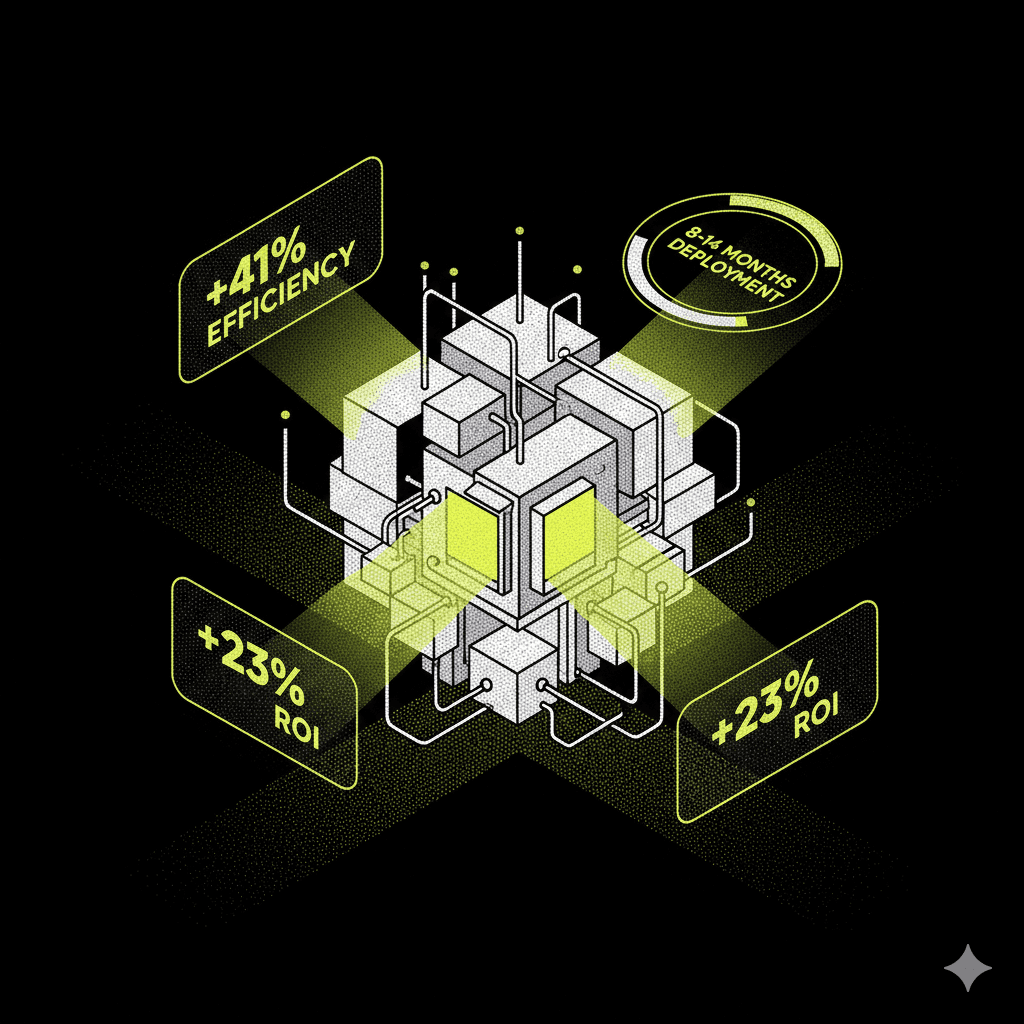
Analysis of 340+ enterprise AI marketing automation deployments reveals 41% efficiency gains and 23% ROI improvement, but 62% require 8-14 months to deploy.
08 min read
Why Traditional Marketing Operations Can't Scale Anymore
The Complexity Crisis in Modern Marketing
At some point, most marketing teams reach the same conclusion: traditional campaign management no longer scales.
Managing multi-channel campaigns, personalizing customer journeys, and measuring ROI across dozens of touchpoints has created complexity that manual processes cannot handle.
The 2024-2025 Shift: From Pilots to Production
The landscape shifted in 2024-2025. AI marketing automation moved from experimental pilots to production systems handling everything from content generation to real-time bid optimization.
Gartner's 2026 analysis of enterprise marketing operations found that organizations with mature AI implementations operate with efficiency advantages that competitors struggle to overcome.
Technology vs. Transformation: The Critical Distinction
What separates functional automation from failed implementations comes down to approach.
Companies treating this as technology deployment consistently underperform those viewing it as operational transformation.
How AI Marketing Automation Works in 2026
From Rule-Based Systems to Autonomous Agents
The fundamental architecture change in 2026 involves how automation systems make decisions. Earlier platforms required explicit programming for each workflow—if X happens, then do Y.
Modern systems deploy agents that make autonomous decisions within defined parameters.
Real-World Example: Shopify's Email Optimization
Shopify's email marketing operation demonstrates the shift. Rather than building decision trees for send-time optimization, they deployed an agent that analyzes individual customer behavior patterns and determines optimal engagement windows.
The result: 34% improvement in open rates without additional human oversight.
What Makes AI Agents Different
These agents operate differently than traditional automation. They adjust to changing conditions, learn from outcomes, and identify patterns humans miss.
Adobe's performance marketing team reported their AI agent discovered that B2B prospects engaging with product comparison content on mobile devices converted 2.3 times more frequently when follow-up occurred within 90 minutes—a pattern that would have taken months to identify through manual analysis.
The New Workflow: Set Boundaries, Not Rules
The practical implication is straightforward. Teams spend less time programming conditional logic and more time defining business constraints and success metrics that guide agent behavior.
The workflow becomes: set boundaries, establish objectives, validate decisions.
Measurement Precision That Changes Everything
Beyond Traditional Attribution Models
Performance marketing in 2026 operates with measurement precision impossible three years ago. AI systems now track complete customer journeys across channels, attributing value to micro-interactions that traditional analytics overlooked.
Case Study: Nike's 17 Hidden Conversion Paths
Nike's marketing team identified 17 distinct touchpoint combinations that consistently preceded high-value purchases. Traditional attribution models had collapsed these into three basic paths.
The impact:
By optimizing budget allocation toward newly identified patterns, they increased ROAS by 28% in Q4 2025.
Predictive Performance: Know Before You Launch
The measurement extends beyond attribution. Modern systems predict campaign performance before launch by analyzing historical data against current market conditions.
When Coca-Cola tested this approach across 200 campaigns, AI predictions matched actual performance within 8% accuracy for 73% of launches.
Real-Time Resource Allocation
This predictive capability fundamentally changes resource allocation. Rather than waiting weeks to assess campaign effectiveness, marketers receive probability-weighted forecasts that inform budget decisions in real time.
The shift from reactive analysis to proactive optimization represents the most significant operational change in performance marketing since digital attribution emerged.
AI Marketing Implementation: What Really Happens
The Agency Relationship Transformation
Working with specialized agencies or consultants in 2026 differs substantially from traditional relationships. The focus has shifted from campaign execution to system integration and optimization strategy.
60-70% of Time Spent on Infrastructure
Leading practitioners now spend 60-70% of initial engagements on infrastructure assessment and data architecture. They evaluate whether existing MarTech stacks can support AI agent deployment, identify data quality issues that would compromise automation accuracy, and map decision-making processes that agents will eventually handle.
Case Study: WPP's 8-Week Foundation Phase
WPP's B2B division documented their approach with a financial services client. The first eight weeks involved zero campaign work.
Instead, they unified data from six platforms, established quality benchmarks, and created feedback loops to train AI systems. Campaign deployment began in week nine, but the groundwork ensured agents had clean data and clear success criteria.
From Monthly Reviews to Weekly Optimization
The operational model also changes. Rather than monthly strategy reviews, teams meet weekly to assess agent performance, adjust constraints, and identify new automation opportunities.
One retail client reported their agency relationship evolved from campaign vendor to continuous optimization partner, with 43% more strategic initiatives launched compared to previous arrangements.
The Expertise Gap
This structure requires different expertise. The most effective teams combine data engineering capabilities with marketing strategy experience—a combination that remains relatively scarce in 2026.
The Integration Challenge No One Talks About
Why Vendor Timelines Are Always Wrong
The technical complexity of implementing modern marketing automation involves substantial integration work that vendor materials often understate.
Most enterprises operate 15-30 different marketing technologies, each with distinct data structures and API limitations.
Even HubSpot Needed 4 Months
HubSpot published a case study detailing their own internal automation implementation. Despite building marketing software, their team spent four months connecting their AI automation layer to existing systems.
The primary challenge involved reconciling how different platforms defined basic concepts like "lead" and "conversion," which had evolved differently across departments over time.
Data Quality: The Consistent Constraint
Data quality emerges as the consistent constraint. AI agents require clean, structured information to make reliable decisions.
When Siemens audited their marketing data before automation deployment, they found 31% of customer records contained conflicting information across systems. Cleaning this data became a six-month project that preceded any automation work.
Beyond Technical Integration: Process Changes
The integration extends beyond technical connections. Successful implementations require process changes across teams:
Content creators structure assets for AI consumption
Sales teams provide feedback that trains lead-scoring algorithms
Analytics teams shift from building reports to validating agent decisions
Companies treating AI marketing automation as purely a technology purchase consistently underestimate these organizational requirements.
Implementations that deliver advertised results typically involve equal parts technology deployment and operational redesign.
Cross-Functional Automation: Where the Real ROI Lives
Extending Beyond Marketing Boundaries
The most sophisticated deployments in 2026 extend automation beyond traditional marketing boundaries. These systems connect marketing operations with sales, customer success, and product development to create continuous optimization loops.
Slack's Campaign-to-Product Feedback Loop
Slack's growth team built an automation framework connecting campaign performance directly to product usage patterns.
When their AI identifies that users from specific campaigns exhibit higher feature adoption rates, it automatically adjusts targeting parameters and notifies product teams about high-value user segments.
Impact:
This cross-functional automation contributed to 19% improvement in customer lifetime value for users acquired in H2 2025.
340% More Tests: The Speed Advantage
The workflow connections enable rapid testing cycles. Rather than quarterly campaign reviews, automated systems test hundreds of variations simultaneously and reallocate resources based on performance signals.
Microsoft's enterprise marketing division reported running 340% more tests in 2025 compared to 2023, with AI agents managing the entire optimization process.
Governance: The Non-Negotiable Framework
These extended workflows require careful governance. As automation spans multiple departments, organizations need clear policies about decision authority, override procedures, and audit requirements.
Companies seeing the strongest results have invested in automation governance frameworks defining where AI agents can operate independently and where human approval remains mandatory.
The governance question becomes particularly important as agents gain more autonomy. Setting appropriate boundaries requires understanding both the capabilities and limitations of current AI systems.
AI Marketing Automation ROI: The Real Numbers
What 340 Enterprise Deployments Reveal
The financial case for AI marketing automation becomes clearer as more implementations reach maturity.
Gartner's 2026 analysis of 340 enterprise deployments found that organizations achieving full implementation saw:
Median efficiency gains of 41% in marketing operations costs
23% improvement in campaign ROI
Those numbers require context.
The Timeline Reality Check
The same study found that 62% of implementations required 8-14 months to reach full deployment, significantly longer than initial vendor estimates.
The timeline difference typically stemmed from data preparation and organizational change management rather than technical deployment.
Salesforce's Financial Breakdown
Salesforce shared detailed financial data from their own marketing automation implementation:
Initial deployment costs: $1.2 million across technology, consulting, and internal resources
Positive ROI reached: Month 11, primarily through reduced agency fees and improved media efficiency
Cumulative savings by month 18: $3.4 million
ROI Timeline by Use Case
The ROI patterns vary by use case:
Lead scoring and email optimization: Returns within 3-5 months
Complex multi-channel orchestration and predictive analytics: Longer timeframes but larger absolute returns
Organizations that prioritize quick wins while building toward comprehensive automation report higher overall satisfaction with their investments.
The Transformation vs. Tool Distinction
These timelines reinforce that AI marketing automation represents significant operational transformation rather than simple technology purchase.
Companies that approach implementation with appropriate resource allocation and realistic expectations consistently outperform those treating it as tactical tool deployment.
What Marketing Leaders Need to Know
The Evidence Is Clear
The evidence from 2026 implementations demonstrates that AI marketing automation delivers substantial returns when approached as comprehensive operational change rather than technology addition.
Organizations seeing the strongest results invest heavily in data infrastructure, establish clear governance frameworks, and align teams around new workflows before expecting performance improvements.
The Competitive Gap Is Widening
The gap between leaders and laggards continues to expand. Companies that deployed effective automation in 2024-2025 now operate with efficiency advantages that competitors find difficult to overcome.
The window for catching up narrows as these systems accumulate more data and refine their decision-making capabilities.
Honest Assessment Required
For marketing leaders evaluating automation strategy, the priority should focus on honest assessment of current capabilities.
Organizations with clean data, integrated systems, and executive support for operational change are positioned to implement successfully. Those lacking these foundations should address infrastructure gaps before pursuing advanced automation.
The Question Has Changed
The technology has matured beyond the experimental phase. The question facing most enterprises is no longer whether AI marketing automation works, but whether their organization is prepared to implement it effectively.
Key Takeaways for Implementation Success
Plan for 8-14 months: 62% of implementations take longer than vendor estimates, primarily due to data preparation and change management
Prioritize data quality: Clean, structured data is the foundation for reliable AI decisions—address this before technology deployment
Expect 60-70% infrastructure work: Leading practitioners spend the majority of initial time on system assessment and integration, not campaigns
Build governance frameworks: Define where AI agents can operate independently and where human approval is required
Start with quick wins: Lead scoring and email optimization show ROI in 3-5 months while building toward comprehensive automation
Think transformation, not tools: Companies treating this as operational change consistently outperform those viewing it as technology purchase
Combine expertise: The most effective teams blend data engineering with marketing strategy—consider specialized agency partners
Need Help with Marketing Automation Implementation?
Our team specializes in infrastructure evaluation and implementation planning for enterprise marketing organizations. We can help you understand what successful deployment would require for your specific technology stack and organizational structure.
Ready to assess your marketing automation readiness? Contact us for a comprehensive evaluation of your current capabilities and implementation roadmap.
How long does AI marketing automation take to implement?
How long does AI marketing automation take to implement? 62% of enterprise implementations require 8-14 months to reach full deployment. This timeline includes data preparation, system integration, and organizational change management—not just technical setup.
What ROI can I expect from marketing automation?
Organizations achieving full implementation see median efficiency gains of 41% in marketing operations costs and 23% improvement in campaign ROI. However, returns vary by use case, with email optimization showing results in 3-5 months while complex orchestration requires longer timeframes.
What's the biggest challenge in implementing AI marketing automation?
Data quality emerges as the consistent constraint. AI agents require clean, structured information to make reliable decisions. Many enterprises find 30%+ of customer records contain conflicting information, requiring months of cleanup before automation can begin.
Do I need to replace my existing MarTech stack?
Not necessarily. The most effective implementations focus on integrating AI automation layers with existing systems. However, this requires 60-70% of initial engagement time for infrastructure assessment, data unification, and establishing feedback loops.
What expertise do I need on my team?
The most effective teams combine data engineering capabilities with marketing strategy experience. This combination remains relatively scarce in 2026, which is why many organizations work with specialized agencies during implementation.
How is AI marketing automation different from traditional marketing automation?
Traditional automation requires explicit programming for each workflow (if X, then Y). AI agents make autonomous decisions within defined parameters, adjust to changing conditions, learn from outcomes, and identify patterns humans miss. The workflow shifts from programming rules to setting boundaries and validating decisions.
Should I wait for the technology to mature further?
The technology has matured beyond the experimental phase. Companies that deployed effective automation in 2024-2025 now operate with efficiency advantages that competitors find difficult to overcome. The window for catching up narrows as these systems accumulate more data and refine their decision-making capabilities.
INSIGHTS
Expert perspectives on design, AI, and growth.
Explore our latest strategies for scaling high-performance creative in a digital world.



View more